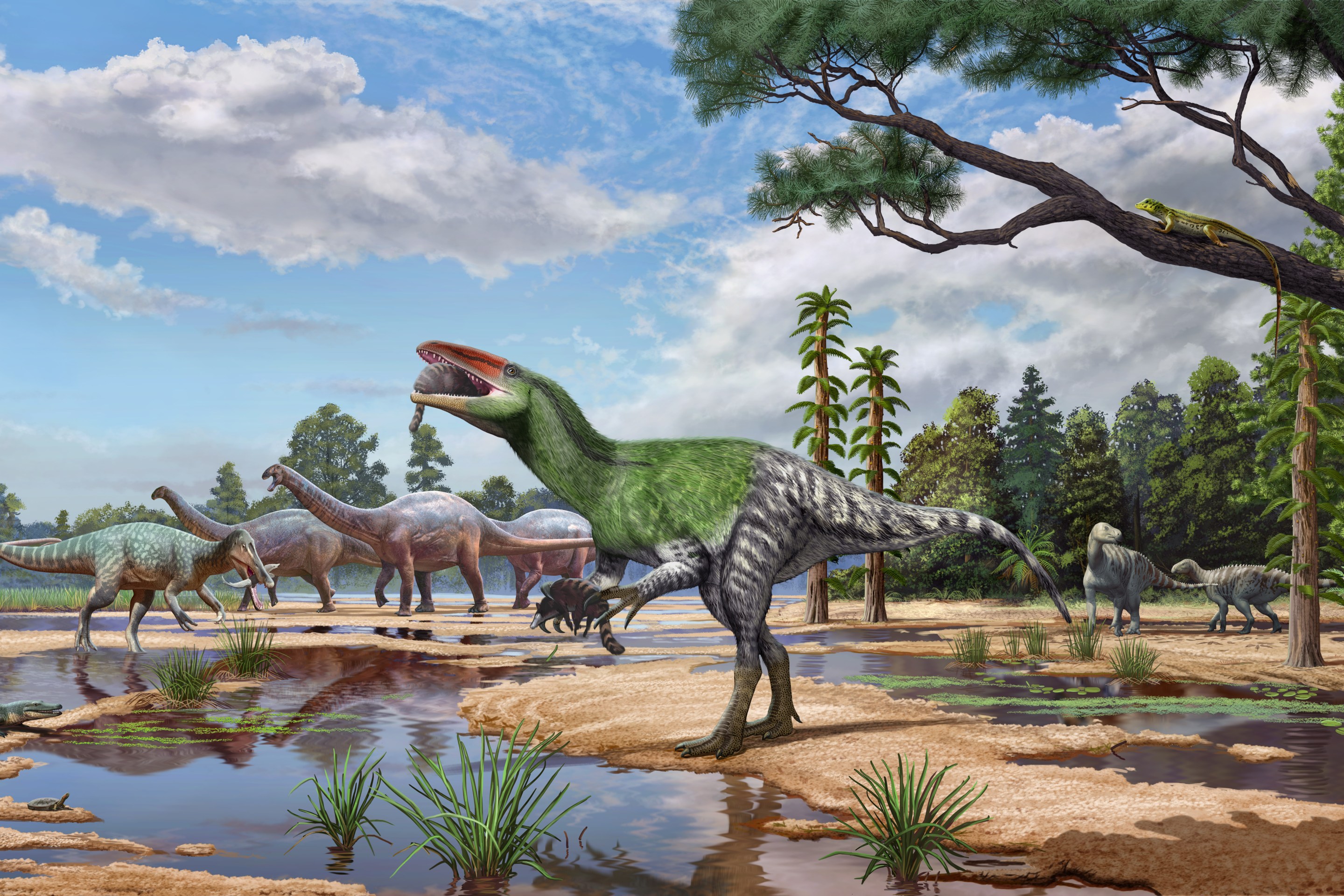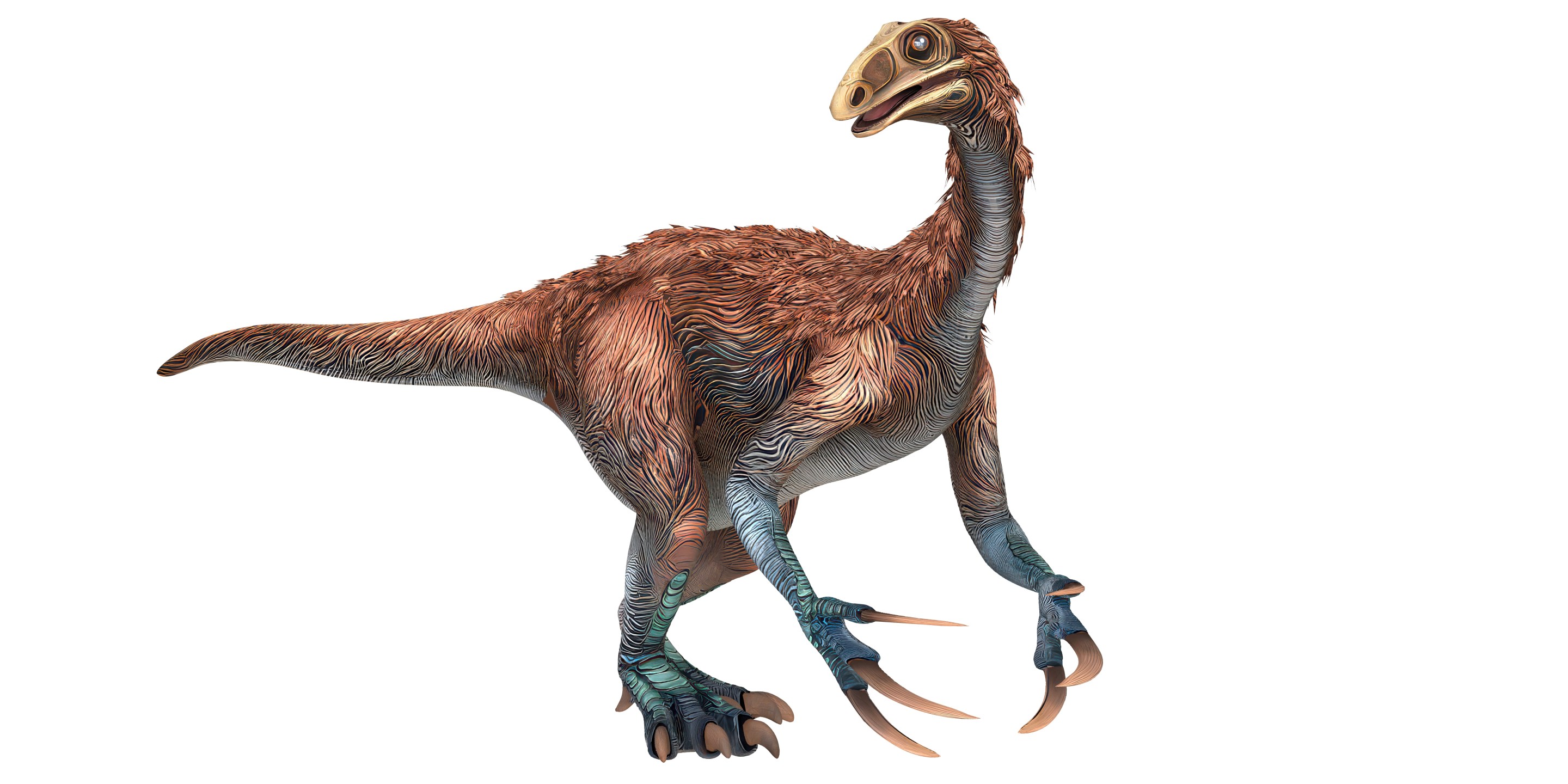
The Therizinosauria group of dinosaurs had a very distinctive look. These animals walked on two legs and boasted small, beaked heads at the end of long necks, a covering of feathers, and some of the longest claws ever found in the natural world.
But even for a group this unique, the newly discovered Kayrasaurus changliensis species stands out.
First of all, it’s big—almost twice as big as previous therizinosaurs found at the Yixian Formation site in northeastern China. Paleontologists more or less have its entire skeleton to study, and they suspect K. changliensis measured more than 11.8 feet in length (towering taller than a grizzly bear on its hind legs) and would’ve weighed as much as 604 pounds. The researchers—from both China and the U.S.—also believe the skeleton is that of a juvenile, so presumably this wasn’t the species’ peak size.
It had a lot more tiny teeth than is usual in this dinosaur group as well, with at least 45 packed into each side of the lower jaw—more than in any other known therizinosaur. Another 32 were found in each side of the upper jaw.
That said, if you’d been wandering around 125 million years ago during the Early Cretaceous and met K. changliensis, you wouldn’t necessarily have had to panic: Paleontologists say the teeth and jaw of the animal suggest a plant eater. Moreover, its teeth patterns are similar to a related species, Beipiaosaurus inexpectus, which likely means the new dinosaur was a heavier, slower-moving therizinosaur compared to some of the others from the same site.
Read more: “Here’s Why There Aren’t Any Tiny Dinosaurs”
More largely, this discovery has helped in some dinosaur family tree reshuffling. It appears that Kayrasaurus sits on an early branch of the therizinosaurs, while later species may have split into two separate groups—with claw shape the main differentiator.
Used for vegetarian purposes or not, those claws definitely left their mark. 
Enjoying Nautilus? Subscribe to our free newsletter.
Lead Image: Andrus Ciprian / Shutterstock