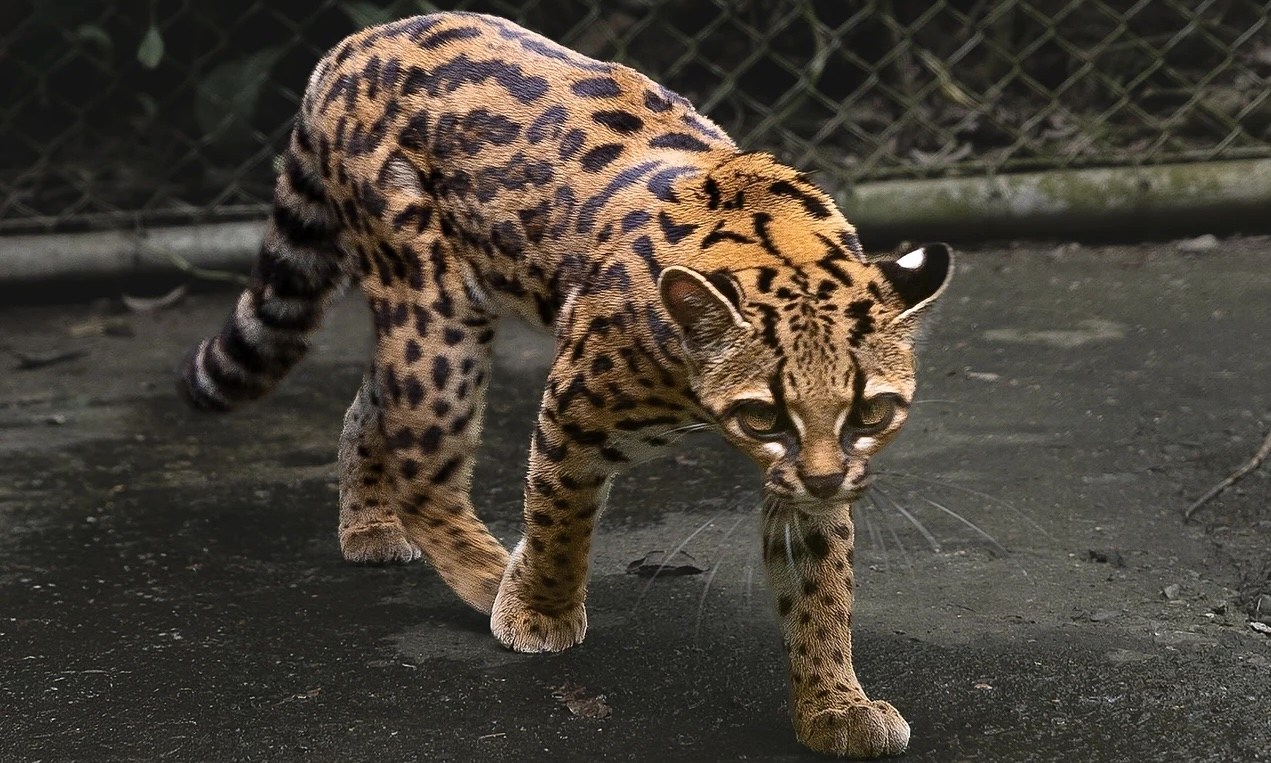
Imagine scooping up a stray kitten, raising it in your own home, and then later discovering it’s actually a feral jungle cat. That’s what happened to one Bolivian man, who decided the pet he’d been feeding rice, noodles, and eggs was probably better cared for by a wildlife refuge. Remarkably, after he brought it in, biologist Paola Nogales-Ascarrunz discovered it wasn’t just a wild cat but an entirely novel species—the first new cat species found in over a century.
Dubbed Leopardus tilcayo, the feline is smaller than a house cat (around 17 to 20 inches, not counting its roughly 10-inch tail), and lives in the Bolivian Yungas, a cloud forest at the foot of the Andes mountains. According to Nogales-Ascarrunz and her fellow researchers, who published a paper describing the species, its distinct irregular spots were the first signal it might be a new species. They performed genetic tests on L. tilcayo and 37 other tropical cats from the genus to confirm the find, while also identifying four other species within the genus.
Read more: “The Mystery of Cave Cats”
Although there are loads of new animals out there awaiting discovery, it’s rare to find a new mammal, especially a cat. The last novel feline species identified by scientists was the Uruguayan pampas cat in 1923, a member of the same genus as L. tilcayo. Most new species designations (including the other four in the paper), delineate cryptic species, or those that resemble existing species morphologically but are genetically distinct. But L. tilcayo was completely unknown to science—there weren’t even any specimens of the cat collecting dust in museums.
That doesn’t mean it was completely anonymous, however. The cat species was known to locals in the area who called it “tilcayo,” although even they’re not sure where the name comes from. “This cat, they call it tilcayo,” Nogales-Ascarrunz told NBC news. “And when you ask, ‘Does it have some meaning in Quechua or Almyra and other Indigenous languages?’ they say, ‘No, my grandpa told me that’s the tilcayo.’”
And if the name is good enough for grandpas, it’s good enough for science. Welcome to the scientific community, L. tilcayo. 
Enjoying Nautilus? Subscribe to our free newsletter.
Lead Image: Alessandro Verniani / Wikimedia Commons