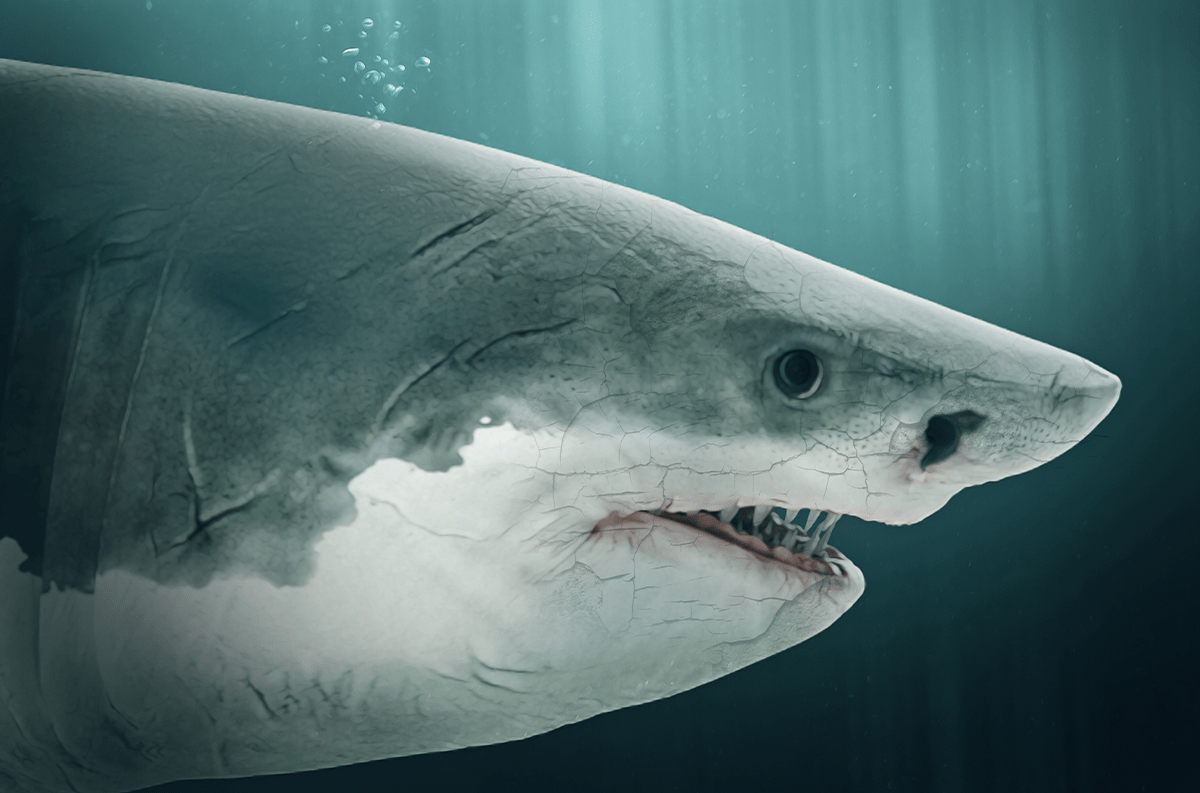
The largest shark to ever terrorize the oceans was the iconic megalodon, which popped up during the Miocene era roughly 15 million years ago. Clocking in at nearly 80 feet long and weighing more than 90 tons, megalodon was the apex predator of the era, dining on whatever it felt like, including massive whales.
Unfortunately, the estimates of its size were based on 10.8-million-year-old vertebrae unearthed in the 1970s, which disappeared from museum archives shortly thereafter. Now, they’ve resurfaced, and the backbones are the subject of a new analysis published today in Palaeontologia Electronica, which confirms the megalodon’s colossal size.
“The rediscovery of the vertebrae was a true delight because they empirically confirm the maximum vertebral diameter of 23 centimeters reported in the literature,” study author Kenshu Shimada of DePaul University said in a statement.
Read more: “What Fueled the Ocean’s Largest Terror”
Because sharks have cartilaginous skeletons, they don’t hold up as well as mineralized bones, and there are no complete megalodon skeletons. In other words, these relatively well-preserved vertebrae are precious scientific commodities.
With the fossils in hand once again, researchers were able to employ some more modern techniques to investigate them. Using micro-CT imaging, they measured the growth bands in the backbones, which are similar to tree rings. They determined the megalodon specimen was at least 64 years old when it died and could have lived as long as 96 years, according to their models.
That wasn’t the only surprise either. A close examination of the rocks discovered alongside the megalodon vertebrae revealed that they contained tiny scales and gill structures, which the team determined came from smaller basking sharks. “This led us to interpret the basking shark elements to represent the stomach contents of the megalodon, which is the first documentation for the megalodon fossil record,” study co-author Mikael Siversson of the Western Australian Museum said.
The Miocene was a shark-eat-shark world, and megalodons were on top. 
Enjoying Nautilus? Subscribe to our free newsletter.
Lead image: Sven Bachstroem / Adobe Stock