Forty years ago, a teenager looking for fossils with his dad on a beach in Belgium found a whale skull. Later, another father-son pair stumbled across a completely different whale skull. Now, as documented in a recent study led by the Institute of Natural Sciences in Brussels, those skulls are key pieces of evidence in a violent whale-shark encounter from 4 to 5 million years ago.
Micro-CT scanning revealed fragments of sharks’ teeth lodged inside both skulls, indicating aggressive bites. One whale (Casatia sp.) appeared to have been attacked by an ancient relative (Carcharodon plicatilis) of the great white shark, with the bite marks on the whale’s forehead, suggesting that C. plicatilis tried to bite its head right off.
The other skull, from a small right whale relative (Balaenella brachyrhynus) that’s now extinct, had been chomped on by a type of cow shark—the bluntnose sixgill shark (Hexanchus griseus). It also bore a long, deep mark that could have been from the great white shark relative. That said, the location of the H. griseus bites suggested a scavenging feast on a dead whale, rather than a predatory attack.
Read more: “What Megalodons Tell Us About Gigantism”
“The position of the bite marks in the upper part of the right whale skull tells us that the animal had probably already died when the shark scavenged its carcasses and that it was in a belly-up position, which is common for deceased whales,” explained lead author and paleontologist Olivia Lambert in a press release.
Neither species of shark occurs today off the coast of Northern Europe, suggesting some large-scale shifts in ecological relationships in that part of the North Sea. And the extinct C. plicatilis doesn’t exist at all—beyond, of course, its lineage shared with the great white shark.
“These findings are a first step toward understanding changes through time in the availability of prey in the southern North Sea and the loss of large predatory sharks in this area,” said Lambert.
They certainly take a big bite out of those efforts. 
Enjoying Nautilus? Subscribe to our free newsletter.
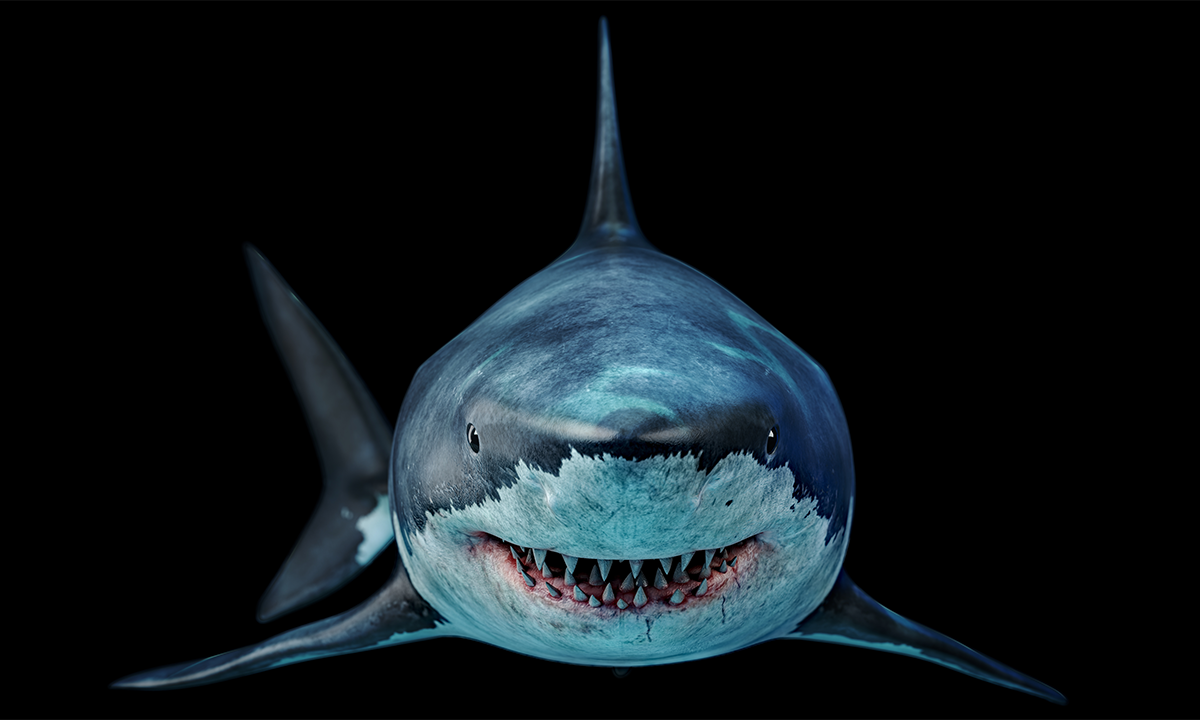
Lead image: Happy Whale / Shutterstock