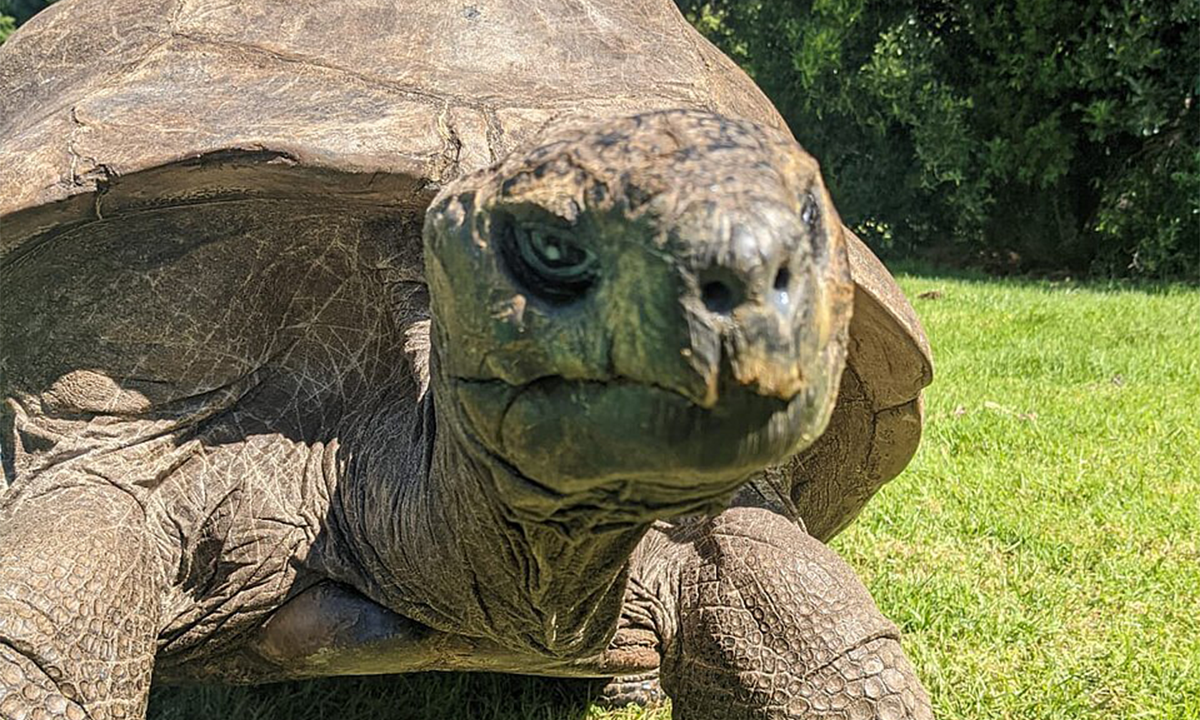
Rumors of Jonathan the Tortoise’s death have been greatly exaggerated. The ancient Seychelles giant tortoise is still alive and well despite a post on X (formerly Twitter), purporting to be from the owner, announcing his demise. While you’d think this hoax might be an April Fool’s joke gone wrong, it appears to be part of a crypto scam (Jonathan is, of course, completely innocent).
At 193 years old, Jonathan is the oldest known terrestrial animal, but he may not be the oldest tortoise to ever live. A tortoise in India named “Adwaita” was estimated to be 255 years old when he died in 2006 from an infected wound following damage to his shell (his true age was never substantiated).
If Jonathan wants to become the world’s oldest known vertebrate, he’s still got centuries to go. Greenland sharks, which inhabit the frigid waters of the North Atlantic and Arctic oceans, can reach a lifespan of at least 272 years, according to radiocarbon dating of their eye lenses. One especially large specimen was estimated to be 512 years old in 2016, meaning it was just a pup when Juan Ponce de León was setting foot on Florida’s shores in 1513.
Read more: “The Oldest Rock on Earth”
What about the oldest members of our family—mammals?
Again, the award goes to an aquatic species. Bowhead whales are considered to be the longest-lived mammals, with a lifespan that could exceed 200 years. Like African elephants (maximum lifespan of 60 to 70 years), these massive beasts appear to be relatively resilient against cancer, thanks to an enhanced ability to repair their DNA.
The animal with the longest lifespan doesn’t look like much of an animal at all: Hexactinellid sponges can live up to 11,000 years. These sponges anchor themselves to rocks thousands of feet beneath the sea, and have a skeletal scaffolding made of silica (hence their common name: glass sponges). Thanks to their long lives, glass sponges can act as a living archive of ocean temperatures, allowing scientists to peer millennia into the past to glimpse what Earth’s climate was like when humans were only beginning to invent agriculture.
So remember to respect your elders—and long live Jonathan! 
Enjoying Nautilus? Subscribe to our free newsletter.
Lead image: Xben911 / Wikimedia Commons