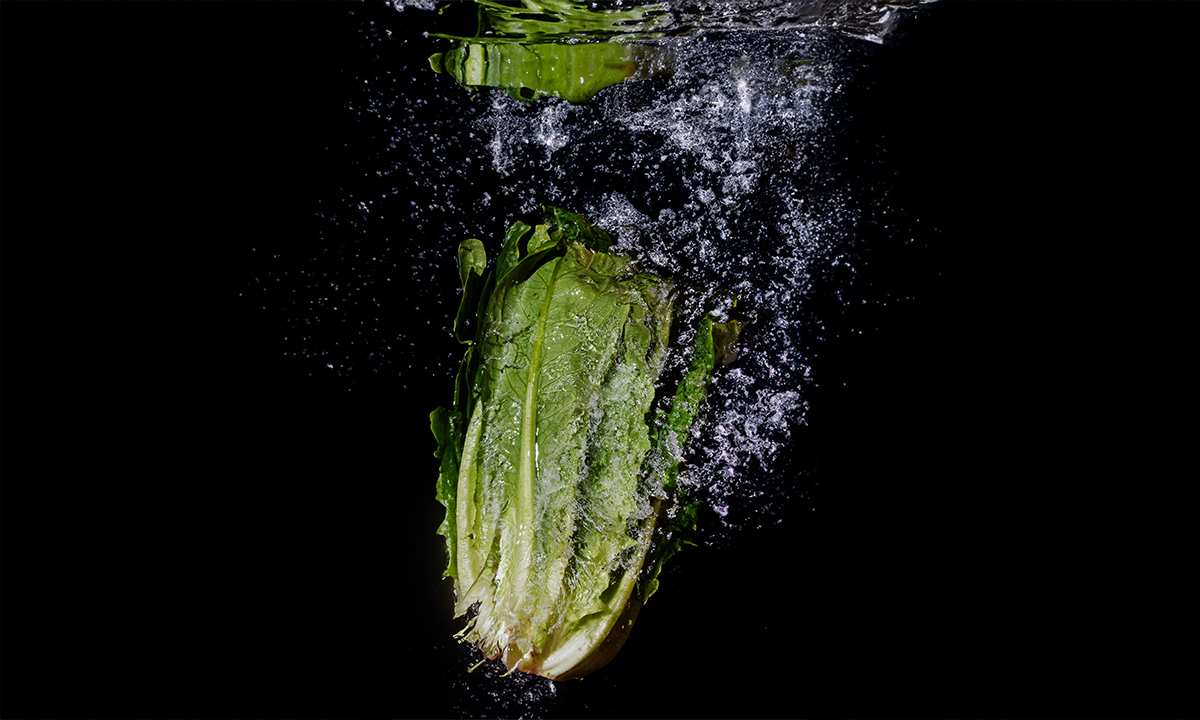
There are few things less inspiring to the salad enthusiast than limp, slimy lettuce. Those contaminated greens don’t just look and smell bad—they can also make you sick. But why do bunches of romaine, mesclun and butterhead so quickly lose their perk and spoil before they can make it to the bowl?
A team of scientists based in Spain recently set out to solve this riddle using high-resolution imaging and chemical analysis techniques. They decided to focus specifically on romaine lettuce, as it tends to wilt and spoil more quickly than other kinds of lettuce, testing plants grown from seedlings in the lab.
The scientists hypothesized that spoiled greens might have something to do with nature’s raincoat: The leaves, flowers, stems and fruits of most plants are covered in a waxy water-resistant layer made of fats known as a cuticle. Previous research had shown that, at the nano-scale—a thousand times tinier than the width of a human hair—the cuticles of rose petals and olive leaf hairs have an uneven texture. Certain cells in the cuticle, known as pavement cells, are relatively uniform. But a second type, known as guard cells, are not, consisting of some water-loving patches and other water-repellant ones.
Read more: “Fruits and Vegetables Are Trying to Kill You”
To test their hunch, the scientists analyzed the romaine leaves when they were fresh and after they had been carefully dried and found no meaningful differences between the two. But they did discover high concentrations of tiny, water-attracting patches clustered around the pores on both sides of the romaine leaves. These pores, known as stomata, allow the plant to breathe, exhaling water and inhaling carbon dioxide for photosynthesis.
The high density of these water-attracting patches in romaine lettuce makes it easier for water droplets to stick around, the scientists propose. This provides prime real estate for microbes, and potentially accelerates water loss, opening the door to contamination and spoiling. The team published their findings in the journal Physiologia Plantarum.
What exactly these water-loving patches do for the plant is still not entirely clear, the scientists point out, and will require further research. They may help plants absorb moisture from rain or dew, adapt to dry or humid environments, or shuttle around gases and moisture.
It may turn out that very features that allow your lettuce to breathe and adapt also make it go limp in your fridge. 
Enjoying Nautilus? Subscribe to our free newsletter.
Lead image: Hawk777 / Shutterstock