Amazon parrots have a rather odd habit. They like to congregate on riverbanks and take bites out of the soil. That’s because it’s rich in kaolin, a kind of clay with properties that ease digestion and protect the birds from toxins (in fact, kaopectate gets its name from kaolin). This dirt-eating routine, known as geophagy, isn’t restricted to parrots. Other animals, including humans, have been known to self-medicate with soil as well. Now new research published today in Scientific Reports reveals a population of monkeys have taken to eating dirt—and it’s all our fault.
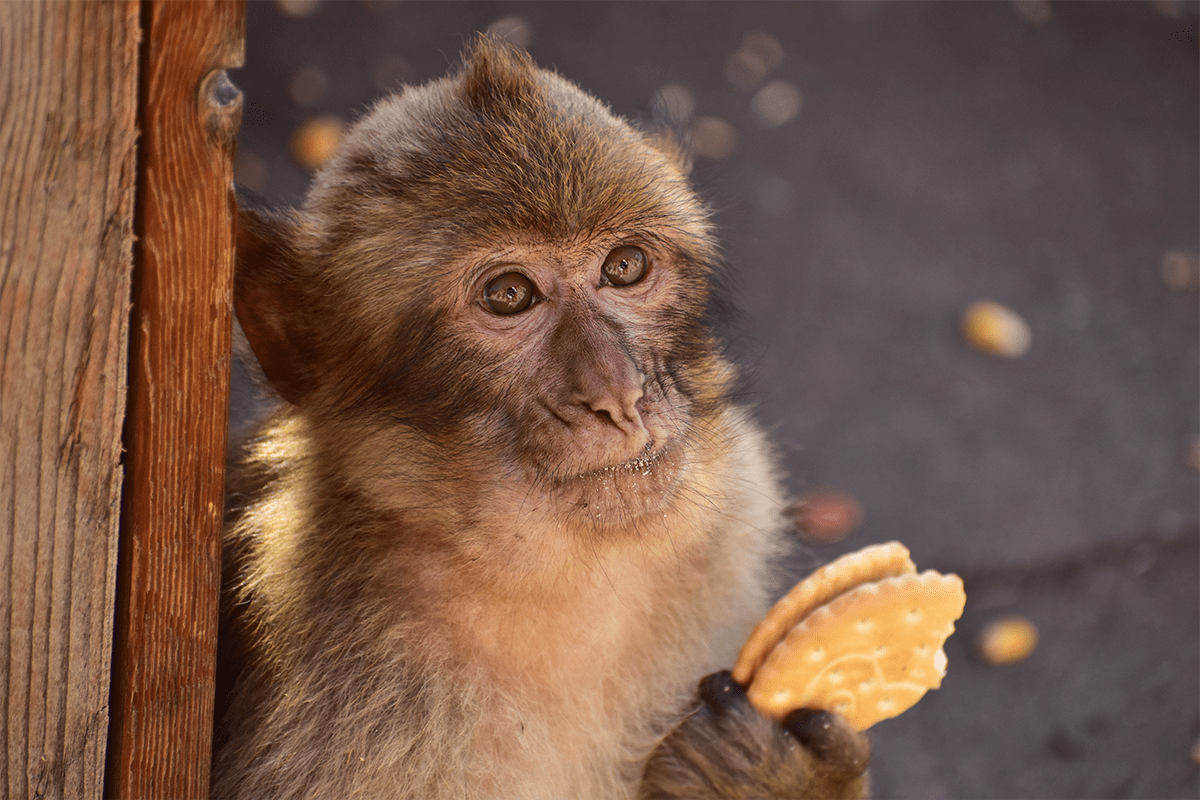
Anthropologists watching the Barbary macaques of Gibraltar off the coast of Spain noticed the monkeys heaving tiny fistfuls of soil into their mouths. It’s the first time geophagy has been observed in this population, the only wild monkeys living in Europe. For almost two years, the team monitored their behavior, noting that macaques who had more contact with tourists ate more dirt and that dirt-eating rates rose during the holiday season.
Scientists say the junk food the monkeys either steal or accept from the tourists is to blame, possibly because it’s disrupting their microbiome or otherwise upsetting their stomachs. Typical fare includes chocolate, potato chips, and ice cream, and these unhealthy foods make up one-fifth of the macaques’ diet.
Read more: “Learning Medicine from Animals”
“Foods brought by tourists and eaten by Gibraltar’s macaques are extremely rich in calories, sugar, salt, and dairy,” study author Sylvain Lemoine said in a statement. “This is completely unlike the foods typically consumed by the species, such as herbs, leaves, seeds, and the occasional insect.”
Eating dirt, the researchers discovered, seemed to be socially learned, with 30 percent of geophagy occurring in groups and 89 percent while other macaques watched. Different groups also preferred different types of soil. Most troops opted for red clay, but one troop developed a taste for tar-clogged soil from potholes in roads (scientists confirmed these preferences by offering monkeys a charcuterie board of soil to sample from). The only troop that didn’t display any geophagy was the troop living far from tourist hotspots.
Local officials have taken steps to prevent the macaques from gorging on junk food, including banning tourists from feeding them and offering a variety of fresh fruits and vegetables at feeding stations. Unfortunately, as we all know too well, soft serve and potato chips can be hard to resist. 
Enjoying Nautilus? Subscribe to our free newsletter.
Lead image: Martin Nicourt/Gibraltar Macaques Project