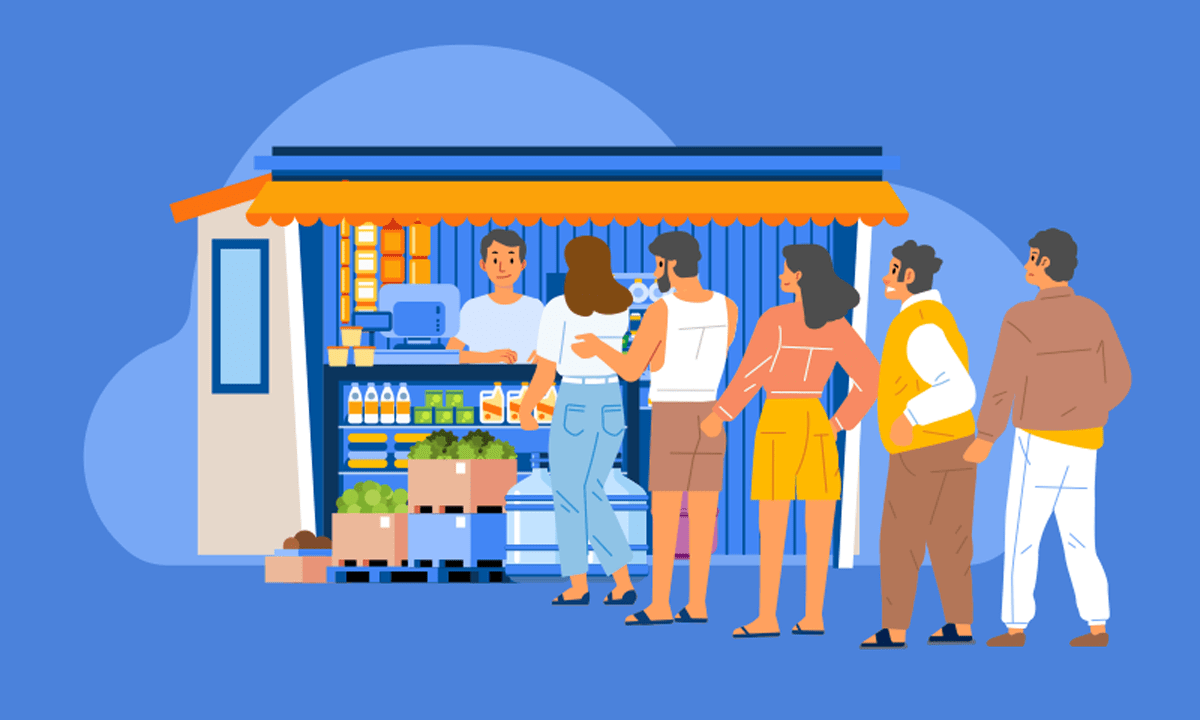
Whether it’s cronuts, ramen burgers, or loaded Instagram-friendly ice cream sundaes, there are always some people willing to line up for hours to get a taste of the latest food fad. What these people might not realize, however, is that those treats are even more psychologically rewarding after they’ve schlepped to a storefront and waited hours in line.
But why do we enjoy things more when we’ve had to suffer for them?
It’s a question that’s puzzled neuroscientists for decades, but research published yesterday in Nature is shedding light on this phenomenon.
This kind of “sunk-cost fallacy” isn’t just a common trap in the business world, it also pervades the animal world. Organisms from ants to human beings tend to value those things they had to work for more than those that came easily.
Read more: “Against Willpower”
“We make fallacious decisions based on what we’ve invested in something, even if the probability of actually gaining an objective advantage from it is zero,” study author Neir Eshel explained in a statement. “And it’s not just us. This has been shown in animals across the animal kingdom.”
It seems counterintuitive from an evolutionary perspective. After all, why would we be hardwired to put a premium on toiling? The answer, according to Eshel, involves our familiar friend dopamine, or the neurotransmitter responsible for pleasure.
In an earlier study, Eshel and his colleagues discovered that mice that received a reward after overcoming a challenge (in this case, a series of mild electrical shocks) released more dopamine compared to those that didn’t suffer for their treat. Now, they’ve added a new piece to the puzzle.
According to their latest research, dopamine gets an assist from the neurotransmitter acetylcholine after mice struggle for a reward. The bigger the effort, the more acetylcholine was released, which in turn, boosted the amount of dopamine.
That explains the neuromechanism behind the phenomenon, but why does it exist in the first place? Eshel has some ideas.
“In an environment with limited resources (as most are), when we typically get rewarded only after really hard work, we may need high dopamine secretion to get us to do it again.” Eshel said. “Because dopamine reinforces previous behaviors, it may reflect sunk costs. The dopamine release we saw may enable you to pay those steep costs in the future.”
Something to think about the next time you’re waiting in line. 
Enjoying Nautilus? Subscribe to our free newsletter.
Lead image: Yisar Andrianus / Shutterstock