Just like us, our cells can get old. But while these senescent cells stop dividing, they linger on, which is one reason they’re sometimes called “zombie cells.” Zombie cells aren’t functionally inert, however, they still play an important role in wound healing, chemically recruiting other cells to repair tissues. As you can probably imagine, we accumulate these zombie cells as we age and now a new study published in Nature Aging is explaining why and maybe even how to reverse it.
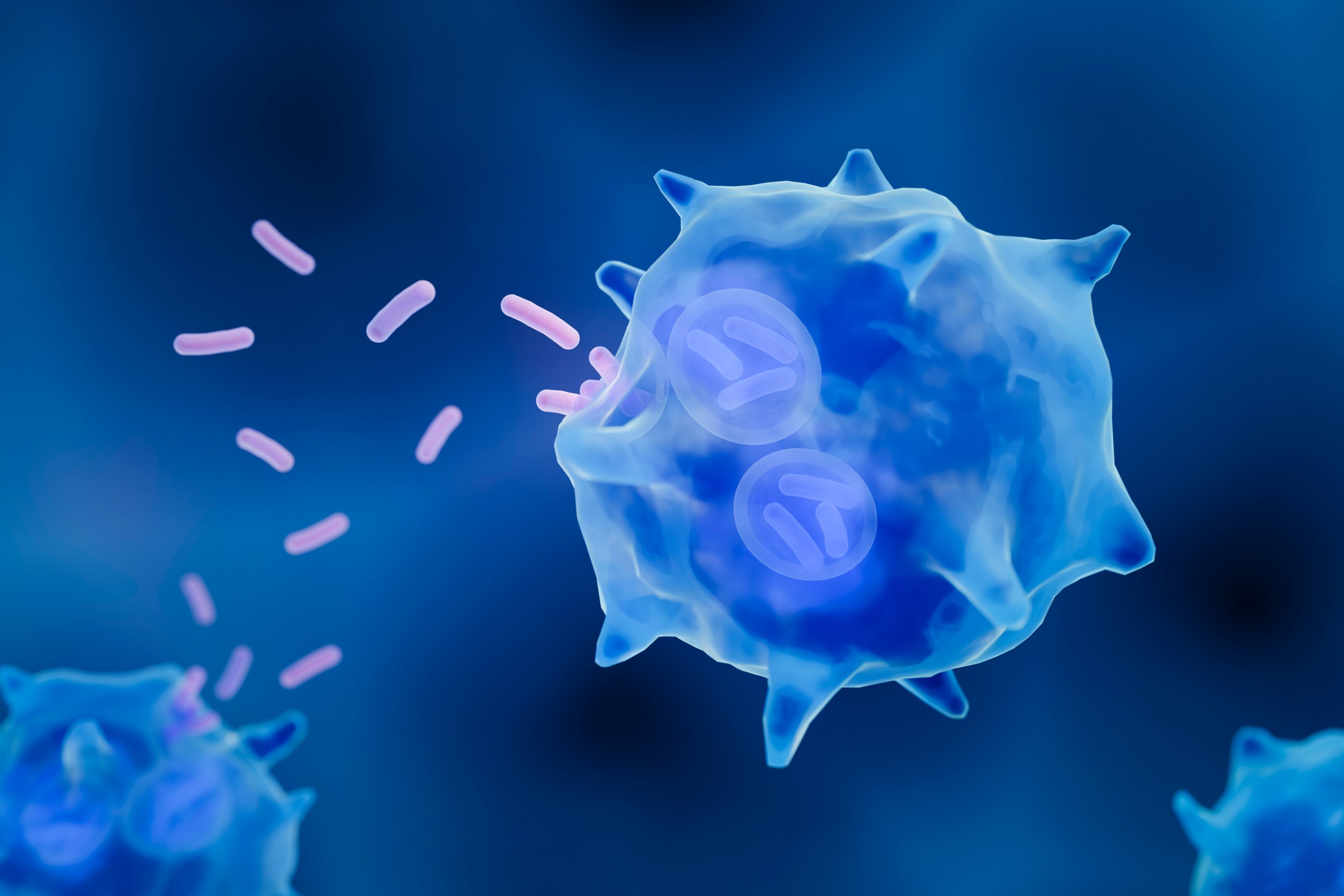
Researchers led by a team of gerontologists from the Albert Einstein College of Medicine focused on a dynamic related to aging—chaperone-mediated autophagy (CMA). During this process, cells chemically tag damaged and junk proteins for removal. Then the body’s garbagemen (macrophages) swing by to gobble them up. As we get older, CMA activity slows down like a body-wide garbage strike, and the resulting trash buildup can contribute to a whole host of age-related diseases, including neurodegenerative disorders, metabolic diseases, and vascular problems.
Read more: “Your Cells Are Dying, All the Time”
Basically, like any good dystopian horror movie, our bodies have piles of trash and proliferating zombies. Could the two be linked? To find out, the team used mice genetically engineered with macrophages that lacked CMA activity. They discovered zombie cells at wound sites in the modified mice piled up quicker, and that their wounds healed slower.
Next, they artificially created their own zombie cells from fibroblasts taken from both young and old mice. Remarkably, the two showed dramatically different CMA activity. Young cells ramped up their CMA as they got zombified, but old cells maintained their same low levels. Unable to break down certain proteins, these old zombie cells effectively dumped their trash on the street, damaging nearby cells and making them more likely to transform into zombies. Unfortunately, the trash also interferes with the garbagemen’s ability to identify zombie cells.
“In older animals, age-related changes in both senescent cells and the immune cells responsible for removing them allow these zombie cells to accumulate and play a role in disease,” study author Ana Maria Cuervo of the Albert Einstein College of Medicine explained in a statement. “By restoring cellular recycling, we may be able to help the body’s own defenses clear these cells more effectively.”
Their findings also have important implications for drug testing. Senolytic drugs, which clear zombie cells, may be tested on mouse cells taken from young animals and artificially transformed into zombie cells. But now we know these cells differ in their trash removal process.
What may help is another helper to boost CMA activity, so the researchers tested one out. Called CA77.1, this molecule has shown promising results in other experiments, decreasing the buildup of zombie cells, reducing inflammation, and restoring macrophages’ ability to do their jobs. The team dosed mouse lung cells with fibrosis with CA77.1 and found early treatment reduced the severity of the disease.
“Our research connects two major drivers of aging—declining CMA and cellular senescence—and shows for the first time how their interaction allows senescent cells to evade clearance by the immune system in old organisms,” Cuervo said. “We’ve also found that instead of trying to kill zombie cells, we may be able to restore their interaction with the immune system so that the body can clear them naturally.”
In other words, a good relationship—even between your body’s garbagemen and its zombies—seems to be an important part of healthy aging. 
Enjoying Nautilus? Subscribe to our free newsletter.
Lead Image: ART-ur / Shutterstock