When the British entomologist John Sudd emigrated to Nigeria in the 1950s to conduct research at University College, Ibadan, he found plenty to study in his own abode. Like most dwellings in the region, his house was infested with pharaoh ants. They rose every morning between seven and nine and foraged all day long. To find out where they went, Sudd laid down paper on the floorboards and trailed them with a pencil.
In 1960, Sudd published his findings, reporting that ants tended to retrace the same path every morning, but that their preferred routes gradually shifted, changing course over weeks or months. He determined that their foraging was directed by pheromones secreted as they traveled between their nest and tasty morsels located outdoors and surmised that the pheromones were volatile: Trails were reinforced by a bountiful harvest and faded away when no more food was found.
Read more: “The Thrill of Science in 2042”
Although Sudd didn’t say it, the insects were being scientific. The ants were studying the territory, researching the distribution of nutrients, formulating hypotheses and publishing their findings with chemicals that their sisters could follow. Publication was based on the heuristic that patterns tend to repeat. Sources of food often persist.
In scientific terms, this heuristic is known as inductive reasoning and has been a central tenet of science since the age of Roger Bacon, the medieval philosopher who laid the groundwork for the scientific method.
But those pheromones have a quality that scientific journals lack. Unlike paper and ink (or their digital equivalent), the chemical attractants gradually vanish if they aren’t regularly replenished. Ants are inductive creatures, but their induction appears to be more sophisticated than our scientific method. Might they provide us with needed guidance?
As every human researcher knows—and both of us currently are researchers at the University of Colorado Boulder—science is imperfect. Over the past several decades, the problems have themselves become a subject of scientific research. Some of the alarming findings were published in Nature earlier this year, after a group of researchers attempted to reproduce published results in the social sciences by replicating experiments. They examined the findings reported in 3,900 papers and were able to reach the authors’ conclusion only half of the time.
Even if the scale of the study was notable, the results confirmed common knowledge. A 2016 survey, also published in Nature, revealed that 70 percent of scientists in fields ranging from physics to medicine had tried and failed to reproduce another researcher’s experimental findings while conducting their own research. Such inconsistencies are rarely published, lacking the glory of new discoveries.
Human beings have a craving for breakthrough research: a cognitive bias that makes us attribute significance to anything we find interesting. Science can be tainted by over-reliance on the heuristic of inductive reasoning: the cognitive bias of taking the past as predictive of the future.
In the world of an ant, pheromones are the substrate that memories are made of, like the synapses in our brains, or the bits in our computers. Pheromones are small, volatile molecules that decay and disperse rapidly in space and time. Over eons, a pheromone’s molecular structure, which determines how long it lasts, has been tuned to the food supply: Where food is scarce and volatile, pheromones decay faster than where supplies are abundant and stable.
The evolutionary benefit of pheromones becomes apparent when you consider the mathematics of foraging. A solitary ant would take far longer to find food than a colony with volatile chemicals at its disposal. In a purely random walk, the search radius scales as the square root of steps, so reaching a source just 10 steps away typically takes around 100 steps. More steps uncover more food, but with diminishing returns. Pheromones change everything. Instead of each forager paying the random search cost, all can reach the source directly in 10 steps. The strategy scales well with group size, with colonies of some ant species running 100 simultaneous pheromone trails leading to food.
The pheromone-based search process of pharaoh ants is a classic example of stigmergy: Instead of storing memories in individual minds, collective memories are deposited in the environment to coordinate collective problem-solving. The colony becomes a kind of “liquid brain,” thinking through its surroundings, and gaining parallel search and parallel fact-checking.
The human research ecosystem is similar: We deposit papers in shared spaces, reviewed and cited as reinforcement. But scientific truths can change. For instance, facts about biological systems change on an evolutionary time scale. When ground truth is unstable, could we improve how knowledge is updated in the formic way, as pharaoh ants wrangle their heuristics about the truthfulness of food locations?
Pharaoh ants link a food source’s persistence to how recently it was verified: A trail strengthens each time it proves predictive and weakens when it hasn’t for some time. A research community could likewise test theories often, lest confirmation bias drive too strong an attachment to induction; untested theories deserve rising skepticism, just as unreinforced ant trails lose their attraction.
And just as pheromones are composed to decay more rapidly in volatile environments where food appears and vanishes more quickly, confidence should decay more rapidly in volatile fields. Dietary science, where recommendations often shift within a decade (whether on account of faddishness or the fast pace of social changes impacting metabolism), may demand more frequent retesting than astronomy, where findings hold steady across lifetimes. Integrating this heuristic into scientific culture means tracking when a result was last tested, how often an experiment was repeated, and at what intervals.
Reinforcement and decay might keep good theories alive and vanquish misinformation, but they can't generate new ideas. For that, the ant relies on her random walk. Just as an ant finds food by zigzagging, a scientist could explore the possibility space with experiments that are not backed by explicit hypotheses. Such experiments would run afoul of the scientific method, which demands that a claim be made and then tested. But there’s no empirical reason why experimental activities couldn’t be a method for hypothesis generation. Ants have no need for Roger Bacon.
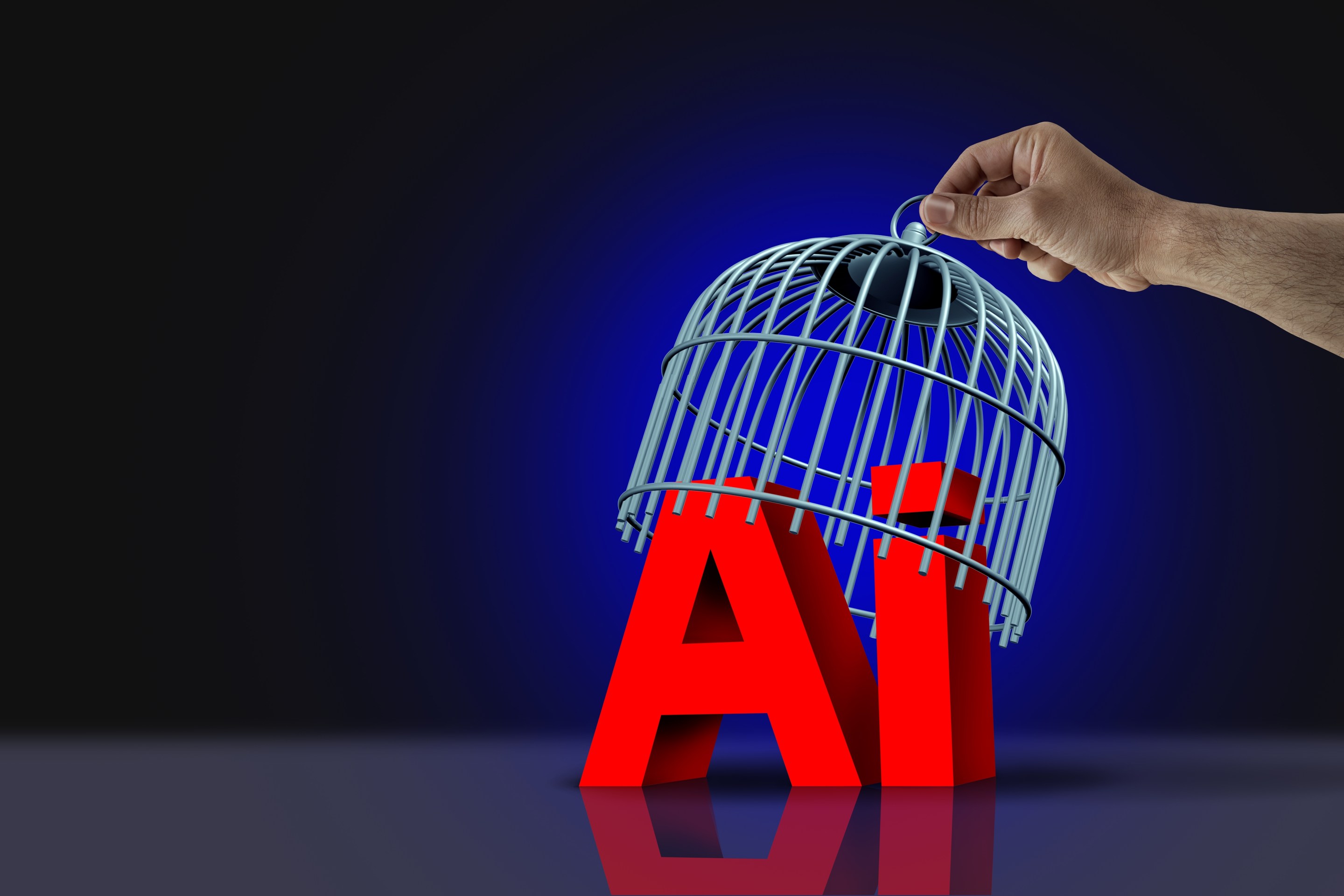
Over the past several years, researchers have begun to invite nonhuman scientists into the laboratory. These scientists have no brains. They reason with circuits etched in silicon. Artificial intelligence has been enlisted not only as a means of improving efficiency but also as a panacea for the replicability crisis and myriad other problems riddling science today. Unfortunately, it’s likely only to make matters worse. As long as AI is modeled on human reasoning, it will only amplify the cognitive biases leading us astray.
Other minds are more promising. And it’s not just the minds of pharaoh ants—or their pheromone trails—with their knack for reasoning inductively without crippling confirmation bias. Consider these common human errors and the animals that avoid them:
In the Monty Hall game, you try to win a car by figuring out which of three doors conceals it. After your first guess, the game show host reveals a goat behind one of the doors you didn’t select. Do you switch? Although switching wins two-thirds of the time, humans stubbornly stay with their first choice even after 200 rounds. Pigeons learn to switch almost every time, unburdened by the intuitions that mislead us.
Another error is to cling to a method we were taught, even when it includes procedures that are plainly useless. A demonstrator shows how to extract a reward from a puzzle box, mixing in useless steps. When the box is transparent and the pointless steps are visibly unnecessary, chimpanzees drop them and go straight for the reward, while human children, and even adults, laboriously copy every step.
Humans are not the only species with cognitive biases, just as we are not the only species with scientific acumen. Chimpanzees and pigeons and pharaoh ants are also likely to be ignoramuses in certain situations. Cognitive biases are cognitive illusions gone rogue: useful mental shortcuts, refined over evolutionary time, that are inappropriately applied in an unanticipated context.
However, all is not lost. The cognitive illusions of pharaoh ants aren’t the same as those of pigeons or humans. Each species evolved in different conditions, with different body shapes and sizes. If the research community is diverse, heuristics can be cross-checked and corrected.
Diversity is already valued in the sciences. When an experiment is successfully replicated in a distant lab using dissimilar techniques, the results are more valued than when it’s repeated in the lab where it originated. Biodiversity is a logical next step.
The trouble is that labs are ill-equipped for pharaoh ants. Even a chimp might have difficulty manipulating a pipette. The most feasible way to bring biodiversity into the sciences, at least in the short term, is through biomimicry: the imitation of other species’ cognitive processes in our own methods and protocols.
The challenge, as is always the case in biomimicry, is to figure out the appropriate level of abstraction. It isn’t necessary to fill fountain pens with pheromones. Instead, an online journal might track when a result was last tested, perhaps as publication metadata: how often an experiment was repeated, and at what intervals. More provocatively, the journal could manipulate search results on past publications to hide those that haven’t been recently validated with new experimental evidence. More sophisticated heuristics might be instantiated in AI, which could thereby escape the problem of reifying human errors. The AI could be designed to blend research heuristics from many species in myriad combinations, and to run many parallel experiments.
Given that artificial intelligence is a human invention, conceived in the clean room and confined to the server farm, there are limits to how fully its thoughts can run wild. Multispecies science must never lose sight of the multitude, which must continuously contribute. Human scientists should learn to be naturalists, as attentive to their environment as John Sudd in Ibadan. 
Enjoying Nautilus? Subscribe to our free newsletter.
Lead Image: M_a_r_ii_a / Shutterstock