The precise origins of domesticated cats have puzzled generations of scientists. Recently, genetic analysis pinpointed North African wildcats as the most likely direct ancestor of the feline friends that now share our homes and steal our hearts. That study also indicated that early domestic cats spread across the globe far later than previously thought.
But this pet picture gets even more complex: Long before the cats we know and love today evolved, some human communities may have formed friendships with wildcats that never morphed into house cats. This includes people in what’s now Europe more than two millennia ago.
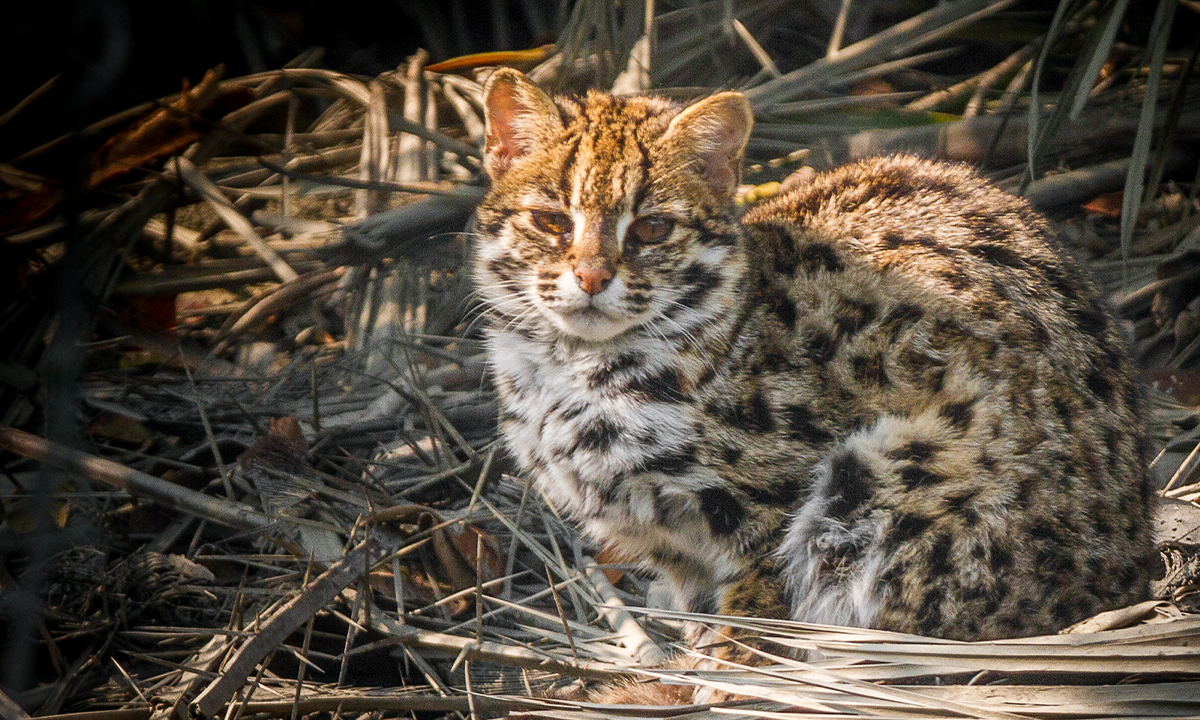
A new study suggests this also seems to be the case for early Chinese farming settlements, where people lived near the native leopard cat for around 3,500 years. An international team of scientists published a genetic analysis of feline remains from Chinese archaeological sites in Cell Genomics.
Read more: “The Mystery of the Cave Cats”
Previously, researchers thought that 5,400-year-old cat remains found at a human settlement in what’s now western China belonged to domestic cats, but later genetic studies found these remains belonged to leopard cats (Prionailurus bengalensis).
These wee cats are native to various parts of Asia. Some scientists have suggested that domestic cats got to China during the Han Dynasty, which spanned 202 B.C. to 220 A.D., according to a bone found in the ancient capital of Chang’an City that’s now located in China’s Shaanxi Province—but it’s tricky to tell bones from domestic and wild felines apart with the naked eye.
Now, to clear up the confusion surrounding Chinese cat history, researchers studied genetic information extracted from 22 ancient cat bones from China dated between 3500 B.C. and 1800 A.D. These remains comprised nearly all of the small cat remains dug up from archaeological sites across China.
The study’s conclusions rewrite the history of cats in the region. For example, the researchers found that bones from around the Han Dynasty period didn’t in fact belong to domestic cats. This means that fully domesticated cats may not have arrived in China until around 1,400 years ago, likely carted around by Silk Road merchants. The authors noted that domestic cats seem to be one of the most recent imports to China, as Eurasian domesticated animals like goats, sheep, and cattle appeared between about 3000 and 2000 B.C.
Instead, they tied feline remains from some earlier human villages to leopard cats. These kitties seem to have bonded with people by gobbling up small rodents, which rid farms of pests. This intimate and mutually beneficial relationship is documented in ancient Chinese art, including paintings and plates.
Unlike the domestic cats now inextricably woven into people’s daily lives, the study pointed out that the relationship between humans and leopard cats eventually tapered off and the creatures retreated to their natural habitats. This coincided with the Han Dynasty’s collapse amid chillier and drier conditions, reduced farming yields, and social unrest.
The findings suggest that domestic cats only came on the scene six centuries later via traders—the winning feline species to claim the hearts of the Chinese people, and communities around the world. 
Enjoying Nautilus? Subscribe to our free newsletter.
Lead image: Soumyajit Nandy / Wikimedia Commons