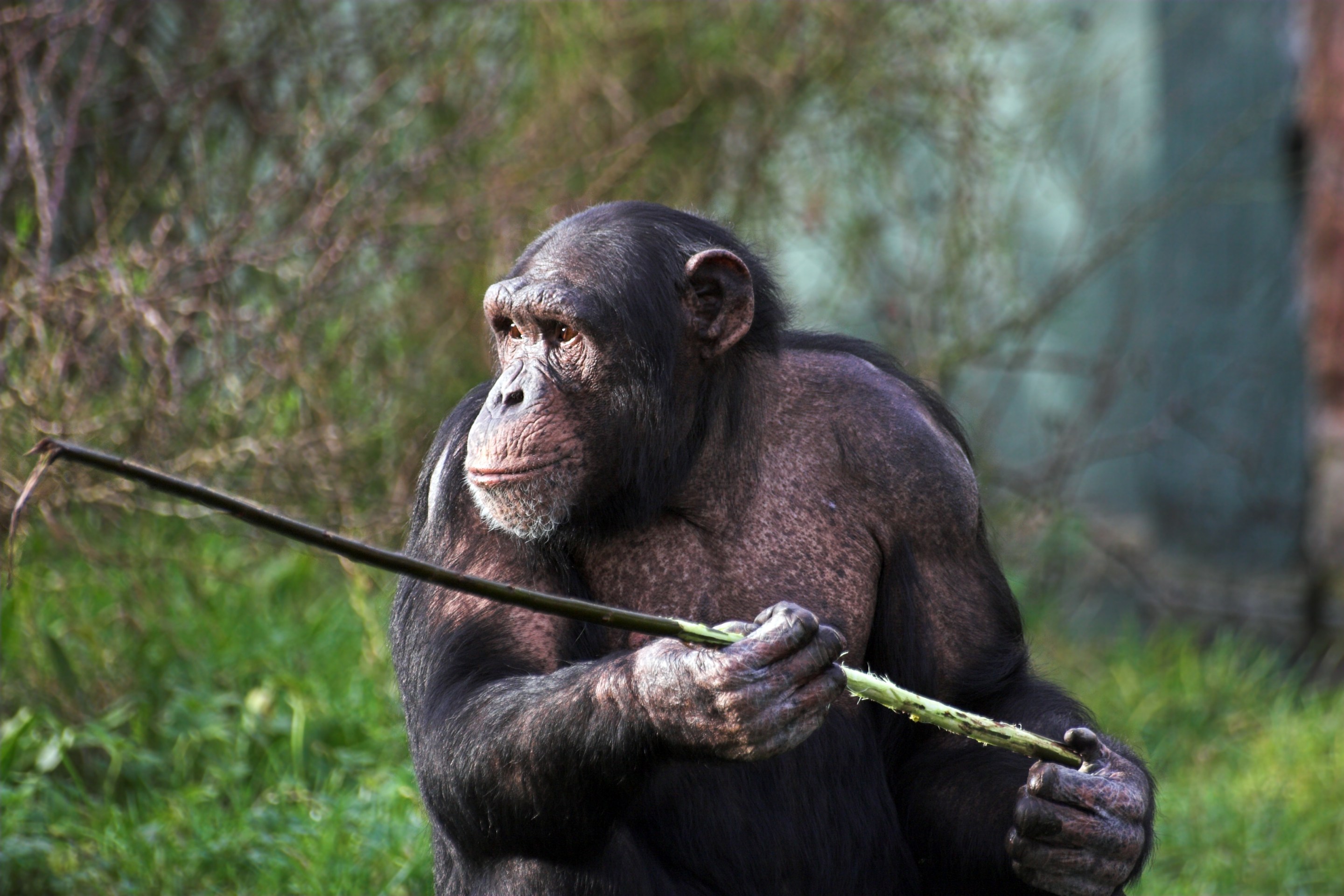
Our two closest relatives, bonobos (Pan paniscus) and chimpanzees (Pan troglodytes), are popular research subjects. Because they share about 90 percent of our DNA and many of our characteristic behaviors, such as playing make-believe, understanding these ape cousins helps hold the mirror to ourselves. The peacefulness of bonobo societies compared to chimps has been touted, for example, as an evolutionary model for how “humans evolved our way of more complex, multilevel societies and cooperation that extends beyond borders,” according to the author of a 2022 study.
New research, however, is yielding a different perspective on bonobo and chimp behavior. A study published today in Science Advances challenges the notion that bonobos are pacifists. The prevailing explanation—the self-domestication hypothesis—purports that the abundant food sources in bonobo habitats and lack of competition from gorillas have reduced resource competition, thereby alleviating the need for male group defense and boosting female camaraderie. But the study, conducted in zoos also with no resource scarcity, shone the light on innate bullying behavior in bonobos versus chimpanzees.
Read more: “The Ape Who Could Play Make-Believe”
Behavioral ecologists from universities in the Netherlands and Belgium tracked behavior in 13 captive groups (88 individuals) of bonobos and 9 captive groups (101 animals) of chimpanzees. Juveniles, defined as under 7 years old, were excluded. Observers recorded all aggressive interactions, whether displaying, pestering, charging, or having a physical fight involving kicking, slapping, biting, hitting, trampling, or wrestling, using a standard primate behavioral log.
The data showed similar rates of antagonistic interactions between the “peaceful” bonobos and the relatively “violent” chimpanzees. A total of 3,243 recorded instances of aggression included 1,368 between bonobos and 1,875 between chimps. Averaging across males and females, the study authors reported no significant overall difference in aggression between the species.
However, the sex of the individuals was strongly correlated with the bullying incidents. In chimps, males were more often the aggressors, especially in altercations that led to combative physical contact. But in bonobos, females rivaled males in aggressive behavior—contact or otherwise.
“Male-to-female aggression was more prevalent in chimpanzees than in bonobos, whereas female-to-male aggression was more pronounced in bonobos, reinforcing the dominant social role of females in bonobo societies,” wrote the study authors.
The findings add nuance to our understanding of ape behavior, while challenging the long-standing view of peaceable bonobos. Aggression isn’t absent in bonobo social systems but rather redistributed to reflect sex roles. 
Enjoying Nautilus? Subscribe to our free newsletter.
Lead image: GUDKOV ANDREY / Shutterstock