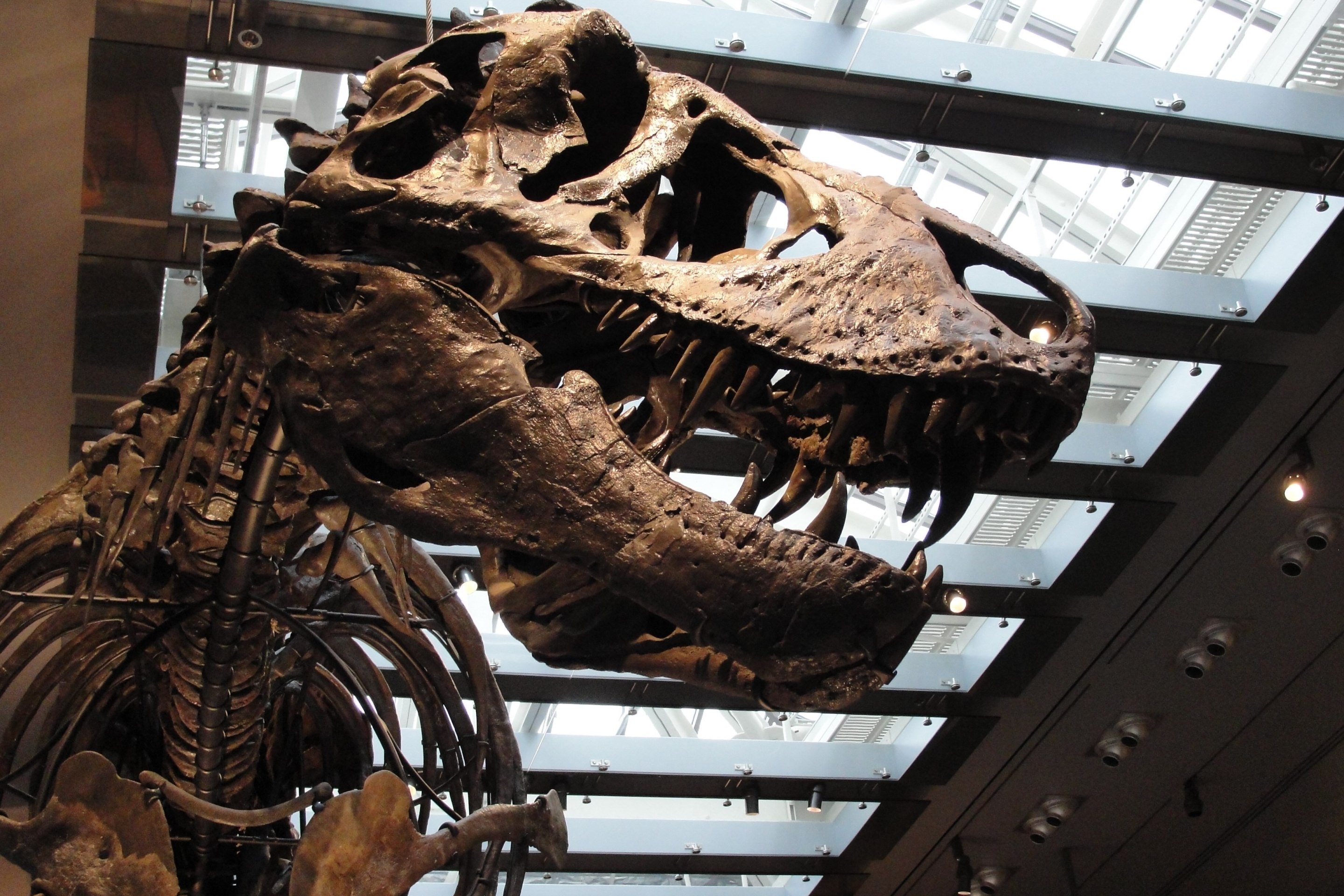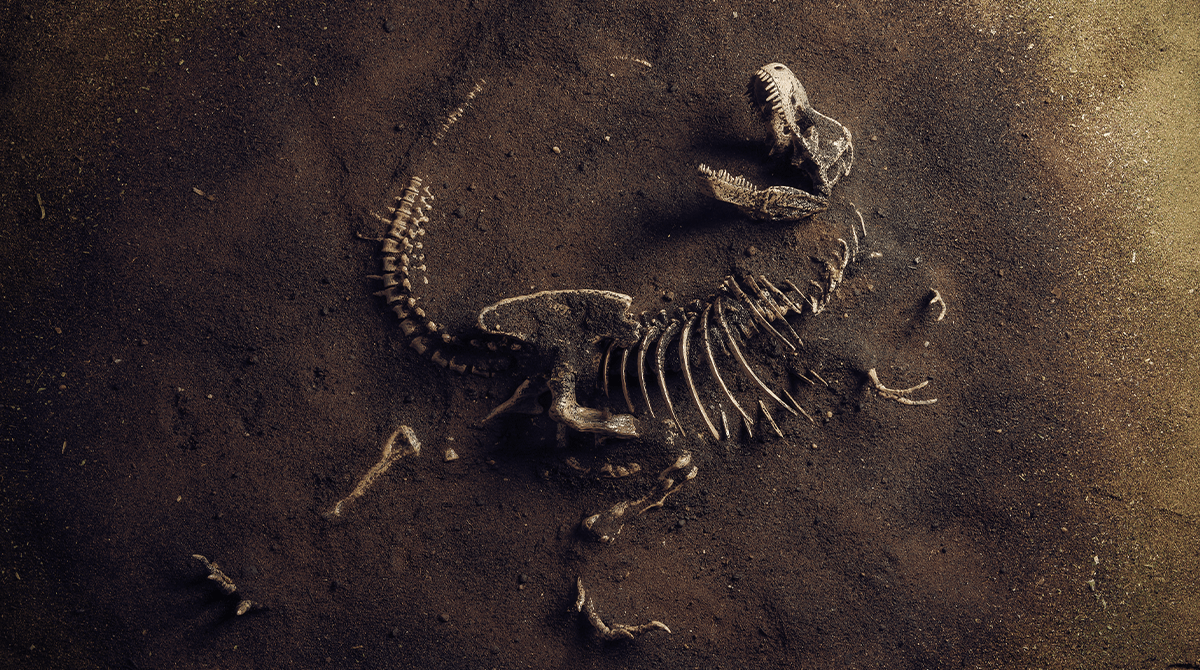
This morning an as-yet unknown buyer paid a cool $50 million for one of the largest and most complete Tyrannosaurus rex skeletons ever found. $50,130,000 to be exact for “Gus” the T. rex.
It’s the latest and largest price paid by a private collector for such a significant vertebrate fossil. But it certainly isn’t the first. In 2024 billionaire Ken Griffin, who founded and serves as the CEO of the Miami-based hedge fund Citadel, ponied up more than $44 million for a Stegosaurus (named Apex), which is currently on loan for two more years to the New York Museum of Natural History. And before either of those purchases, eccentric actor Nicholas Cage paid $276,000 for the skull of a different Tyrannosaur (T. bataar) in 2007. Cage ended up returning that particular fossil to the government of Mongolia, where it was unearthed, when it was determined that the relic was stolen.
The trend toward private collectors snapping up scientifically significant dinosaur fossils is something of an embodiment of widening wealth gaps across the globe. But the habit isn’t just ostentatious. Sending these fossils to mansions instead of museums could limit what science can learn from these important finds and they certainly keep these pieces of Earth’s natural history from public appreciation.
Read more: “Paving Over the Fossil Record”
Kristina Curry Rogers, vice president of the Society of Vertebrate Paleontology, says that the trend is indeed worrying. While professionals can and do work hand-in-hand with private landowners and fossil enthusiasts to ensure the permanent study of such fossil riches, the fate of these finds must be ensured for future generations of researchers and amazed viewers alike. “Paleontologists aren't opposed to fossil discovery. We share the awe these remarkable fossils inspire,” she recently told me via email. “What we're trying to protect is the scientific future of important specimens.”
I asked her more questions about how impressive fossil finds are treated after they emerge from the ground.
Do fossils like Gus belong in museums or in mansions?
Fossils like Gus belong in museums, where they can have their greatest and longest-lasting impact. A spectacular dinosaur skeleton certainly inspires awe, but its importance extends far beyond display. It is a source of scientific evidence that can continue generating discoveries for generations. Museums make that possible by preserving specimens, documenting their history, and providing ongoing access to researchers and the public alike. Museums also inspire the next generation of scientists. Every kid who stands beneath a dinosaur skeleton today may become the researcher who develops tomorrow’s techniques and asks new questions. That future depends on these specimens remaining accessible.
Are any fossils (such as Gus) found on private land available for private sale?
In the United States, fossils discovered on private land generally belong to the landowner and can often be sold legally; in many other countries, fossils belong to the state, not to a single individual (for example, Brazil, Mongolia). The legal question, however, is separate from the scientific one. Paleontologists recognize the rights of landowners while also encouraging outcomes that place scientifically important fossils in permanent public repositories where they remain available for research, education, and future generations of scientists.
Is there an effort to change laws so that significant fossil finds make their way into research facilities or museum collections instead of into the hands of private collectors?
Different countries have adopted different legal approaches, and within the United States fossil ownership depends largely on where a specimen is found. Rather than focusing solely on legislation, many paleontologists emphasize collaboration among landowners, commercial excavators, museums, and researchers. There are many successful examples in which scientifically important fossils have been acquired for museums through donations, partnerships, or philanthropic support. Those collaborative solutions respect private property rights while ensuring that important fossils remain available for research and public education.
How would you incentivize landowners, amateur fossil hunters, and commercial excavators to make fossil finds available to public collections?
It is important to recognize that many landowners and amateur fossil hunters already work closely with museums to keep fossils they find in the public trust. There is no doubt that many important dinosaur discoveries have entered museum collections precisely because landowners appreciated their scientific importance and chose to work with museums and scientists to keep their finds accessible.
Continuing to build those partnerships is essential. Museums should acknowledge the contributions of discoverers and ensure they receive appropriate recognition for this work of discovery and donation. Philanthropy has played a critical role in keeping extraordinary fossils in museum collections by enabling their permanent acquisition. When a scientifically important fossil has already entered the commercial market, the best possible outcome is for the purchaser to permanently donate it to an accredited museum, where it once again becomes available for study and education.
Read more: “How Dinosaur Skeletons Became So Expensive”
What are some of the most scientifically significant fossil finds that have gone into private collections rather than being made available for research or public viewing?
The number of scientifically significant dinosaur fossils that entered private ownership is too high to count. The details and outcomes vary from case to case, and often the identities of the buyers are confidential. Rather than focusing on individual examples, I think the broader issue is more important: Every time an exceptional fossil leaves the scientific community's reach, we lose confidence that future researchers will be able to study it.
What are some of the problems that can arise when fossils are purchased by private collectors?
The central problem is that long-term scientific and educational access is no longer assured. Occasionally, a fossil purchased at auction is immediately donated to an accredited museum. When that happens, the specimen once again becomes permanently available for research and public education, which is unquestionably the best scientific outcome. Some collectors place specimens on long-term loans to museums—this temporarily facilitates education, but a loan is not a permanent solution. When access depends on individual circumstances that can change over time through sale, inheritance, or other decisions, science is always at risk.
Is there important scientific information that can be lost when significant fossil finds are purchased by private collectors?
Absolutely. The fossil itself is only part of the scientific record. Information about its precise location, the surrounding rocks, associated plants and animals, and the conditions under which it was buried all contribute to our understanding of ancient ecosystems. Equally important, a fossil continues to yield new information long after initial discovery and excavation. Advances in imaging, geochemistry, bone histology, and other techniques routinely allow scientists to extract new insights from fossils that were unimaginable when many classic specimens were first collected. If future researchers cannot continue studying a specimen because access depends on private ownership, opportunities for new discoveries may be delayed indefinitely or lost altogether. 
Enjoying Nautilus? Subscribe to our free newsletter.
Lead image: trafa / Adobe Stock