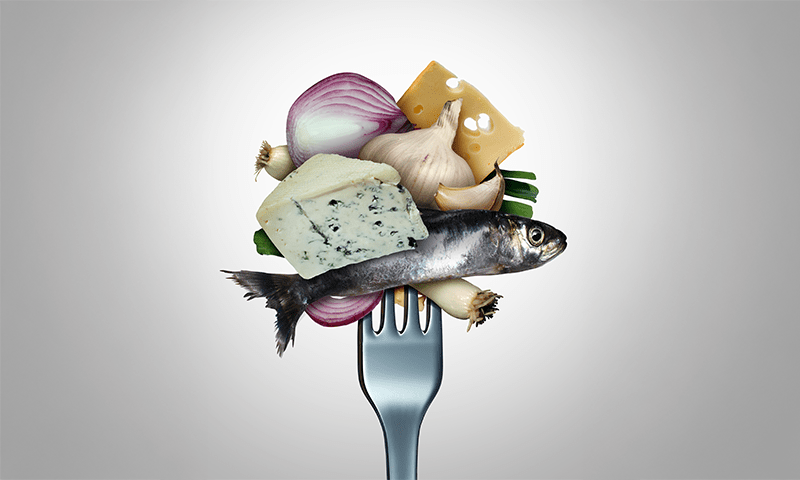
Most of us know a stink when we smell one. Yesterday’s fish or last week’s socks can cause us to retch. But other familiar scents can conjure the opposite effect: A distinctive eau de toilette can start us pining for a certain someone. A whiff of fresh-baked cookies can make the stomach growl and remind us of grandma’s house. Bad or good, smells can leave indelible marks on our memories that linger far longer than the odors. But science has understood surprisingly little about how brains attach meaning and emotion to particular aromas.
Now, a team of scientists led by researchers at the University of Florida’s Chemical Senses Institute has revealed some of the key neural connections made when the brain perceives a smell, decides if it’s good or bad, and then attaches an emotional response to the odor. The findings recently appeared online in Molecular Psychiatry.
Working in mice, the researchers zeroed in on the amygdala, a brain region long known to regulate emotional responses to sensory stimuli. By exposing mice to odors, observing their behavior, and monitoring brain activity, the team identified novel neuron types that categorize smells as either pleasant or unpleasant. The newly described brain cells extend from the amygdala into the ventral striatum—the region of the brain most closely associated with reward—where they excite other neurons, influencing learned and off-the-cuff emotional states.
According to the unbelievably aptly named Sarah Sniffen, first author on the paper and University of Florida Ph.D. student, the significance of the research extends beyond the quotidian experience of encountering and reacting to smells. “I hope this work provides insight into how altered sensory-emotional processing might contribute to neuropsychiatric conditions like depression, anxiety, or PTSD,” she said in a statement. “We’re constantly breathing in and out and that means that we’re constantly receiving olfactory input … For people who have a heightened response to sensory stimuli, like those with PTSD or anxiety or autism, it’s a really important factor for their day-to-day life.” 
Lead image: Lightspring / Shutterstock