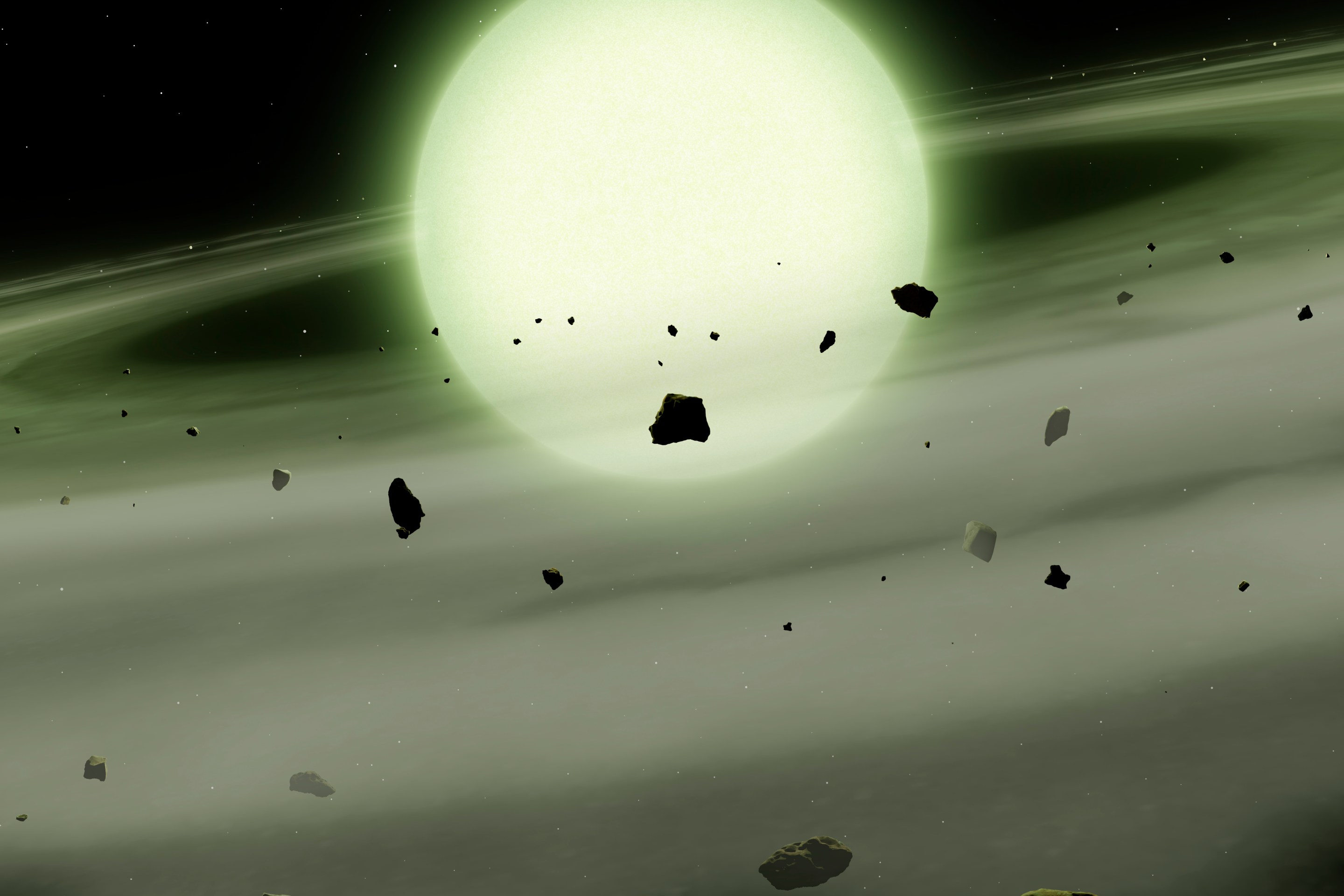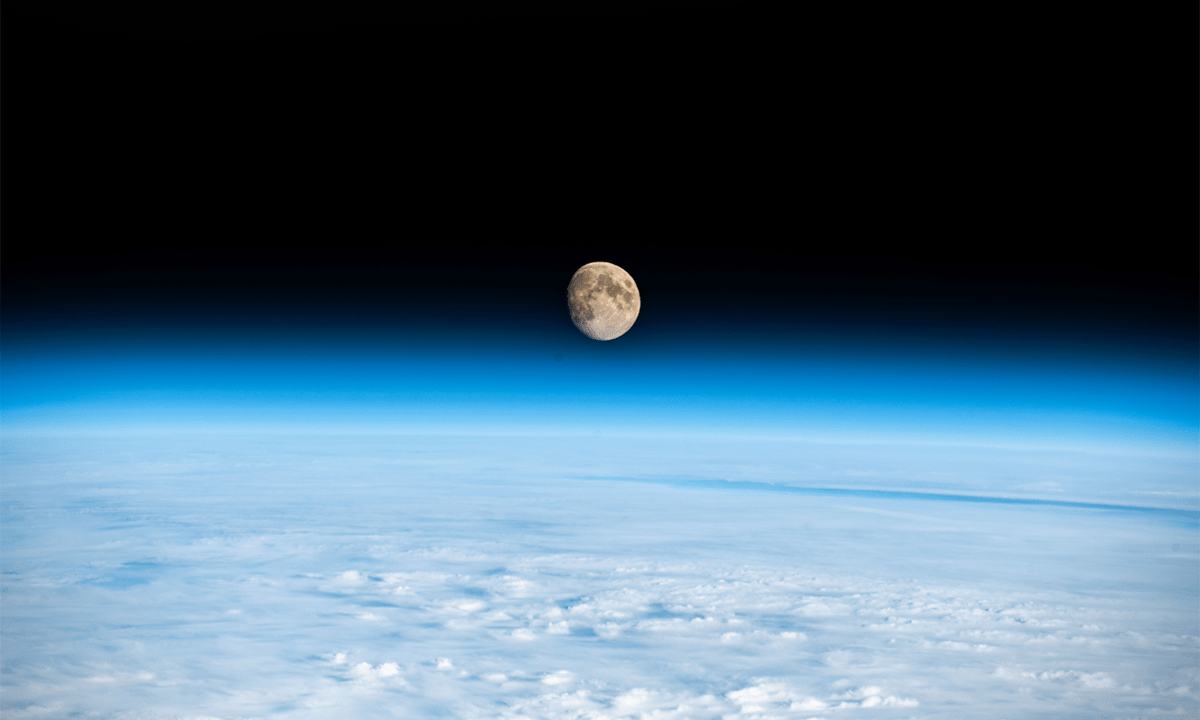
For Earth, there was a day, 4.5 million years ago, that was pretty bad. A giant, mysterious object flying through space smashed into the young planet, forever altering the course of its history, size, composition, and orbit. It wasn’t all bad for proto-Earth on that fateful day though. The massive, cosmic collision also birthed our constant companion—the moon.
For years, researchers have puzzled over the world-size change agent that smashed into Earth about 100 million years after the solar system formed. The object—known as Theia—was completely obliterated by the impact, but traces of it can still be found on Earth and the moon in the form of distinct metal isotopes. Now, by careful study of these compounds, a team of researchers has published in Science the most detailed list of Theia’s ingredients, which indicate where in our solar system it formed. And they suggest that Theia originated much closer to Earth than previously suspected.
Read more: “The Violent Birth of the Moon”
“The most convincing scenario is that most of the building blocks of Earth and Theia originated in the inner Solar System,” said Timo Hopp, a geoscientist at the Max Planck Institute for Solar System Research and lead author of the paper, in a statement. “Earth and Theia are likely to have been neighbors.”
Hopp and his colleagues made this determination based on precise measurements of the ratios of isotopes of iron, chromium, zirconium, and other elements in moon rocks, on Earth, and in meteorites. Where bodies form, in terms of their distance from the sun, alters the makeup of their constituent elements and compounds. Using newly generated data and information from previous isotope analyses, the researchers estimated the location of Theia’s formation. “Our calculations suggest that Theia might have formed closer to the sun than Earth did,” they wrote in the paper.
So it might have been Earth’s own cosmic neighbor that changed the face of our planet, and perhaps the entire history of every living thing on this blue pearl, all those billions of years ago. 
Enjoying Nautilus? Subscribe to our free newsletter.
Lead image: NASA