What makes a species a species?
It’s a question that’s tormented biologists for centuries. Early naturalists relied on differences in appearance to make the call, but advances in genetics have allowed biologists to identify species that may look similar but actually show marked differences in their genomes—so-called “cryptic species.”
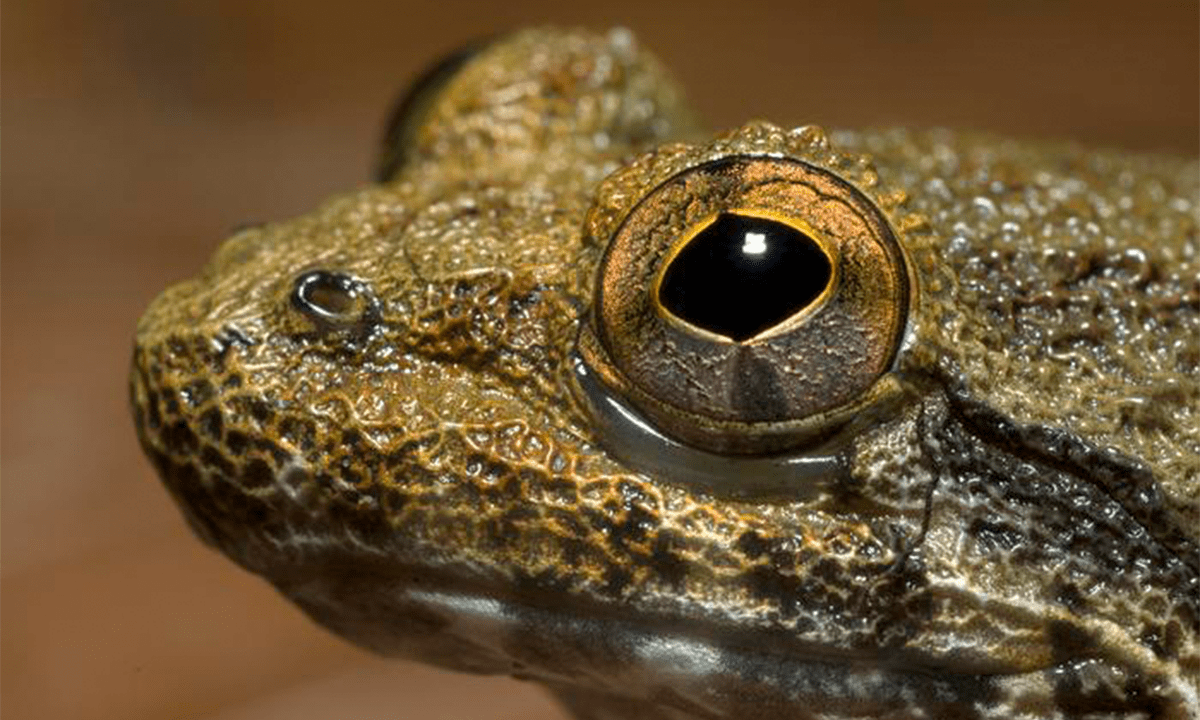
Still, distinctions between populations aren’t always clear-cut, and drawing the boundary can be a fraught endeavor. Take the fanged frogs of Borneo for example. One species (Limnonectes kuhlii), identified almost 200 years ago, has more recently been sliced and diced by a series of genetic analyses into as many as 18 distinct species.
But do these genetic distinctions really reflect biological reality?
To investigate, a team led by Chan Kin Onn of Michigan State University collected DNA from fanged frogs throughout the Bornean rainforests, analyzing more than 13,000 locations in their genomes. Their findings, published in Systematic Biology, determined that the frogs do indeed belong to multiple species, but they’re clustered in six or seven distinct groups—that is, not 18.
“It’s not just one species. But it’s not 18 species, either,” Chan said in a statement.
Read more: “Why Taxonomists Write the Meanest Obituaries”
The discrepancy exists because earlier genetic analyses focused on finding divergence between the populations using models that assumed no gene flow was taking place, meaning there was no interbreeding between the populations. But as Chan put it, “We found a ton of gene flow going on.”
According to Chan, a better approach involves focusing not just on the divergence between cryptic species, but their cohesion as well. These two forces represent a push and pull that can keep populations in a kind of a gray area. With both forces acting on a population, speciation can’t happen quickly. “It’s not like all of a sudden, boom. It’s more of a continuum,” Chan explained.
It’s a unique perspective in the centuries-old debate between “lumpers” and “splitters.” While lumpers tend to focus on commonalities of organisms and have a high bar for bestowing a new species designation, splitters like to focus on their diversity, parsing organisms into ever smaller splinter groups.
It’s an academic debate that has real-world implications. Newly described cryptic species have smaller geographic ranges, which means they’re more likely to be designated as at-risk species.
“People have generally found that the smaller a species’ range size is, the more likely that species is to go extinct," University of Arizona biologist John J. Wiens said in an article on the university website. Wiens, along with his colleague Yinpeng Zhang, recently published a study on cryptic species estimating there are twice as many vertebrate species as previously thought.
“If we don’t know a species exists, then we can’t protect it,” Wiens said.
It’s a sentiment that’s echoed by Chan, with an important caveat: “There are so many species in the world that we still haven’t discovered, and that could go extinct before we can give them a name,” he said. “But there’s a flip side to that coin, too.”
Splitting species unnecessarily can put a strain on conservation efforts, Chan argues. “We cannot possibly conserve everything, so we have to triage and decide how to allocate limited resources toward what we think are the highest priorities,” Chan said. “We could be putting names on things that shouldn’t be prioritized.”
Life is messy, and our fraught attempts to define it are too, so the debate between lumpers and splitters rages on. 
Enjoying Nautilus? Subscribe to our free newsletter.
Lead image by Chan Kin Onn, Michigan State University