Birds do it, bees do it, even African fish do it. Nest building is behavior displayed by all kinds of species, but how do they know how to construct these refuges? A new study of African cichlids published in Current Biology investigated their nest-building skills—and revealed a fascinating interplay between nature and nurture.
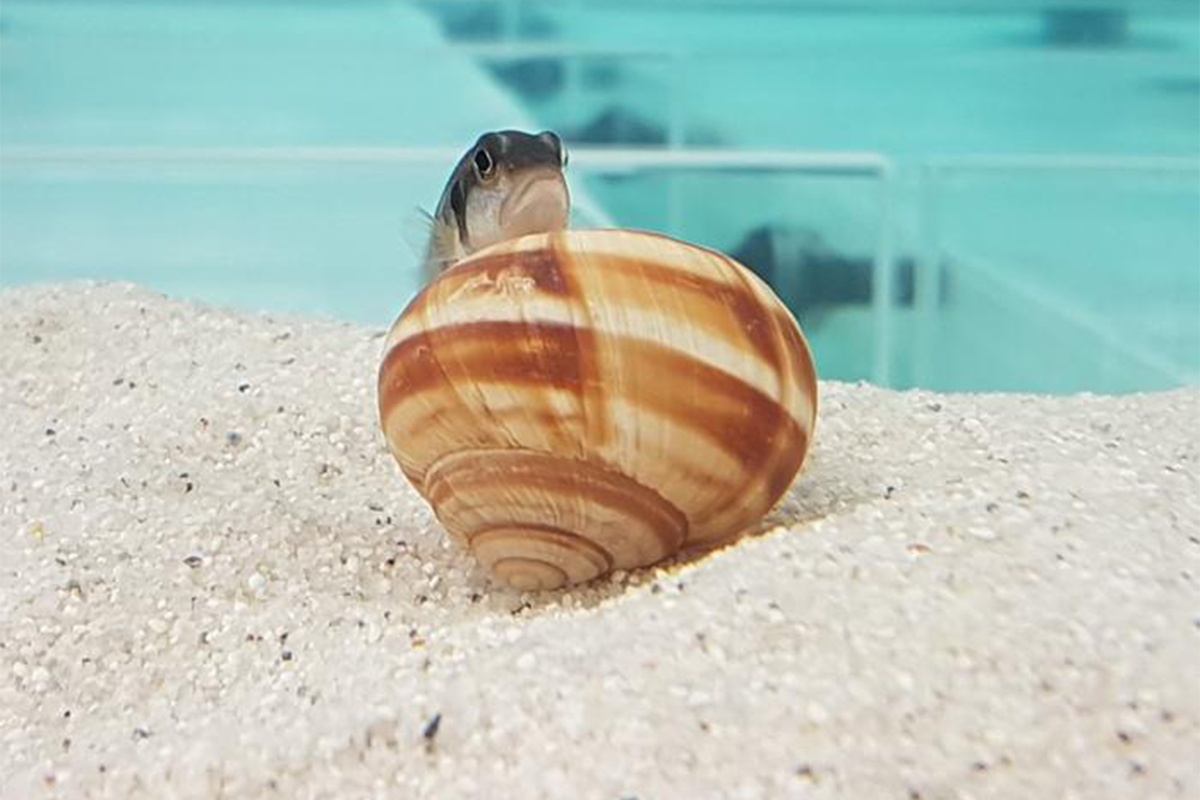
Originally found in a massive freshwater lake in East Africa, the African cichlid (Neolamprologus ocellatus) is also a popular aquarium pet. Care directions usually instruct owners to leave an empty snail shell in their tanks so the fish can bury them in sand to make their shelters (a daunting task given they don’t have any hands).
But is this nest building an instinct, or is it something they learn? To find out, researchers at the Max Planck Institute for Biological Intelligence raised cichlids from birth to adulthood in tanks with no shells, and then isolated them in enclosures with 3-D-printed shells to record what happened.
Read more: “When Fish Follow You”
Even though they’d lived a shell-less existence, the cichlids did manage to turn the artificial shells into nests—eventually. For some of them, it took days to get the four-step process going, much longer than cichlids in the wild.
Still, the behaviors were the same. The fish first sidled up to the shells, examining them. They then used their mouths, fins, and tails to excavate a little divot in the sand, positioning the shells tip-down. Moving clockwise, they manipulated the shells into the substrate, covering them with more sand. With their homes complete, they took care of them, keeping them free of debris.
The researchers repeated this process in three different sessions with 10 days separating them and discovered the fish learned to build their little aquatic Hobbit holes quicker and quicker. Essentially, nest-building was indeed innate, but it was also something they could learn to get better at. After keeping the fish away from shells for a year and reintroducing them, they proved to be just as quick as they were on their third session, indicating that they’d retained what they learned.
To further challenge the cichlids, the researchers introduced 3-D-printed shells with a left-handed spiral—a rarity in nature. Surprisingly, after a bit more time reorienting themselves, the fish proved to be just as adept at rotating the backwards shells counterclockwise.
“For a long time, it was assumed that nest building consisted of purely innate behavioral patterns,” study author Swantje Grätsch said in a statement. “But studies in birds and our own research show that cognitive abilities such as learning, remembering, and adapting also play important roles.” 
Enjoying Nautilus? Subscribe to our free newsletter.
Lead image: © MPI for Biological Intelligence / Swantje Grätsch