In interpreting the intimate relationships between pollinators and orchids, Charles Darwin proposed that specialized flower shapes and colors drive diversification. After all, it seems logical that as flowers adapt to better match to specific pollinator color preferences, body forms, or mouthparts, new species emerge.
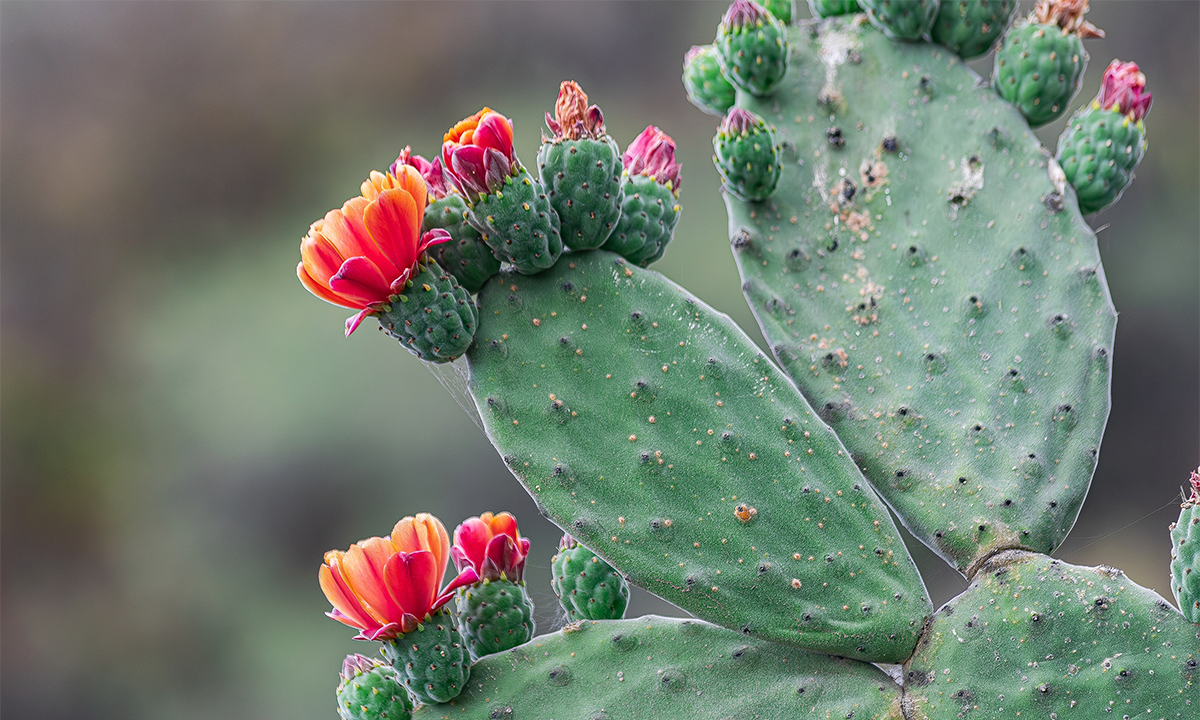
But a recent study by University of Reading biologists published in Biology Letters evaluated Darwin’s hypothesis and found evidence to the contrary in cacti (family Cactaceae). The researchers compared flower length for 774 cactus species representing nearly all cactus subfamilies, whose flowers spanned an 185-fold size range from .08 inches to 1.5 inches. Next, they mapped flower lengths on a phylogenetic tree of cacti, from which they estimated speciation rates over geologic time since cacti first showed up on Earth.
“We expected cacti with longer, more specialized flowers to be the ones creating the most new species,” said lead author Jamie Thompson in a press release.
Read more: “Why Is Everything an Orchid?”
Instead, the researchers found that flower size made minimal difference in how fast new species emerged, and that it was cacti whose flowers (of whatever size) were changing the fastest that had more likelihood of branching off new species.
The overall pace of cactus evolution revealed in the study was surprising as well. Despite how slowly individual cacti grow, “the cactus family is one of the fastest-evolving plant groups on Earth. Knowing how fast cacti evolve reveals that deserts, often seen as harsh and unchanging, are actually hotbeds of rapid natural change,” said Thompson.
Thus, the cactus family, which has about 1,850 species, spread rapidly across the Americas during the past 20 to 35 million years, which might seem like forever, but is actually a short interval in evolutionary time, and it appears to be their floral diversity, rather than a specific pollinator adaptation, that led the way.
So although desert landscapes may seem, as Thompson put it, harsh and unchanging, you can be sure the cacti within them are busy evolving. 
Enjoying Nautilus? Subscribe to our free newsletter.
Lead image: Martin Leber / Shutterstock