At the root of our family tree is a 600-million-year-old cyclops.
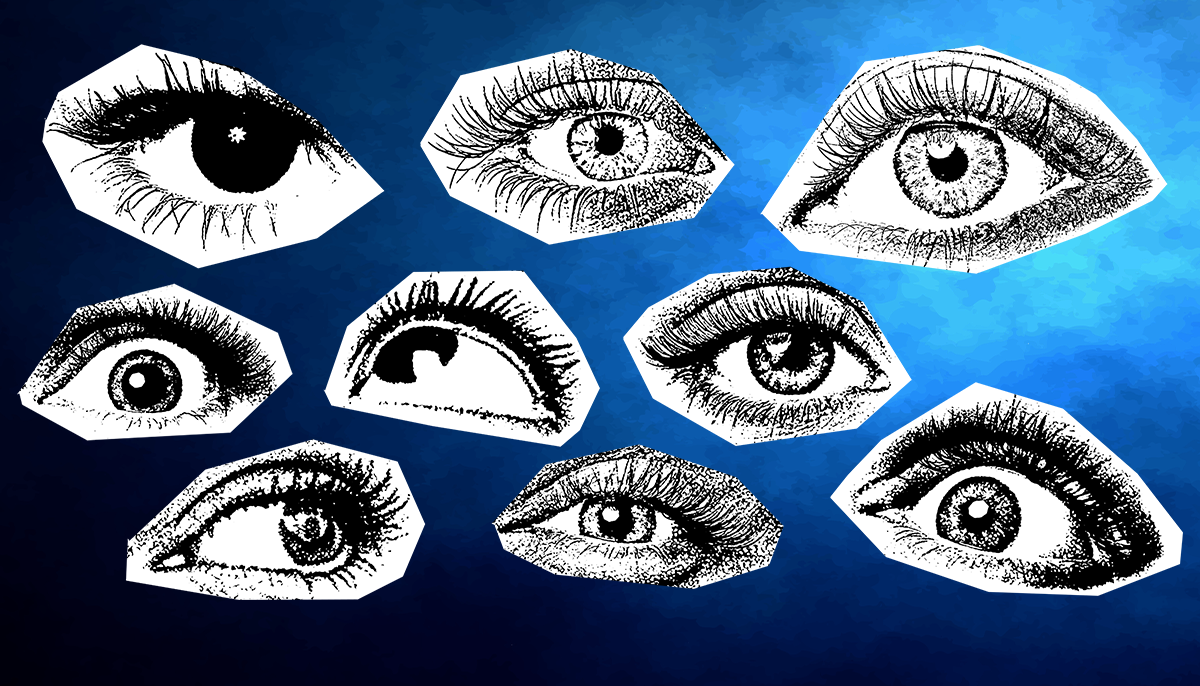
Biologists from Lund University in Sweden recently conducted a deep dive on the many different light-sensitive cells in animals, mapping the types of photoreceptors and their locations on the body to an evolutionary tree. They traced modern vertebrate eyes all the way back to a simple worm-like ancestor with a single eye in the middle of its head. Even more intriguing, this ancestor appears to have developed two bilateral eyes before reverting to its primordial one-eyed state.
“We don’t know whether the paired eyes in our branch of the evolutionary tree were just light‑sensitive cells or simple image‑forming eyes,” study author Dan‑E Nilsson explained in a statement. “We only know that the organism later lost them.”
The change appears to coincide with our ancestor adopting a more sedentary life, filter-feeding on the ocean floor, which would reduce the need for bilateral vision. This organism kept a group of centralized light-sensing cells, and when later generations returned to a free-swimming lifestyle, these cells gave rise to two eyes once again. Now, however, they also developed a photoreceptor protein capable of transducing light into electrical signals more quickly, which made them more responsive. It’s one of the innovations that allows modern vertebrates to have keen eyesight.
Read more: “These Eyes Shine Light on the Path of Evolution”
While this primordial ancestor was a deuterostome like all vertebrates, protostomes—an archaic group that includes invertebrates like arthropods and mollusks—went on their own eye evolution journey. “Now we finally understand why the eyes of vertebrates differ so radically from the eyes of all other animal groups, such as insects and squid,” Nilsson said. “The film of our eyes—the retina—developed from the brain, whereas the eyes of insects and squid originate in the skin on the sides of the head.”
But there’s one final twist in this story of our evolution. While our one-eyed ancestor lost its two eyes when it moved to the ocean floor, subsequent generations didn’t lose the centralized light-sensing cells when they developed two eyes again. In fact, this organ is still in your brain today. Through millions of years of evolution it became the pineal gland. Buried deep within the brain, this light-sensing organ now secretes melatonin and governs your body’s biological clock.
“It’s mind‑boggling that our pineal gland’s ability to regulate our sleep according to light stems from the cyclopean median eye of a distant ancestor 600 million years ago,” Nilsson said.
We’ve come a long way from the ocean floor. 
Enjoying Nautilus? Subscribe to our free newsletter.
Lead image: The Thunks and Zìyóu / Adobe Stock