
Myriad studies focus on human sleep, from mapping circadian rhythms to determining optimal sleep length. But we’re not the only creatures that need some shut-eye. The same is also true even of invertebrates, though far less is known about their sleep patterns. Which is why a new study published yesterday in the journal Proceedings of the National Academy of Sciences decided to take a closer look at spider sleep in particular.
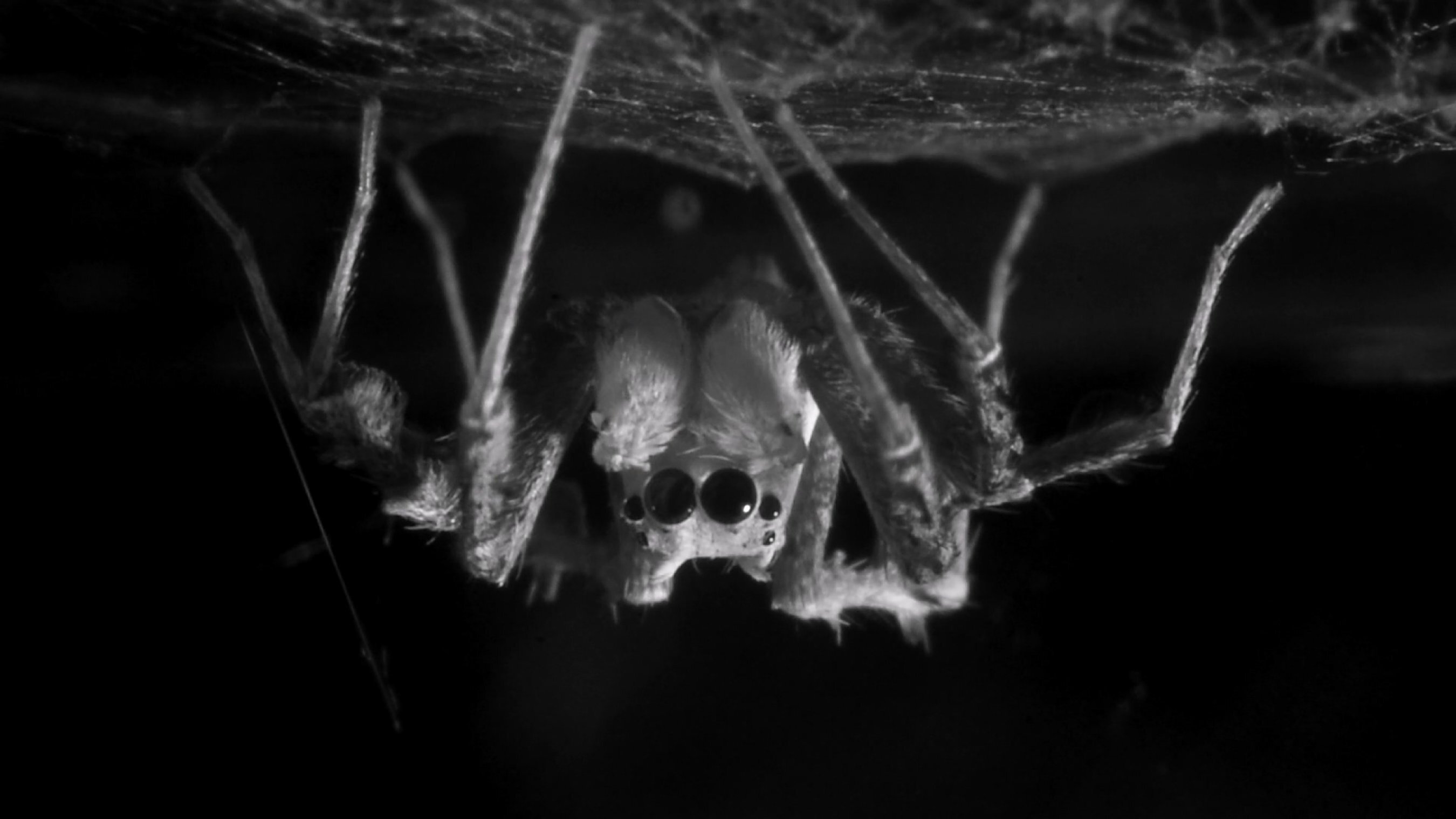
It’s obviously tough to conduct an electroencephalogram on a spider the length of a rice grain. And so, led by biologists in Germany, with colleagues from Australia and Italy, the study took a new approach to examining the sleep behavior of Australian jumping spiders (Portia fimbriata). Such arachnids are typically active in the daytime, then asleep at night in characteristic legs-pulled-in postures that camouflage them against foliage or rocks.
Read more: “Why Do Spiders Decorate Their Webs? A New Piece of the Puzzle”
The researchers kept them in the lab, where 10 individual spiders were continuously recorded over three days. At night, their sleeping positions and REM-like periods—exhibited by twitching limbs and flicking retinas—were documented using infrared cameras. Spiders exposed to different light conditions were individually monitored. The depth of their sleep was also determined by playing a startling sound and measuring their reaction times.
It turns out that jumping spider sleep patterns look uncannily similar to ours, with “a free-running circadian rhythm, robust sleep architecture, regularly occurring REM- like behaviors, elevated arousal thresholds during those REM-like states, as well as rebound effects following sleep disruption,” according to the paper.
The study authors hypothesize that their poorer vision at night, coupled with the risk of exposure to night predators, may have shaped their human-like circadian rhythms. Similarly, spider brains also might need REM sleep to coalesce a lot of sensory inputs they’ve received during the day, in this case from the stimulus-rich forests they inhabit.
Still, a sleepover with an Australian jumping spider might not be that restful for you—after all, they’re known to bite. 
Enjoying Nautilus? Subscribe to our free newsletter.
Lead Image: Daniela C. Rößler