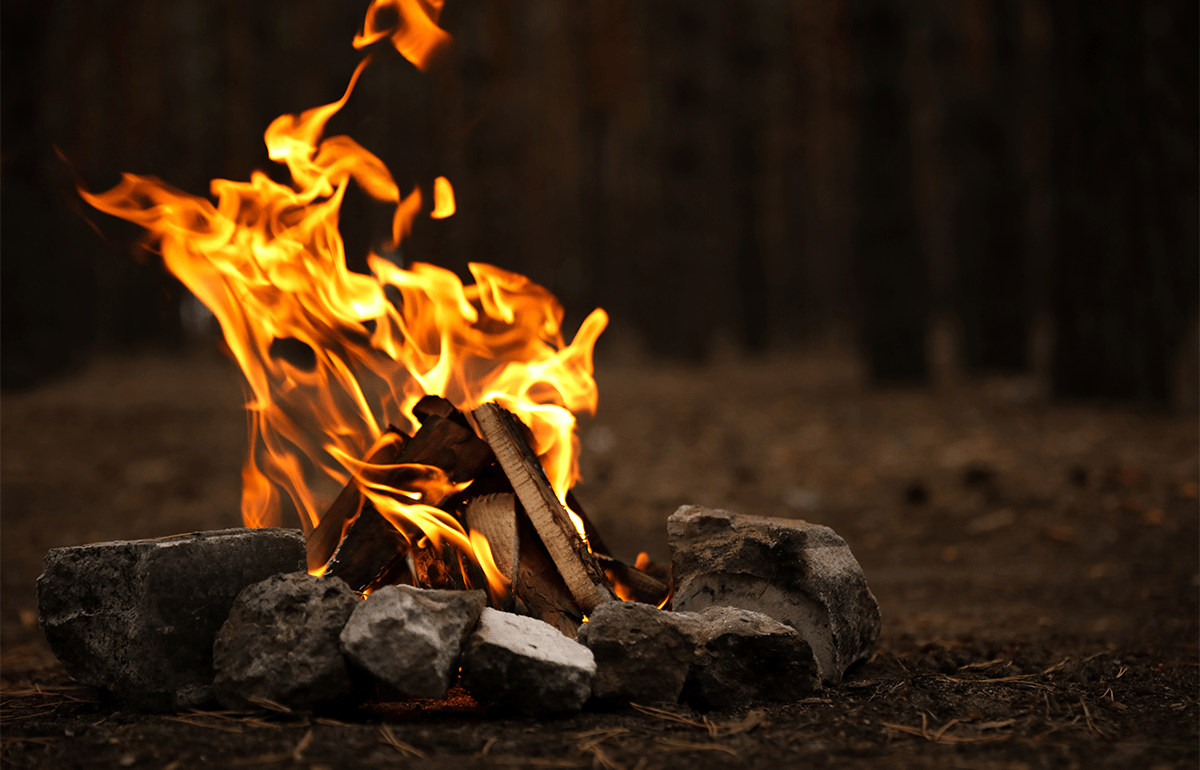
For our early human ancestors, fire was a godsend. This transformative technology could provide warmth, ward off predators, offer illumination after dark, cook proteins, and more. Still, there’s some debate over when exactly early hominins started using fire. Now, new research published in PLOS One is pushing back the clock 700,000 years.
An international team of scientists studying the Wonderwerk Cave in South Africa found evidence that early hominins, likely Homo erectus, used fire anywhere from 1.1 to 1.8 million years ago. They arrived at that conclusion by using a novel technique to investigate tiny bones found buried in the cave.
Heating bones changes their chemical structure in ways that can be detected through luminescence. When the researchers put the bones under high-energy blue light, they glowed red—a telltale sign they’d been exposed to fire. Dating sediments in the layer of dirt where the bones were found provided the timeline.
Read more: “We Didn’t Start the Fire”
The bones weren’t brought to the cave by hominins, however. Researchers say the micromammal bones likely came from owl pellets that accumulated over the years and may have made for convenient fuel for the fires.
How do they know hominins are responsible? The researchers say the location of the burned bones offers clues. Because they were found roughly 100 feet from the cave entrance, the team ruled out a wildfire incursion. Additionally, the heated bones weren’t scattered haphazardly, but concentrated in a cluster, a good sign of hominin activity.
Importantly, the team says the evidence doesn’t point to these early hominins creating fire, nor does it suggest they were using it for cooking. Instead, they were likely sourcing the fire from local wildfires, transporting it to the cave, and maintaining the flames once it was inside. The earliest evidence of hominins possessing the tools to light fires comes from a Neanderthal site around 400,000 years ago. But this new evidence indicates our primitive ancestors grasped the value of a good campfire long before that. 
Enjoying Nautilus? Subscribe to our free newsletter.
Lead image: New Africa / Adobe Stock