For centuries, science has been a top-heavy enterprise. A vanishingly small number of field-leading experts has the propensity to shape knowledge. They who win the Nobels. They who secure the multi-year, millions-of-dollars grants. They who rewrite the textbooks. Other workers in science are merely passing through, riding the coattails of these giants.
But how does a researcher’s capacity for invention, innovation, and insight change over the course of a career in science?
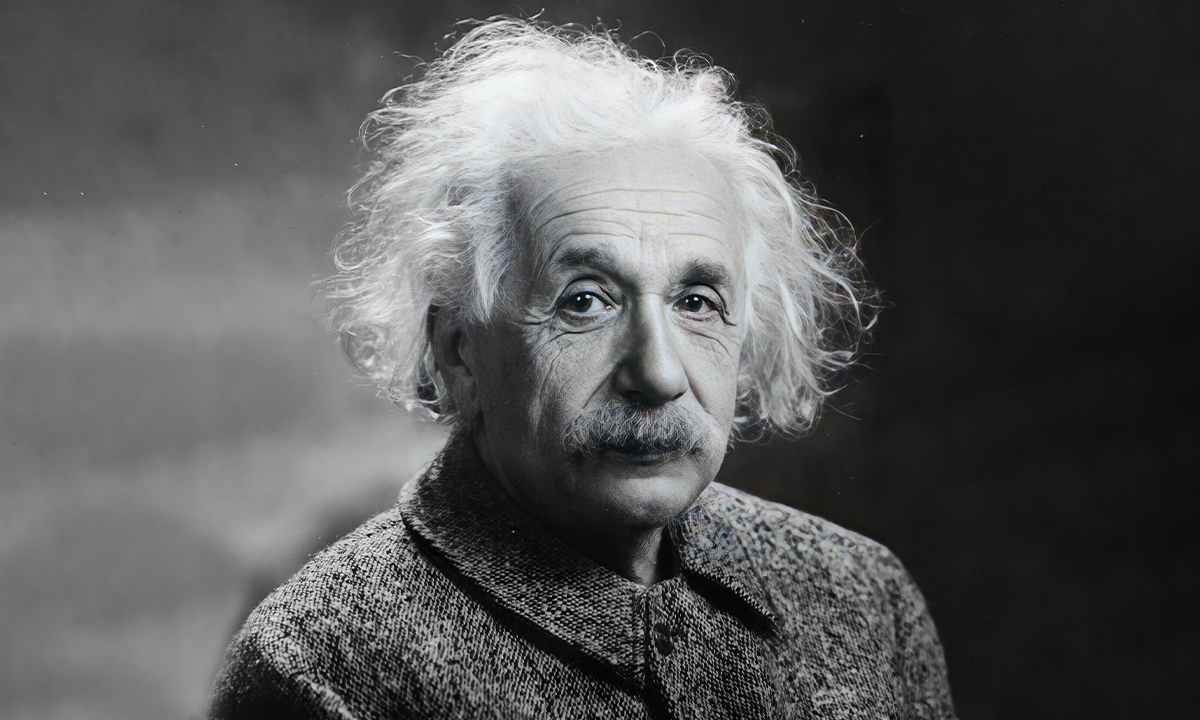
Even the giants seem to have something of a use-by date. In one year of publishing—1905—Albert Einstein turned physics on its head and revolutionized humanity’s understanding of our universe with his concepts of special relativity, mass energy equivalence (E=mc2, anyone?), the photoelectric effect, and Brownian motion. He was 26 years old. The shockwaves of the ideas contained in four papers continue to ripple through the fabric of spacetime and shape the intellectual evolution of our species. But toward the tail end of Einstein’s life, he argued strenuously against the concepts undergirding the emerging field of quantum mechanics, the ideas that are shaking up physics yet again and may lay bare even more of our universe’s mysteries.
Read more: “A Letter to Einstein from the Future”
Historians of science have long debated both the typical shape of a scientist’s output curve and the reasons for its particular slopes, traced throughout the arc of a career in research. Creativity declines with age. Or not. Young scientists are more likely to crack open a field and explore uncharted territory. Older researchers acquire the necessary experience and knowledge necessary to shift paradigms and point inquiry in new directions. And so on.
Now, researchers from the universities of Pittsburgh and Chicago have proposed a new model. The key lies in splitting creativity into two separate expressions—novelty through recombining existing insights into new connective ideas and disruptive innovation, the Einsteinian flashes of brilliance that rewrite a field’s trajectory. By analyzing the output of more than 12 million scientists over the course of six decades, from 1960 to 2020, they find that researchers across the world tend to increase their capacity for connective novelty as they age and decrease in their ability to disrupt. They published their findings in Science last week.
The authors invoke Douglas Adam’s take on a life spent wandering through the intellectual wilds. “This life-cycle pattern accords with science-fiction author Douglas Adams’ observation about technological change,” they wrote. “What exists at one’s intellectual ‘birth’ feels normal, what appears during early career feels revolutionary, and what emerges after maturity feels suspect.”
They contend that, as scientists age and their experience deepens, they become attached to the ideas upon which they built their career. This makes replacing this foundation harder as time wears on. But it also makes it more likely that they notice some connection between two or more established, familiar ideas. “Even the greatest minds, such as Einstein, transitioned from disruptor to gatekeeper when quantum mechanics threatened his nostalgic view of the universe,” they wrote.
It was the Nobel laureate and quantum physicist Max Planck who wrote that “science advances one funeral at a time” (which is actually a somewhat artful translation of his original statement, in German) about revered gatekeepers and their nostalgia for insights past that keep leaps in scientific understanding from happening. Turns out, he may have been right. 
Lead image: Oren Jack Turner / Wikimedia