One evening in the early 1800s in a London bookbinder’s shop, strewn with leather covers, sheets of parchment, and wheat starch paste, a teenage apprentice named Michael Faraday sat down to read a manuscript that had caught his eye. As a boy of the lower class who learned to read, write, and do basic arithmetic in Sunday school, his professional career as a bookbinder was laid out before him as clearly as the book in front of him. That is, until he opened its pages and began to read. At that moment, he later said, his future took a very different turn: the book “saved me.”
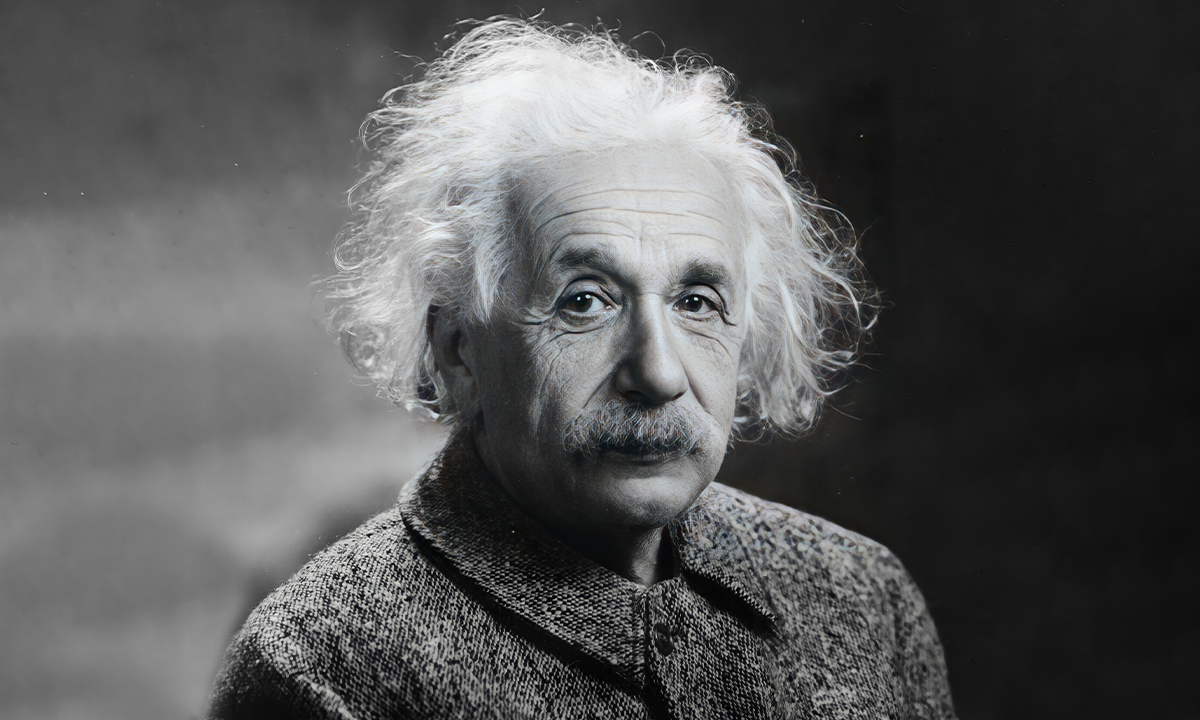
The book, originally published in 1806 and titled Conversations on Chemistry, offered an introduction to the field that even the young bookbinder could grasp. It set him on a new professional trajectory as a scientist whose experiments in chemistry and electromagnetism were foundational to his discovery of radio waves and would one day make possible the inventions of engines and cell phones. A framed image of Faraday graced the desk of Einstein, whose theory of relativity was indebted to Faraday’s discovery of the electromagnetic field.
Read more: “The Woman Who Gave Us the Science of Normal Life”
In 1832, Faraday expressed his gratitude for the author who had unlocked his mind. “I felt that I had got hold of an anchor in chemical knowledge & clung fast to it,” he wrote in his diary. “Hence my deep veneration for Mrs. Marcet.” She was, Faraday fondly wrote, “my first instructress.”
What’s surprising is not only that a woman authored the book, but that it was written for women. At the time, science was mostly a boys’ club, and women were excluded from studying at universities and holding memberships at prestigious science academies. Yet Jane Marcet’s Conversations found a wide readership with thousands of young men and women, became an international bestseller, and played a supporting role in educating a generation about a revolutionary shift in chemistry.
I have long studied early women philosophers and wrote a book about them, but I didn’t learn about Marcet until recently. Once I did, I visited the New York Public Library’s Rare Books Division to look at an early edition of Conversations. I was moved by Marcet’s insistence on science as a public good—especially now when the value of science in America is being eroded. Marcet’s story reminded me that scientific advancement depends on the less glamorous but no less important work of informing us not only of its significance but its wonders.
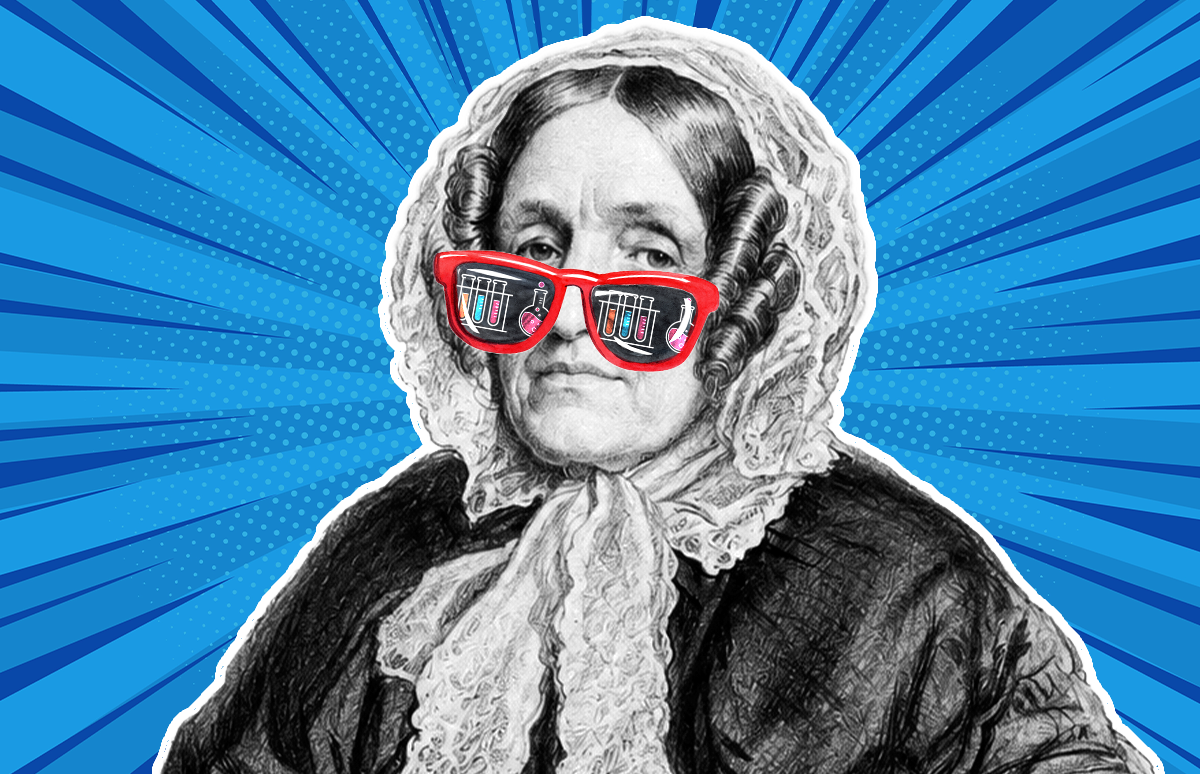
Marcet was born Jane Haldiman in 1769 in London to a wealthy Swiss father and English mother. While most contemporaries believed that female education should be minimal—or, as one contemporary put it, “a woman should be satisfied by learning how to make pudding and by learning just a little bit of history and geography”—the Marcets did not. Jane and her sisters were tutored in the same subjects as their brothers.
When she was 15, Marcet’s life transformed in a single day when her mother died from infection after childbirth. Marcet, the eldest of 10 children, was suddenly thrust into some of her mother’s roles. No longer expected to spend her days studying in the nursery with the rest of her siblings, “Miss Jane” became “Mistress Jane” who was in charge of the butlers, maids, governesses, and the rest of the household staff. She quizzed her siblings on the material they covered in their tutorials. There was no time to mourn when there was so much to do. It may have been her workload that prevented her from getting married in her 20s, like most of her peers. It couldn’t have been due to a lack of appeal. She was a catch: pretty with a considerable inheritance.
Soon after her mother’s death, Marcet was fitted for a silk gown, given earrings, and had her hair done to serve as co-host alongside her father for his twice-weekly salons. She was suddenly hobnobbing with over 40 guests—businessmen, scientists, and writers—who filled her home to eat, drink, and discuss burning issues. She eagerly jumped into the mix. For the next 15 years, these routine salons gave her an informal yet unparalleled education. As her knowledge unfurled beyond the typical limits placed on female education, she began to see herself as a member of the intellectual set.

According to the testimony of one scientist attendee, Marcet was a brilliant, compelling conversationalist. Another reported that she was pleasant, but not a people-pleaser: “She may not easily sympathize with your private concerns.” The latter was an early impression she made on Alexander Marcet, a Swiss medical doctor practicing in London whose appetite for scientific learning was as great as hers. The two married in 1799, he 29 and she 30, and Alexander moved into Marcet’s home with her father where the three of them continued hosting the salons. Alexander introduced more scientists into the salon rotation, including the chemists Humphry Davy, Pierre Prevost, Marc August Pictet; the botanist Augustin de Candolle; and the physicist August de la Rive.
The bent of Marcet’s mind was toward the cutting edge. She had one of her good friends, Edward Jenner, a physician who enjoyed languorous brunches at Marcet’s home and who also invented the first vaccine, immunize her eldest son with an early batch of smallpox serum. Fortunately, it worked.
She was particularly inspired by a new worldview proposed by some chemists. It all began around 1802 when she attended a series of lectures by Davy, who was a professor of chemistry at the Royal Institute. Although women could not be members, they were allowed to attend the public lectures. Davy was a popular and charismatic lecturer, and horse-drawn carriages clogged the front of the institute when he was scheduled to speak.
Read more: “If Only 19th-Century America Had Listened to a Woman Scientist”
Davy spoke about material reality in a way that shattered popular opinion. Following in the footsteps of French chemist Antoine Lavoisier, Davy rejected the ancient Greek theory, still alive in his day, that matter was composed of four elements: earth, fire, wind, and water. He also rejected a notion that many serious chemists entertained: “phlogiston”—a supposedly weightless substance contained in matter. Instead, Davy described to his audience a reality that was assembled from the building blocks of innumerable elements. Davy demonstrated this before their very eyes—placing beakers full of substances over flames to show the breakdown of compounds into simpler substances, such as chlorine, sodium, potassium, magnesium, and many other elements that he personally had discovered. While Davy caught the vapors of heated substances into vessels, he explained Lavoisier’s insight that energy could never be created or destroyed, only transformed.
Marcet came away from Davy’s lectures both mesmerized and confused. On the one hand, she was taken by “the impression made upon [my] mind by the wonders of nature studied in this new light.” On the other hand, she “found it almost impossible to derive any clear or satisfactory information from the rapid demonstrations.” But after subsequent conversations with friends and repeatedly conducting Davy’s experiments in a chemical lab in her own home, she felt she finally understood the “principles of that science.” And she wanted to share these fresh insights with others.
At the same time, Marcet was aware of the “the great advantage which [my] previous knowledge of the subject, slight as it was, gave [me] over others who had not enjoyed the same means of private instruction.” To correct for this, she decided to write an accessible book introducing lay readers to the field—especially women who otherwise had no little chance of learning about it.

How best to draw in such readers? Promise to elicit their amazement. A “woman may obtain such a knowledge of science as will not only throw an interest on the common occurrences of life, but will enlarge the sphere of her ideas, and render the contemplation of nature a source of delightful instruction,” Marcet wrote.
The moment was ripe for such a book. Marcet had the support of members of the Royal Institute who were keen on popularizing science in the hopes of increasing industrial progress. For some members, this popularization included educating women, but only for the sake of helping them improve their domestic work. Marcet’s view was more expansive: She wished to educate women because they had a right to enjoy the pleasures of the mind. “I assure you,” she addressed her female readers, “that the most wonderful and the most interesting phenomena of nature are almost all of them produced by chemical powers.”
The full title of her book was Conversations on Chemistry; in which Elements of that Science are Familiarly Explained and Illustrated by Examples in Two Volumes and it was written as a dialogue between a teacher, Mrs. B., and her two students, Caroline and Emily. Marcet was placing her book in a pantheon of scientific works that used dialogue to convey complicated ideas to a broader public that dated at least to Galileo’s 1632 Dialogue on the Two Chief World Systems, which introduced lay readers to a heliocentric cosmology.
Conversations ranges over many topics, such as light and heat, oxygen and nitrogen, electricity, hydrogen, metals, alkalies, acids, and many more—all intended to introduce its readers to the latest research in chemistry. She encourages her students to not “confine the chemist’s laboratory to the narrow precincts of the apothecary’s and perfumer’s shops.” Caroline, the more closed-minded of the two students, says to Mrs. B: “I know that all bodies are composed of fire, air, earth, and water …” to which Mrs. B responds: “But you must now endeavor to forget it … as in the last thirty years chemistry has experienced an entire revolution.” She explains that the field has transitioned from alchemy “an obscure and mysterious art, [and] become a regular and beautiful science, to which art is entirely subservient.”
Read more: “A Lab of Her Own”
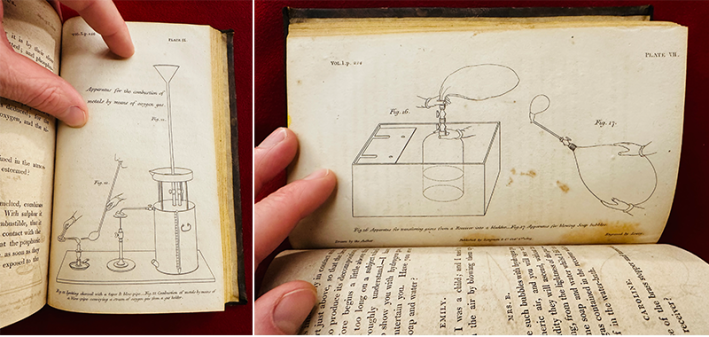
Along with this new vision, Marcet wanted to impart to her readers an appreciation for the scientific method. She encouraged them to not rely on the opinion of others, but their own observation instead. All theory must be grounded in evidence. And when it came to experimentation, it was crucial to keep all conditions constant except for a single variable. Conversations is full of descriptions of experiments and illustrations drawn by Marcet herself that readers could also perform at home—in some cases using household items. Marcet wanted women to have hands-on experience just like young men were receiving in schools. Her insistence on this saved one woman’s life when a woman had accidentally swallowed a poison. Her sister remembered reading a passage in Marcet’s book on how to neutralize an acid with a base, and in this case, ingesting some magnesium did the trick.
Conversations went through 16 editions and sold more than 160,000 copies. It was read by the young and the old and was required reading in many men’s colleges and all-girls schools in England and the United States. Famous people praised it including Thomas Jefferson and Alfred Lord Tennyson. One scientist wrote, “I admire Mrs Marcet’s art; she could give good teaching lessons to Professors.” The success of Conversations led to many more books styled in a similar fashion: dialogs on economics, natural philosophy, and botany. She also wrote several books for young children about travels, government, and grammar. Yet none of her works eclipsed the popularity of Conversations, which she frequently updated to include the latest breakthroughs in chemistry. By the time the 12th edition rolled out in 1832, Marcet shared with her readers the brilliant insights of one of her earliest fans, Faraday himself.
Today science is losing public support. Under the Trump administration, the National Institutes of Health has drastically cut the number of new grants for early scientists. Government scientific agencies have also taken a hit over the past year losing around 25,000 employees—many of them in the early stages of their career. Polls also show public support for science is dropping not only among Republicans, but people of either party with a high school diploma or less.
Marcet aimed to dispel prejudice and teach the value of science—to stoke curiosity in all of us, including the disadvantaged. We need to ask ourselves: How many young Faradays are we losing right now? 
Sources:
Bahar, S. Jane Marcet and the Limits to Public Science. The British Journal for the History of Science 34, 29-49 (2001).
Faraday, M., Michael Faraday to Arthur-Auguste de la Rive (2 Oct. 1858)
Forget, E.L., Jane Marcet as Knowledge Broker. History of Economics Review 65, 15-26 (2016).
Fulford, T. Humphry Davy, Jane Marcet, and the Cultures of Romantic-Era Science. European Romantic Review 32, 535-550 (2021).
Lindee, S.M. The American career of Jane Marcet’s Conversations on Chemistry, 1806-1853. In Cravens, Hamilton, et al. (Ed.), Technical Knowledge in American Culture: Science, Technology, and Medicine Since the Early 1800s University of Alabama Press (1996).
Meurig Thomas, J. “Michael Faraday: Paragon,” in Albemarle Street: Portraits, Personalities and Presentations at The Royal Institution Oxford University Press, Oxford, England (2021).
Polkinghorn, B., Jane Marcet: An Uncommon Woman Forestwood Publications, Ipswich, England (1993).
Lead image: Tasnuva Elahi; with images from Wikimedia Commons and DGIM studio, bddesigner15 / Adobe Stock