It’s not uncommon for a new species to be discovered among existing collections; it’s rare that the new species is still alive, though. But that’s what a research team from Charles University in the Czech Republic found when they examined an old culture of marine microorganisms.
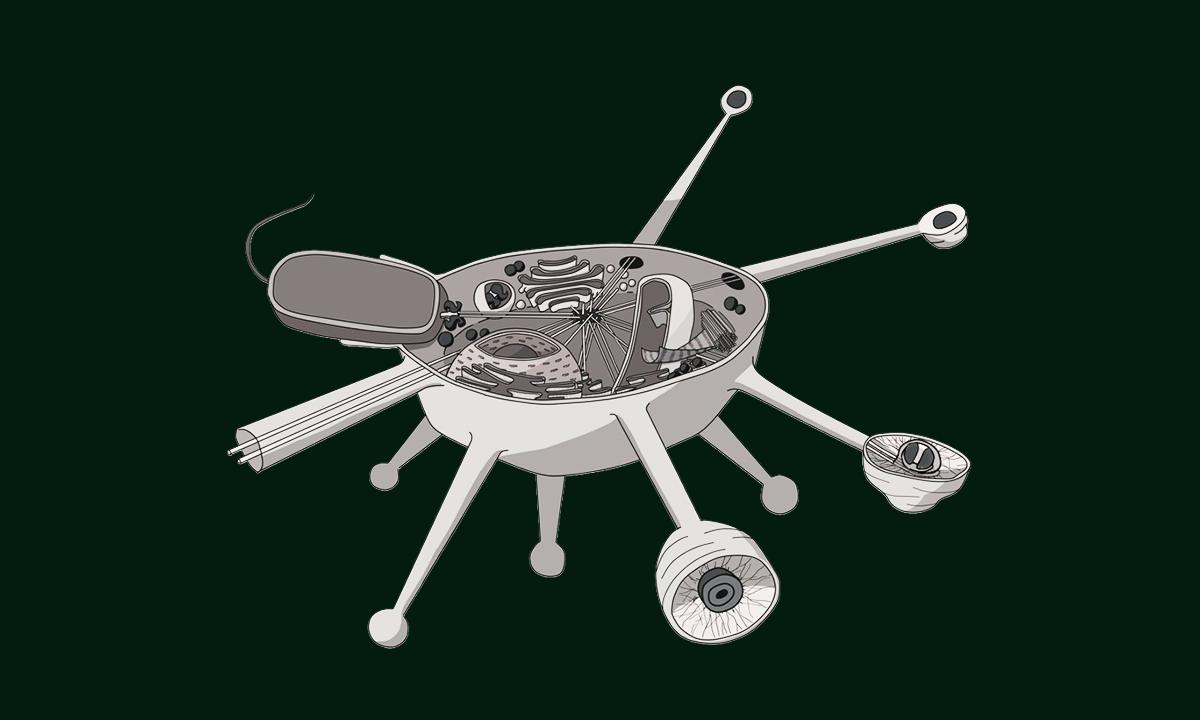
In the years-old sample, larger organisms had expired, but there was still one tiny, odd-looking creature left living. It was a minuscule, one-celled protist—a catchall group that comprises eukaryotic organisms that aren’t plants, animals, or fungi. With ray-like protrusions extending from a central mass, their new find resembled a sun, so the team dubbed it Solarion arienae, publishing their findings in Nature.
The curious structure and resilience of the newfound species was remarkable, but a genetic analysis revealed S. arienae was hiding even more stunning surprises. After sequencing the genome and cross-referencing it with existing databases, the researchers determined this organism didn’t belong to any previously recognized lineages of eukaryotes. Instead, S. arienae, along with a handful of other mysterious protist relatives, constituted a new supergroup, called Disparia. A search of environmental DNA databases indicated S. arienae is (somewhat paradoxically) both rare and widespread, living a quiet life in marine sediments.
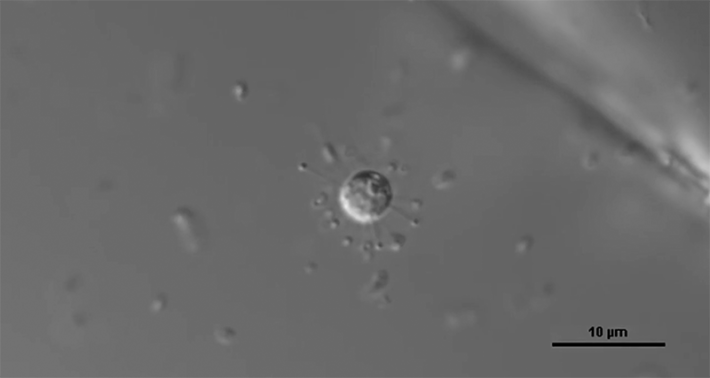
Even more surprising was the DNA inside S. arienae’s mitochondria. Tucked in those organelles was the gene secA, a fragment of a protein translocation system inherited from the bacterial ancestor that gave rise to mitochondria, and a sequence that’s been lost in almost all other eukaryotic species. According to the endosymbiotic theory, mitochondria were once free-living prokaryotic cells that were engulfed by precursors to eukaryotic cells. After this intimate interaction, eukaryotic cells housed mitochondria, which provided energy to the partnership and resulted in the profusion of eukaryotes we see today.
Read more: “The Unique Merger That Made You (and Ewe, and Yew)”
In other words, S. arienae is essentially a living fossil, allowing researchers an unprecedented glimpse into the evolution of eukaryotic life.
“Solarion is a remarkable reminder of how little we still know about the diversity of microbial life,” study authors Ivan Čepička and Marek Valt said in a statement. “The discovery of such an evolutionarily deep lineage—essentially a living fossil—shows that key parts of the eukaryotic story remain hidden in places we rarely explore.”
Tree-of-life-changing scientific breakthroughs: Always in the last place you look. 
Enjoying Nautilus? Subscribe to our free newsletter.
Lead image: Charles University