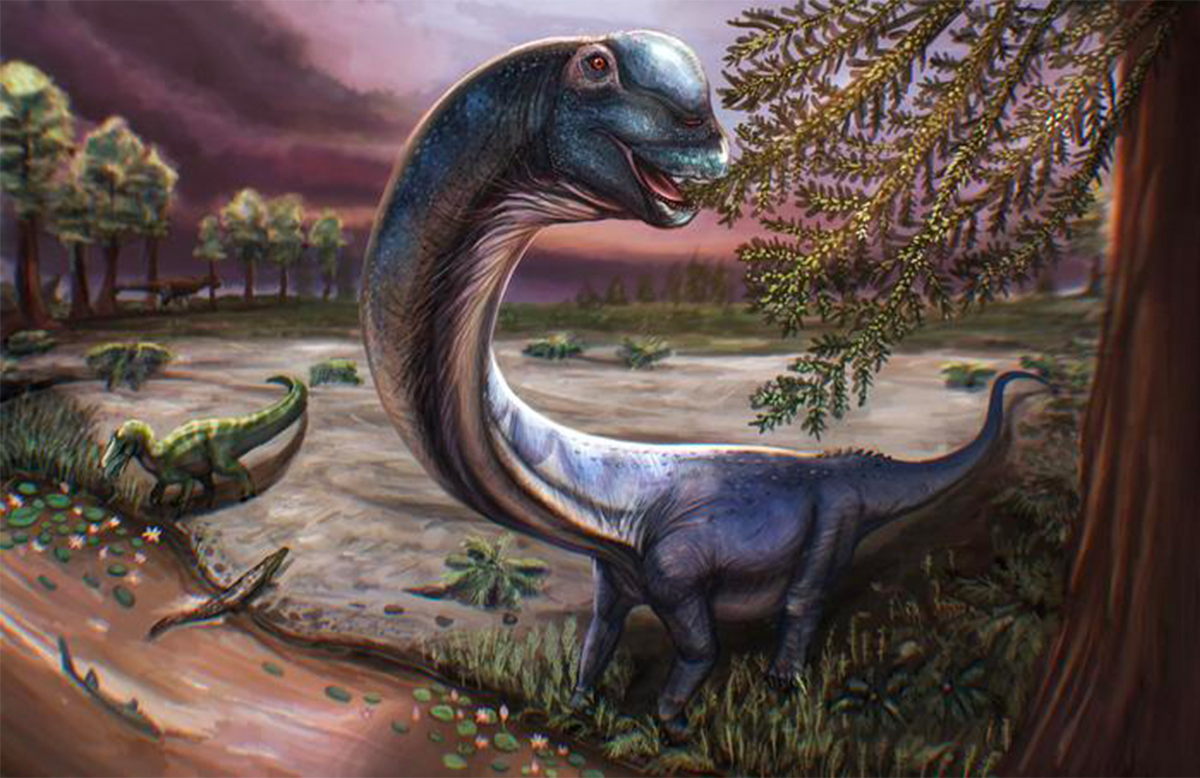
Around 100 million years ago, a long-necked giant stalked the warm, subtropical grasslands of prehistoric Thailand—and it may have been the last of its kind. An international team of paleontologists recently described the new species of sauropod in Scientific Reports, and it’s the largest dinosaur ever discovered in Southeast Asia.
They named the behemoth Nagatitan chaiyaphumensis, after aquatic half-human serpents from Asian folklore (naga), the Greek Titans, and the province in Thailand where it was found (Chaiyaphum). Weighing in at a whopping 60,000 pounds, this nearly 90-foot-long colossus towered over the predators that lived alongside it, like the toothy spinosaurs that lurked in the many rivers that cut through Thailand during the Cretaceous Period.
While Nagatitan was the largest dinosaur discovered in Southeast Asia so far, it was dwarfed by other massive sauropods living around the same time, half a world away. Case in point: South America’s Patagotitan and Argentinosaurus—two of the largest land animals to ever walk the face of the Earth—both clocked in at more than twice Nagatitan’s weight.
Read more: “What Megalodons Tell Us About Gigantism”
This epoch of Earth’s history was particularly favorable to the evolution of these lumbering leviathans. Lush forests covered the globe, providing plenty of treetops to feed from, and the abundant carbon dioxide turned the planet into a greenhouse, with temperatures ranging 9 to 18 degrees Fahrenheit warmer than today. The sauropods’ long necks and tails afforded them more surface area to dissipate heat and better regulate their internal thermostats. But in Thailand, rising oceans would soon claim Nagatitan’s ancestral lands.
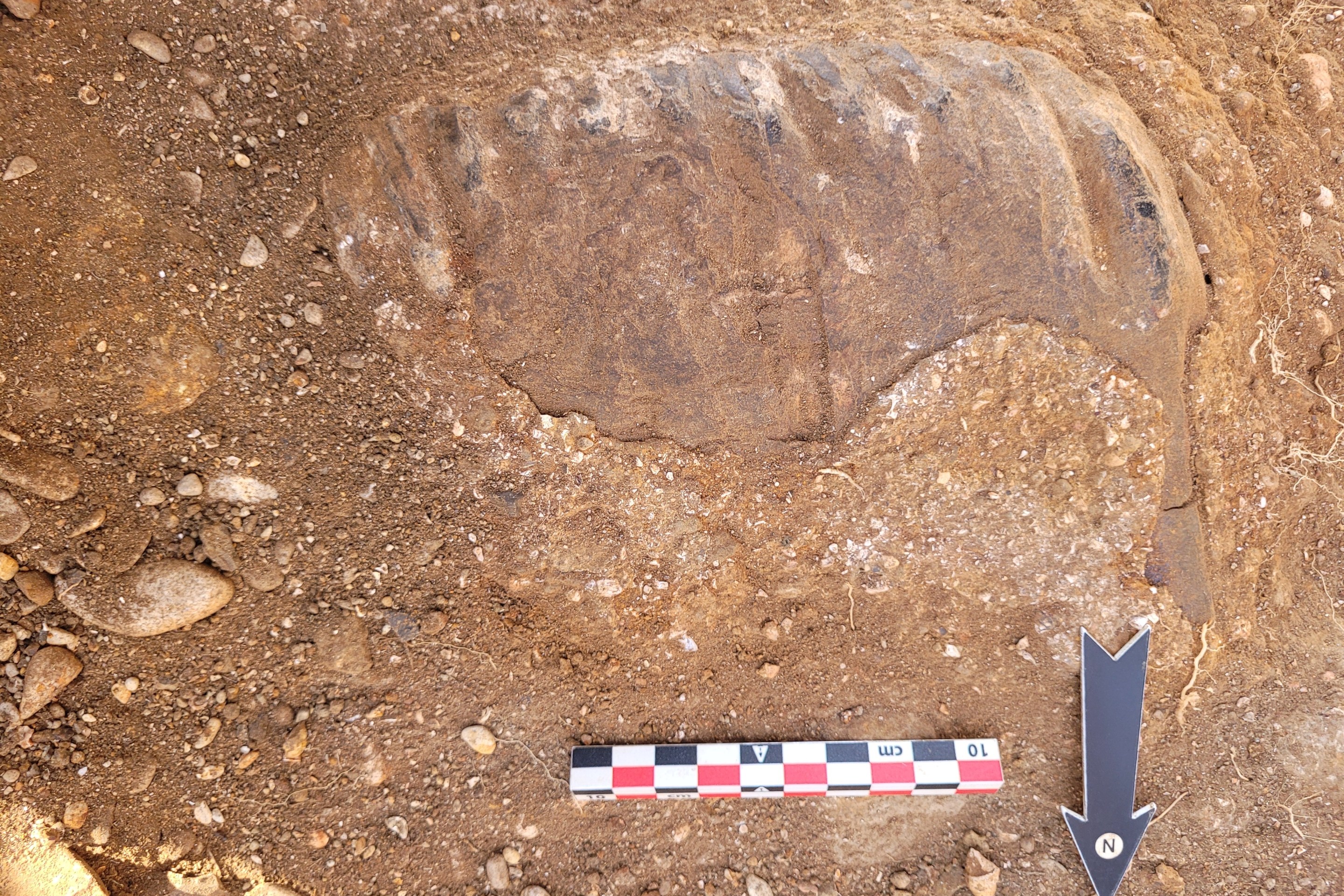
“We refer to Nagatitan as ‘the last titan’ of Thailand. That is because it was discovered in Thailand’s youngest dinosaur-bearing rock formation,” study author Thitiwoot Sethapanichsakul explained in a statement. “Younger rocks laid down toward the end of the time of the dinosaurs are unlikely to contain dinosaur remains because the region by then had become a shallow sea. So this may be the last or most recent large sauropod we will find in Southeast Asia.”
When it comes to climate change, there’s no such thing as “too big to fail.” 
Enjoying Nautilus? Subscribe to our free newsletter.
Lead image: Patchanop Boonsai