The Indo-Pacific Ocean hosts a kaleidoscope of sea creatures, every color imaginable writhing in the shallow reefs and crystal-clear water. And now, thanks to the efforts of amateur naturalists and researchers, two of these psychedelic-hued animals, who inhabit tropical reefs around Indonesia’s South Sulawesi province, have been welcomed into the taxonomic fold. Meet Phyllidia fontjei and P. ovata.
These two members of the wart sea slug family had previously evaded formal identification and naming, but this week they were christened with their scientific monikers—P. fontjei was named after the late Fontjei Kaligis, a mollusk researcher at Indonesia’s Sam Ratulangi University, and P. ovata after its egg-like appearance.
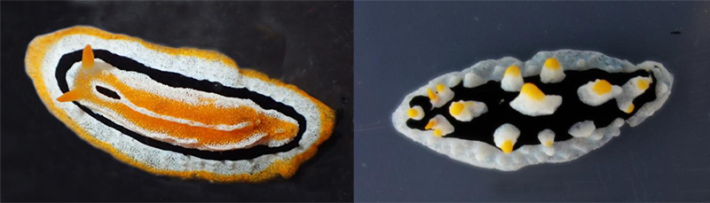
An international team of scientists published details of the discovery—which included descriptions of the rare animals’ geographic distributions and anatomies (from digestive tracts to genitals to circulatory systems)—in ZooKeys.
The research, which was years in the making, used photos and data hosted on Facebook, as well as on amateur-naturalist platforms such as iNaturalist and NudiPixel, to help identify and map the distributions of these new additions to the scientific tree of life.
Although the newly described sea slug species look dazzling (and some might say delicious), their startling coloration serves as a warning sign to would be predators. Like the hundreds of other sea slug species that call the Indo-Pacific home, they are toxic, their defensive chemicals harvested from the sponges they eat. 
Lead image: Heike Wägele