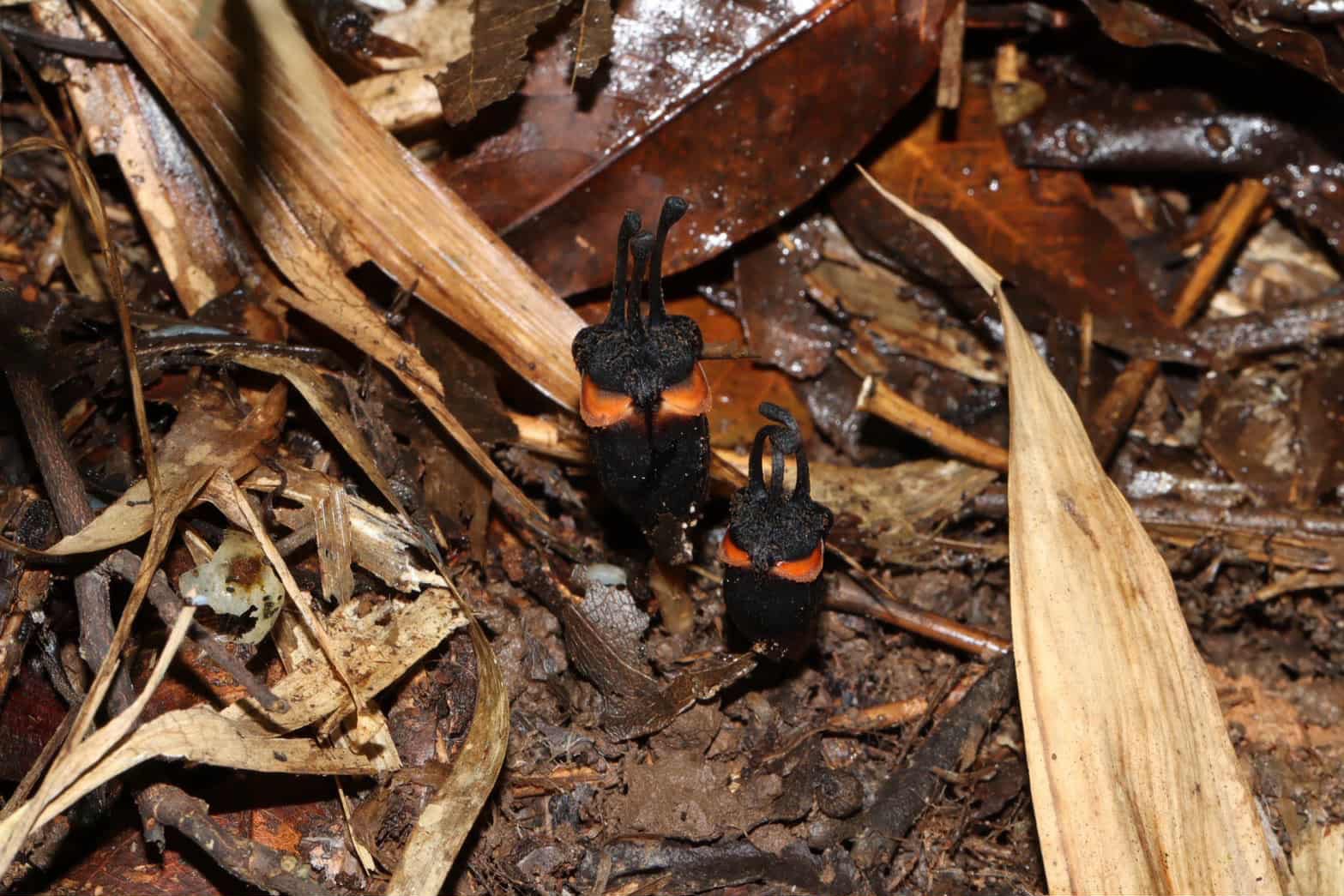
If you come across a mushroom on a hike, there’s a decent chance it’s from a species that’s entirely unknown to science. In fact, we don’t even know how many fungi species there are. Current estimates put the number anywhere between roughly 2 million and 13 million, but only around 150,000 have been described—a tiny sliver of existing species even if the most conservative estimates are correct.
Now, according to a study published in the Proceedings of the Royal Society B, we can add one more fungus species to the list—and its discovery is rewriting the origin story for magic mushrooms.
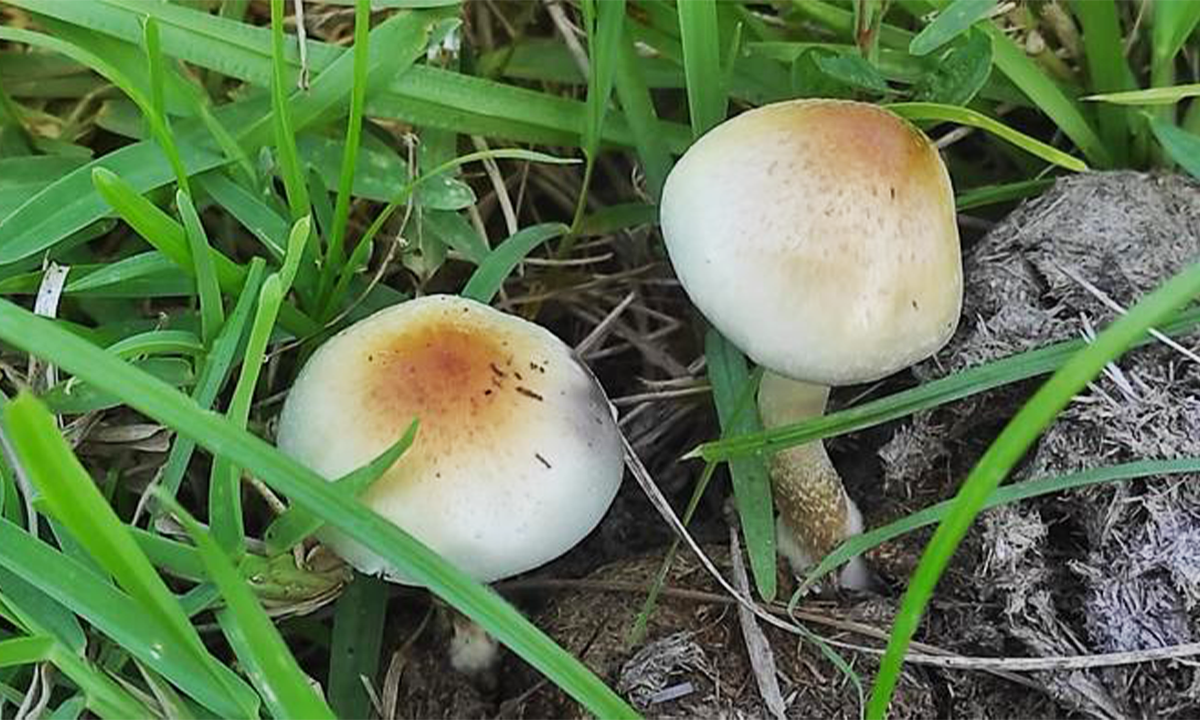
An international team of mycologists identified a new African species of fungus that was hiding in plain sight. Originally thought to belong to the traditional magic mushroom species, Psilocybe cubensis, the team’s analysis revealed the new species has distinct genetic, ecological, and chemical characteristics. They named it Psilocybe ochraceocentrata for the ochre-yellow coloring on the crown of its fruiting body.
Read more: “March of the Mangroves”
“It’s one of the most popular strains of magic mushrooms, because it is quite potent and easy to grow,” study co-author Breyten van der Merwe said in a statement. “But until this study, nobody realized it was a totally separate species from the classic magic mushroom.”
By comparing the DNA from P. ochraceocentrata to samples collected throughout the world, the team determined it shared a common ancestor with P. cubensis around 1.5 million years ago. Their finding contradicts the traditional story of how magic mushrooms spread to America.
P. cubensis, which grows on dung, was first identified in Cuba in 1904 and is thought to have been introduced along with cattle in the 1500s. According to this new analysis, P. cubensis is so divergent it must have made the trip across the Atlantic well before modern humans even existed.
How did P. cubensis travel so far?
The authors don’t have a definitive explanation but suggest the sturdy, thick-walled spores could have come over in the bellies of dung beetles or been carried on atmospheric currents. Once in South America, the endemic prehistoric megafauna population would have provided a smorgasbord of droppings, allowing the fungus to spread far and wide.
It’s a fascinating finding that gives us deeper insight into the mysterious world of fungi, but there are still millions of species out there, waiting to be discovered. 
Enjoying Nautilus? Subscribe to our free newsletter.
Lead photo byTalan Moult