Plants can go to extremes to attract pollinators. Some orchid species, for example, produce structures that look like female bees, tricking males into “mating” with them. After a quick and unproductive shag, the bees move on to the next flower, carrying the orchid’s pollen with them. Not all liaisons between plants and their pollinators are so manipulative or transactional, though. In fact, new research published in Current Biology depicts a relationship that’s almost nurturing—and even monogamous.
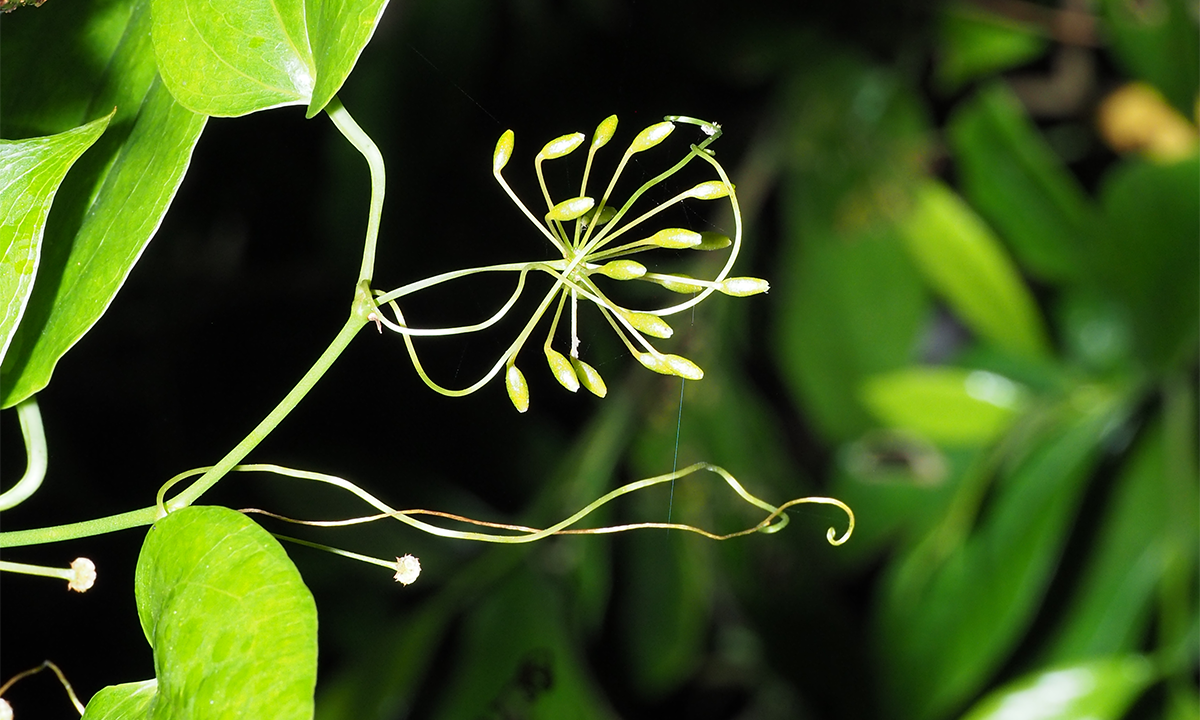
The climbing vine Smilax insularis grows on the chain of islands dotting the ocean from Okinawa to Taiwan, where it’s pollinated by a single insect: the gall midge (Dasineura heterosmilacicola). In exchange for the tiny fly inseminating its female flowers, the plant allows the females to lay its eggs in the male flowers, sacrificing some of its surplus pollen to give the larvae their first meal.
Known as “brood-site pollination,” this exchange is a somewhat rare but well-known dynamic among plants and their pollinators (figs famously have a similar arrangement with fig wasps). Still, botanist Suetsugu Kenji of Kobe University in Japan had questions. “The larvae were reported only in male flowers,” he said in a statement. “So how do the female plants remain part of the system? And what keeps the system specific to this insect? I felt there must be some hidden mechanism governing this interaction.”
Read more: “The Incredible Fig”
To find out, he led a team of researchers to five islands where S. insularis grows to conduct field experiments. They determined the compound attracting the gall midges was an odorant that’s not known to be the dominant floral scent in any other plant, a chemical called dihydroedulan I. In their tests, dihydroedulan I attracted gall midges and gall midges alone—no other insects were enticed. “It is a private chemical password,” Suetsugu said.
Importantly, both male and female flowers emit this “private password,” but at different times. Male flowers give off the scent when they open early in the day, and female gall midges dip their abdomens inside to lay their eggs, collecting pollen along the way. When female flowers open later in the day, they repeat the process (minus the egg laying), pollinating the flowers. The timing of the plant’s chemical cues is what ensures successful pollination and keeps the female flowers in the mix.
While some mysteries remain—like why female midges usually don’t lay eggs in female flowers—Suetsugu is pleased with the results. “I am really excited about this combination of chemical precision and ecological balance,” he explained, detailing plans to continue unraveling the chemical complexities of this relationship.
And there’s no doubt a lot to it. After all, it’s a bond that’s formed over countless generations of coevolution, and the futures of both species are now forever intertwined. Talk about a long-term relationship. 
Enjoying Nautilus? Subscribe to our free newsletter.
Lead image: SUETSUGU Kenji