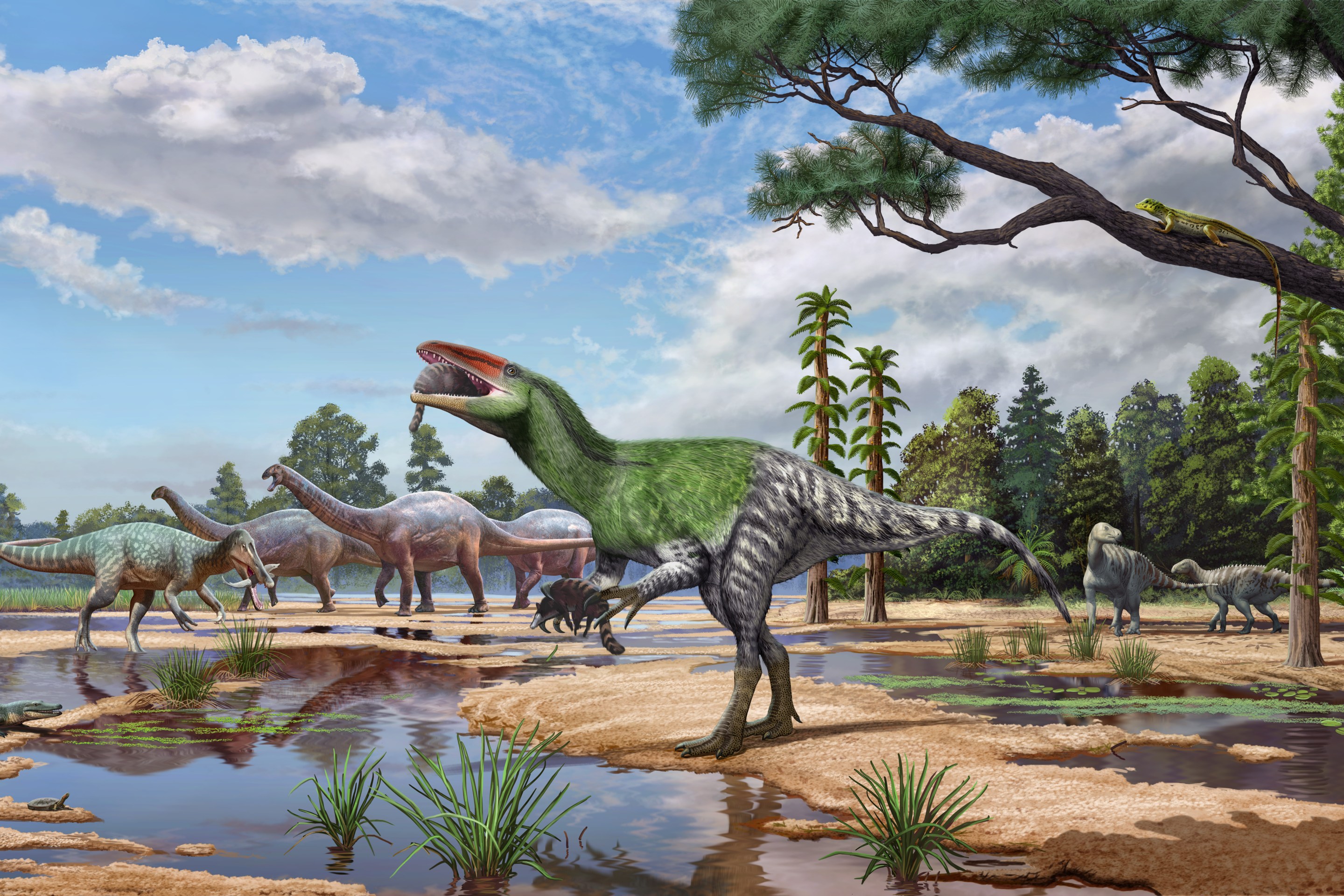
Southern Argentina during the Late Cretaceous didn’t have the cool, arid climate it does today. Instead it was temperate, muggy, and teeming with prehistoric life. Snails, fish, lizards, and even a distant relative of the modern platypus lived in the ancient Patagonian rivers and lakes, and all of them may have been lunch for a newly discovered dinosaur: Kank australis.
“Kank lived in a landscape of meandering rivers and streams with seasonal ponds, inhabited by aquatic plants such as water lilies and animals including fish, insects, and various mollusks,” Matías Motta of the Bernardino Rivadavia Natural Sciences Museum and co-author of a study describing the species said in a statement.
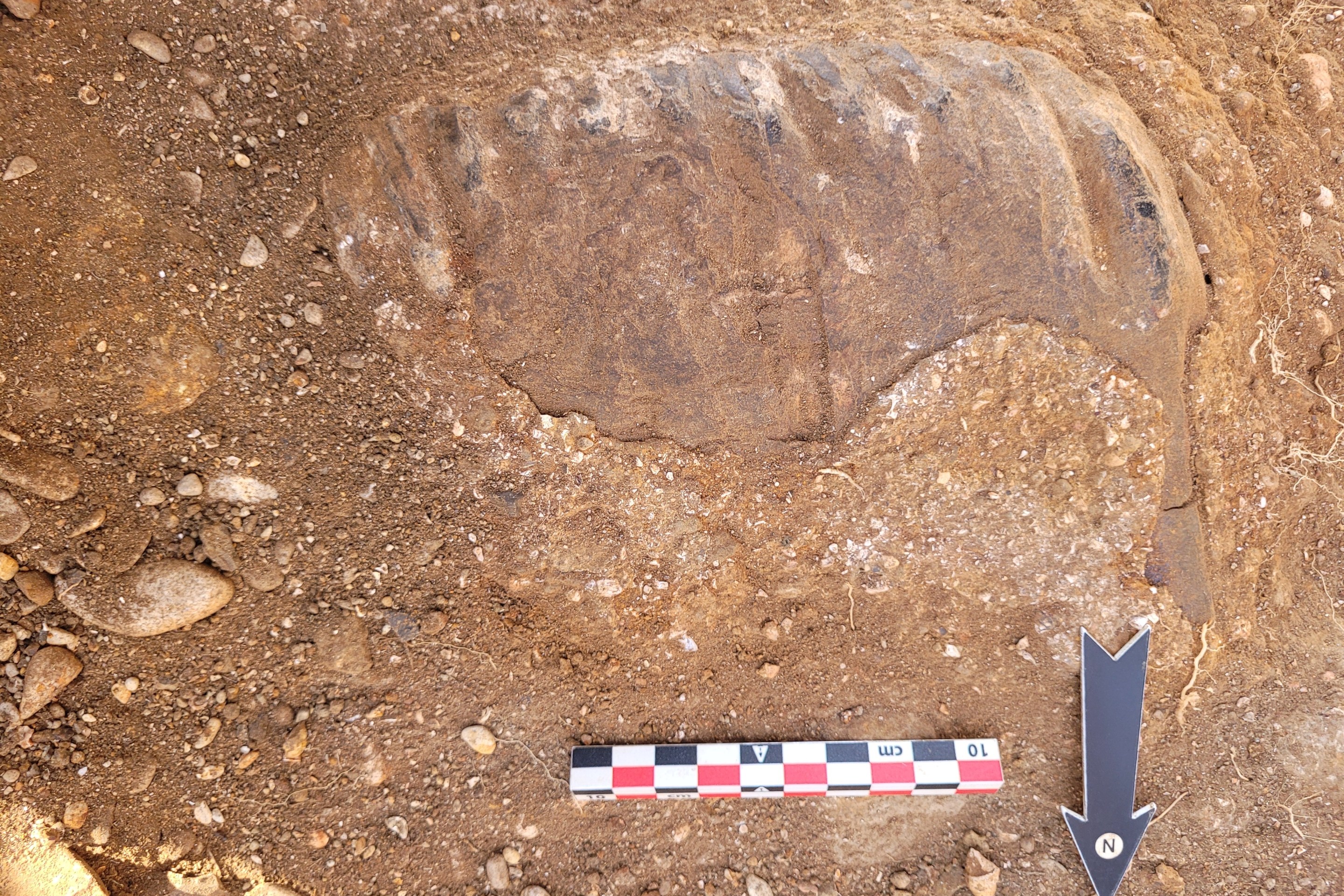
Paleontologists unearthed a smattering of fractured K. australis bones from the fossil-rich Chorrillo Formation in Southern Argentina during a 2018 excavation. Unfortunately, they were too fragmented to be identified until a neck bone was discovered six years later. According to the team, that was the key to identifying the new species.
Read more: “Unraveling the Evolution of Flight”
On the neck vertebra closest to the dinosaur’s body, the paleontologists noticed small bony protrusions. These little nubs were attachment sites for muscles, similar to those in modern birds that have long, agile necks capable of complex maneuvers, like herons.
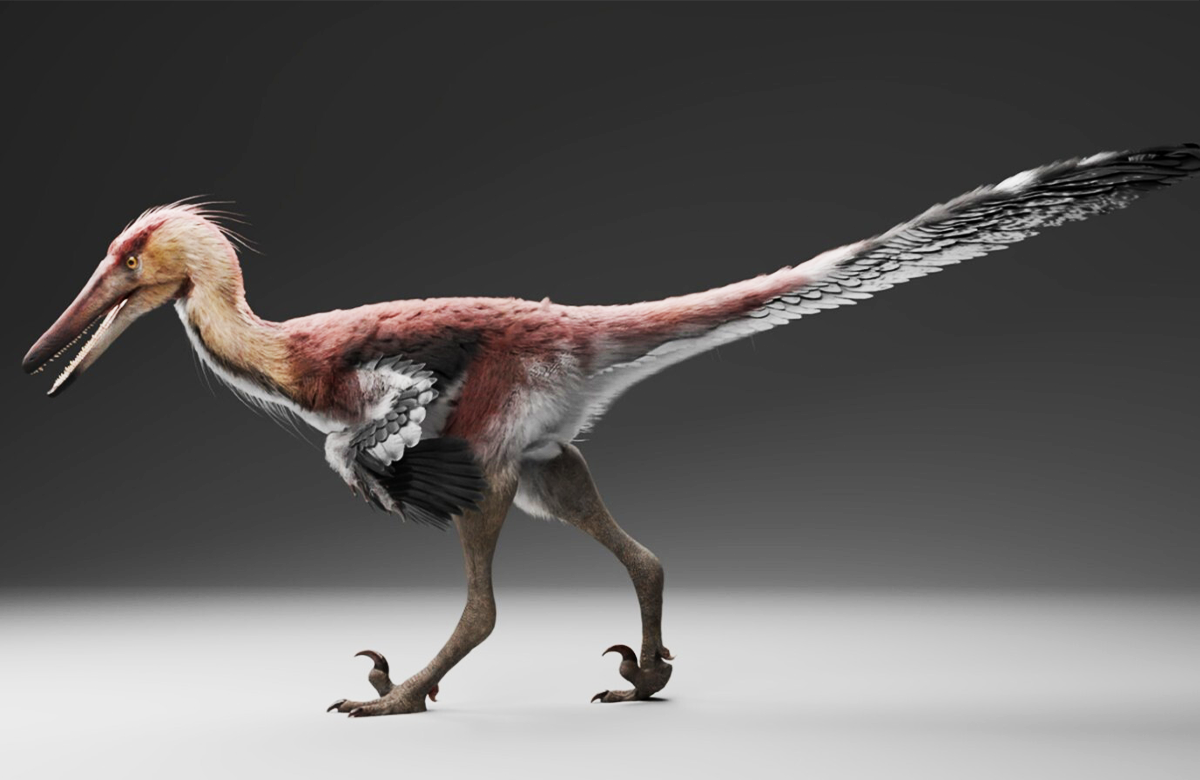
According to the researchers, K. australis fed also like a heron, wading into the water to snatch unsuspecting fish with its tooth-filled jaws. “Their elongated snouts, numerous teeth, and long, flexible necks suggest adaptations for fishing, similar to modern herons,” Motta explained.
Unlike herons, though, the dinosaur also had long, sharp claws on its largest toes, similar to raptors. In fact, it’s a member of the family unenlagiidae, which includes Neuquenraptor argentinus—a similar dinosaur that lived 20 million years earlier. Based on comparisons to that species, the paleontologists estimate K. australis could grow to be almost 10 feet long.
The find is shedding light on the diversity and spread of unenlagiids in South America as well. While several species have been found farther north, including the 16-foot austroraptor, Southern Patagonia has yielded fewer specimens.
“Kank helps bridge a distributional gap for the Late Cretaceous of southern Patagonia, connecting known records from northern Patagonia and Antarctica, and showing that this family was dispersed across different latitudes of South America,” Motta said.
In other words, the Late Cretaceous was a good time to be an unenlagiid, but a bad time to be a fish. 
Enjoying Nautilus? Subscribe to our free newsletter.
Lead image: Gabriel Díaz Yantén