Even in this era of advanced maternal healthcare, human birth is a difficult business, with long delivery times and numerous potential complications. Evolutionary biologists have blamed our laborious births on the “obstetrical dilemma,” or the paradox between walking upright and having large brains. The hypothesis goes that when humans became bipedal, the pelvis narrowed for more efficient walking. At the same time, our heads trended larger to accommodate our brains, causing a mismatch between baby head size and pelvic dimensions.
A recent paper in Biological Reviews, however, challenges the notion that human births are uniquely hard among mammals. Evolutionary biologist Nicole Grunstra from the University of Vienna reviewed the research literature for instances of birth difficulties (“dystocia”) in humans and other mammals that give live birth. She included studies of captive and wild animals, in each case noting the underlying causes of dystocia.
Read more: “Egg Laying or Live Birth: How Evolution Chooses”
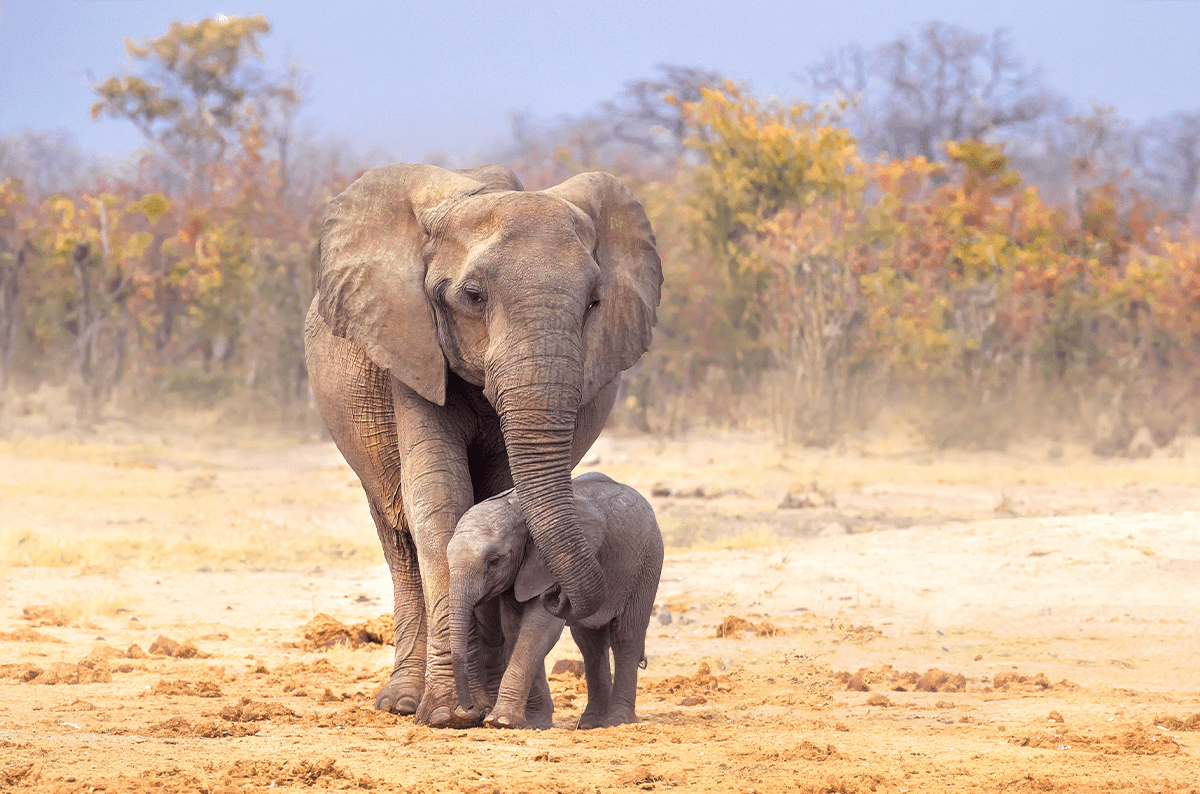
From 170 studies, Grunstra determined that birth complications are widespread in mammals, writing that “parturition [birth] results in maternal death in non-human mammals at meaningful frequencies, even in domesticated and farmed mammals where life-saving intervention is also available.” Precocial mammals like primates or elephants, which give birth to one or a few large, well-developed babies, have especially hard births.
The same is true even in wild mammals, where you’d expect natural selection to eliminate genes for traits that cause risky births. For example, whale calves sometimes get stuck during birth and perish. And wild ungulates—hooved animals like deer and antelope—have especially high rates of birth complications, rivalling maternal mortality in humans. Their heads aren’t large, but all those long limbs must come out of the birth canal, too.
These findings beg the question of why natural selection hasn’t prompted changes to reduce risky births. Grunstra attributes the persistence of the risk to “a life history trade-off between the improved survival of large offspring and the occasional costs of birth complications.” There’s plenty of evidence that bigger babies survive better, making for a continual evolutionary tension between offspring body size and the mechanical limits of the birth canal imposed by the pelvis.
In what Grunstra calls a “cliff-edge model of selection,” the survival advantages of large offspring will keep increasing their birth size until it hits a dangerous maximum where they can’t get out of the birth canal.
So, bigger is better—until, that is, it becomes too dangerous. 
Enjoying Nautilus? Subscribe to our free newsletter.
Lead image: Theodore / Adobe Stock