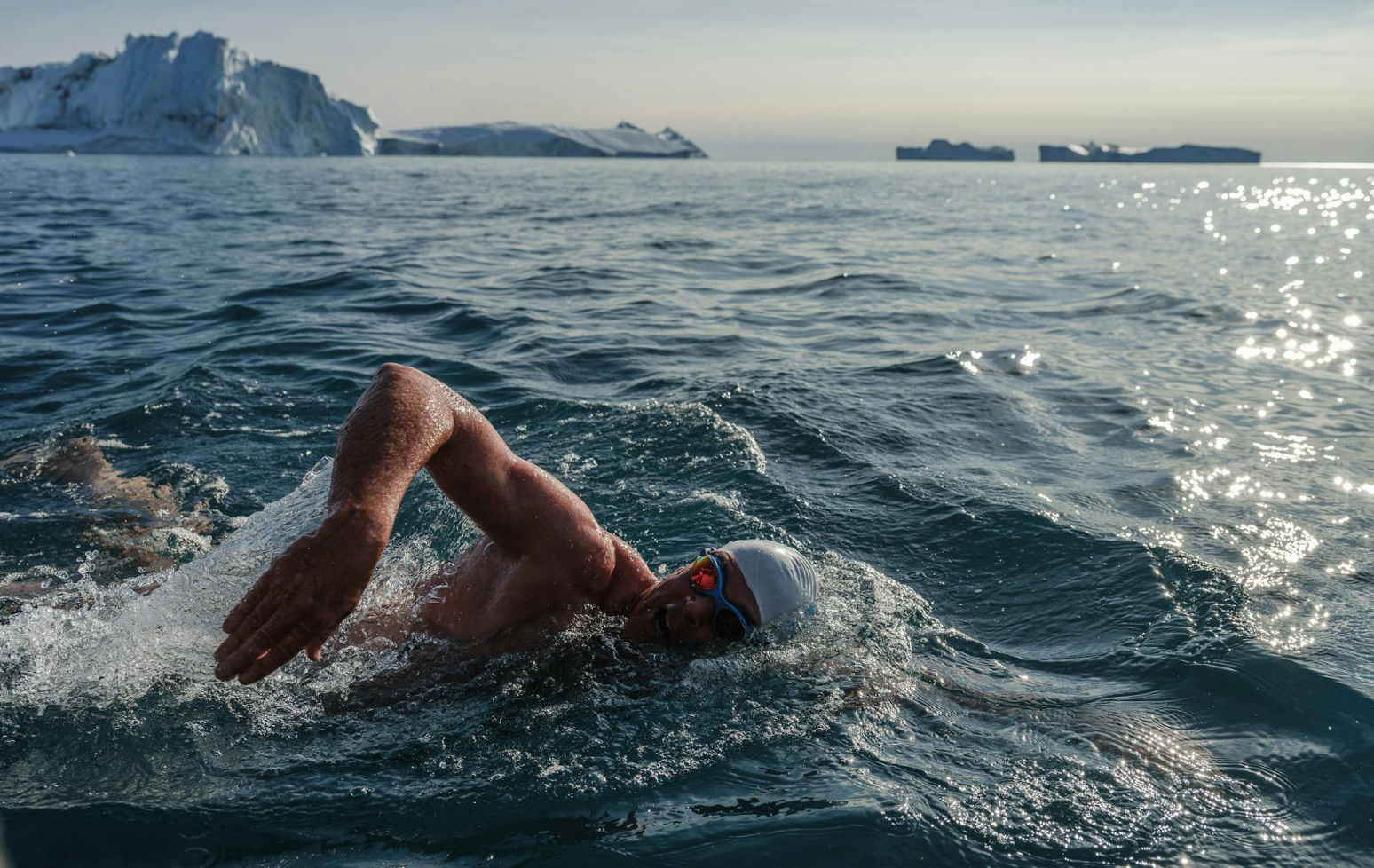
Endurance swimmer and United Nations Patron of the Oceans Lewis Pugh is a leading voice for marine conservation. By pioneering challenging swims in extreme conditions, Lewis Pugh highlights the threats facing our oceans, the impacts of a warming planet, and the importance of #30×30 in tackling climate change.
Among his many achievements:
- The first swim across the North Pole, to highlight the melting of Arctic sea ice.
- Swimming across a glacial lake on Mount Everest, to draw attention to the melting of Himalayan glaciers.
- Swimming the full 528-kilometer length of the English Channel to call for 30 percent of the world’s oceans to be protected by 2030.
- Swimming across the mouth of Greenland’s Ilulissat Icefjord, to highlight the dramatic impact of climate change.
His efforts have earned him international recognition as well as high honors in France and South Africa.
At Sails of Change, we believe that Lewis Pugh’s commitment and determination to highlight the importance of protecting our oceans is deeply inspiring, and we are proud to have supported his climate swim in Greenland.
You can learn more about Lewis Pugh by visiting lewispugh.com
Lewis Pugh's Climate Swim in Greenland
In September 2021, Lewis Pugh became the first person to complete a multi-day swim in the Polar Regions when he swam 7.8 kilometers over 12 days in Greenland’s Ilulissat Icefjord. The water temperature ranged from zero degrees Celsius to 3 degrees Celsius.
Ilulissat Icefjord is fed by the world’s fastest-moving glacier, the Ilulissat Glacier, which drains around 30 cubic kilometers of ice per year into the sea. Some of the icebergs that break from the glacier are over one kilometer tall.
Due to warming temperatures, the glacier is melting faster—40 meters a day—a real example of the dramatic impact of climate change.
By Sails of Change Team.
Lead image courtesy of Sails of Change.