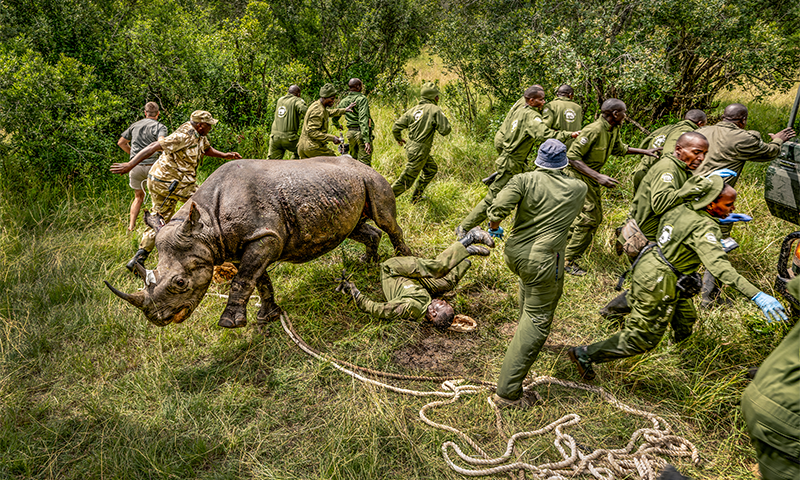
In January 2024, officials from the Kenya Wildlife Service undertook a massive mission: translocating 21 black rhinoceroses (Diceros bicornis) to a region where they hadn’t lived for half a century. Black rhinos can weigh as much as a small sedan and are known to gore people, which makes moving them a daunting task. But when Kenya’s 16 existing rhino sanctuaries became too crowded, officials had little choice.
That black rhinos are suffering from overcrowding is one sign of an improbable success. Kenya’s black rhino population plummeted from 20,000 individuals in the 1970s to fewer than 300 by the 1980s, mirroring the species’ plight across central and eastern Africa as poachers killed the animals for their horns. Today, the International Union for Conservation of Nature lists black rhinos as critically endangered, but government intervention in Kenya has led to a modest rebound. Thanks to anti-poaching enforcement and large-scale sanctuaries, Kenya is almost halfway to reaching its goal of harboring 2,000 wild rhinos.
Yet moving such powerful animals can be dangerous for both rhinos and their human caretakers. Photographer Ami Vitale was documenting the translocation of this female from the OI Pejeta Conservancy in central Kenya to the Loisaba Conservancy in the north when the rhino reacted poorly to anesthesia and stopped breathing. Veterinarians and handlers initiated a special resuscitation for large animals and administered drugs to reverse the effects of the anesthetic, saving the animal’s life. Vitale says this image—captured the moment the rhino recovered—speaks to the danger that people are willing to face to bring back an imperiled species.
Vitalie’s image won the Human/Nature award in the California Academy of Sciences’ BigPicture Photography Competition, now in its 12th year. 
This story originally appeared in bioGraphic, an independent magazine about nature and regeneration powered by the California Academy of Sciences.
Ami Vitale is an award-winning American photojournalist, documentary filmmaker, educator, and speaker.