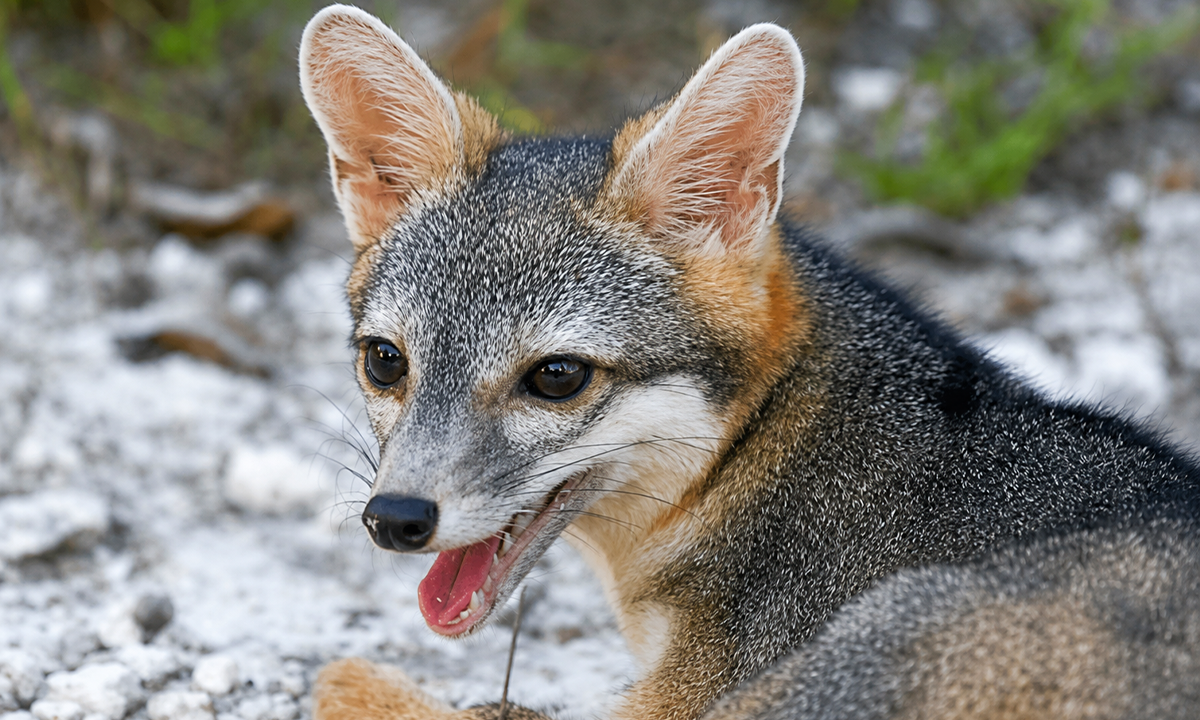
Strange things happen to animals when they colonize islands. Some of them get larger, like the enormous rabbit Nuralagus rex of ancient Menorca, while others get smaller, like the dwarf fox of Cozumel. This mysterious species of gray fox is estimated to be only around 60 to 80 percent the size of its larger mainland brethren. Fossils indicate it first arrived on the Mexican island around 5,000 years ago, predating the arrival of humans.
Since then it’s become critically endangered. In fact, the Cozumel dwarf fox is so rare, the last secondhand sighting was more than two decades ago, in 2001. Many believed the species to be extinct. Then, in 2023, reports of a disoriented animal meandering along the highway poured into the Cozumel Parks and Museums Foundation, and officials raced to rescue the wayward critter. They also snapped some photos—the first taken of the dwarf fox.
After scooping him up and providing a full health assessment, the dwarf fox was relocated to the Laguna Colombia State Reserve, far from any dangerous roadways. While this particular animal was spared, the species is still in dire straits due to habitat loss, invasive species, and climate change.
“The biggest challenge facing the Cozumel fox is that we still know almost nothing about it, including its remaining population size, distribution, or ecology,” Travis Bayer, author of a recent paper on the sighting published in Neotropical Biology and Conservation said in a statement. “That uncertainty alone is dangerous, because it makes effective conservation extremely difficult.”
Read more: “The Vanishing Animals of Hispaniola”
The dwarf fox isn’t Cozumel’s only diminutive mammal threatened by modern life either; pygmy raccoons and coatis living there are also endangered. Researchers hope these new photos will lead to more intense conservation efforts to save Cozumel’s unique wildlife.
“One of the most important takeaways from this research is that species can quietly disappear without the world even realizing they are gone,” Bayer said. “We often think extinction is something dramatic and obvious, but in reality, it can happen gradually and silently, especially for rare species living in remote or understudied habitats.” 
Enjoying Nautilus? Subscribe to our free newsletter.
Lead photo: Rafael Chacón