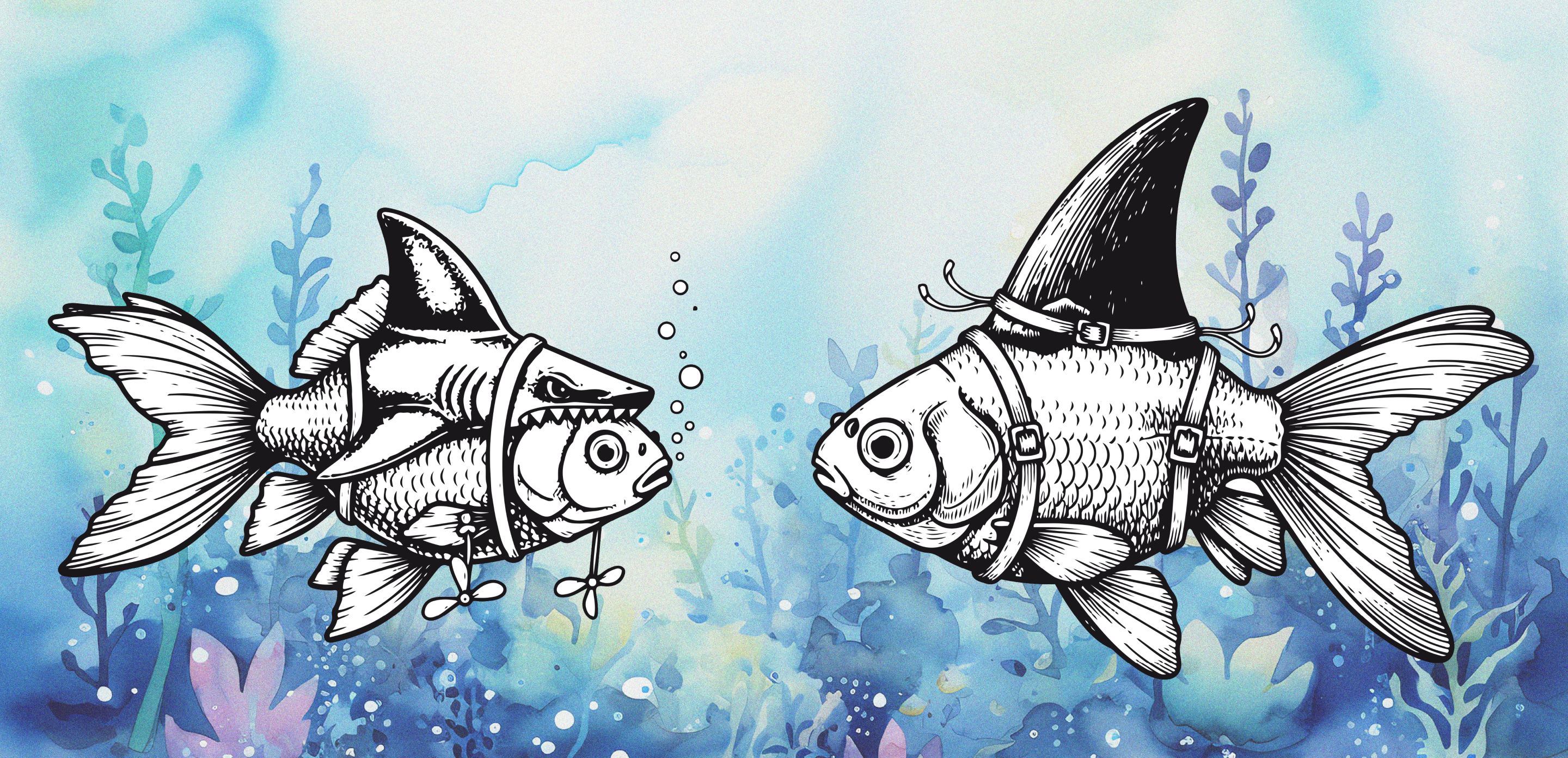
During World War I, Allied ships got flashy new paint jobs featuring bold zig-zagging stripes. Known as “dazzle camouflage,” the purpose of the makeover wasn’t to conceal the ships but rather to make their range, speed, and heading difficult to discern for anyone peering through the periscope of a German U-boat. According to new research published in Amphibia-Reptilia tree frog tadpoles may have adopted the same strategy—with a slight twist.
Tadpoles from the Japanese tree frog Dryophytes leopardus are usually a dull brownish color with translucent tails, but in the presence of their predators, dragonfly nymphs, their tails transform into a vivid orange color with black spots. “After seeing these tadpoles with orange tails at (Kyoto University’s) experimental farm, I wondered what role such a bright tail could have,” study author and Kyoto University graduate student Akihiro Noda said in a statement.
Read more: “These Nature Photographs Aren’t What They Seem”
To find out, Noda and his colleagues placed both normal and orange-tailed tadpoles in tanks with dragonfly nymphs and watched what happened. The team recorded the attacks and misses, along with where the nymph focused its efforts (body versus tail).
Somewhat surprisingly, the nymphs went for the orange tails most frequently, but these attacks also missed the most. Additionally, even successful strikes to the tail were less likely to result in mortal wounds compared to body strikes. According to the researchers, the tail coloration likely serves two functions: drawing the nymph’s attention while making it more difficult to target, similar to the zebra-striped World War I ships. “The way the orange tail moves when the tadpole swims may make it harder for dragonfly nymphs to aim accurately,” Noda explained.
Sometimes all it takes to survive is a new paint job. 
Enjoying Nautilus? Subscribe to our free newsletter.
Lead image: fledermausstudio and Wera / Adobe Stock