The Artemis II mission to return to the moon for the first time in over 50 years is underway, and while the crew has yet to enter lunar space, NASA has already provided some phenomenal photographs from the mission. Below are some of the most striking images from the crew’s voyage to the moon (so far).
The Artemis II crew standing in front of the Space Launch System that sits ready to propel the Orion spacecraft out of Earth’s atmosphere. From left to right: NASA astronauts Reid Wiseman, commander; Victor Glover, pilot; Christina Koch, mission specialist; and Canadian Space Agency astronaut Jeremy Hansen, mission specialist.
The Artemis II Space Launch System (SLS) rocket clearing the tower on April 1, 2026. The SLS features a core stage with an expendable fuel tank filled with liquid hydrogen and oxygen that power its four engines. On the sides, it’s flanked by two solid rocket boosters. It’s NASA’s most powerful rocket to date.
The two solid rocket boosters shortly after they separated from the SLS. With their job of helping the Orion spacecraft reach escape velocity finished, they returned to Earth, where they were recovered for reuse.
A three-minute exposure showing the parabolic path taken by the SLS, as well as the exhaust from its engines.
A glimpse back at dimly lit Earth photographed by mission commander Wiseman from the Orion spacecraft shows a crescent sliver of light, and illuminated cities dotting continents around the globe.
The same view as above, photographed with a longer exposure that shows the green light of the Aurora Borealis creeping across Earth’s magnetic north pole. Looking at the same location on the southern hemisphere shows a faint hint of the Aurora Astralis. Prior to the Artemis II launch, a coronal mass ejection from the sun sent charged particles scattering across Earth’s magnetosphere, producing the aurorae.
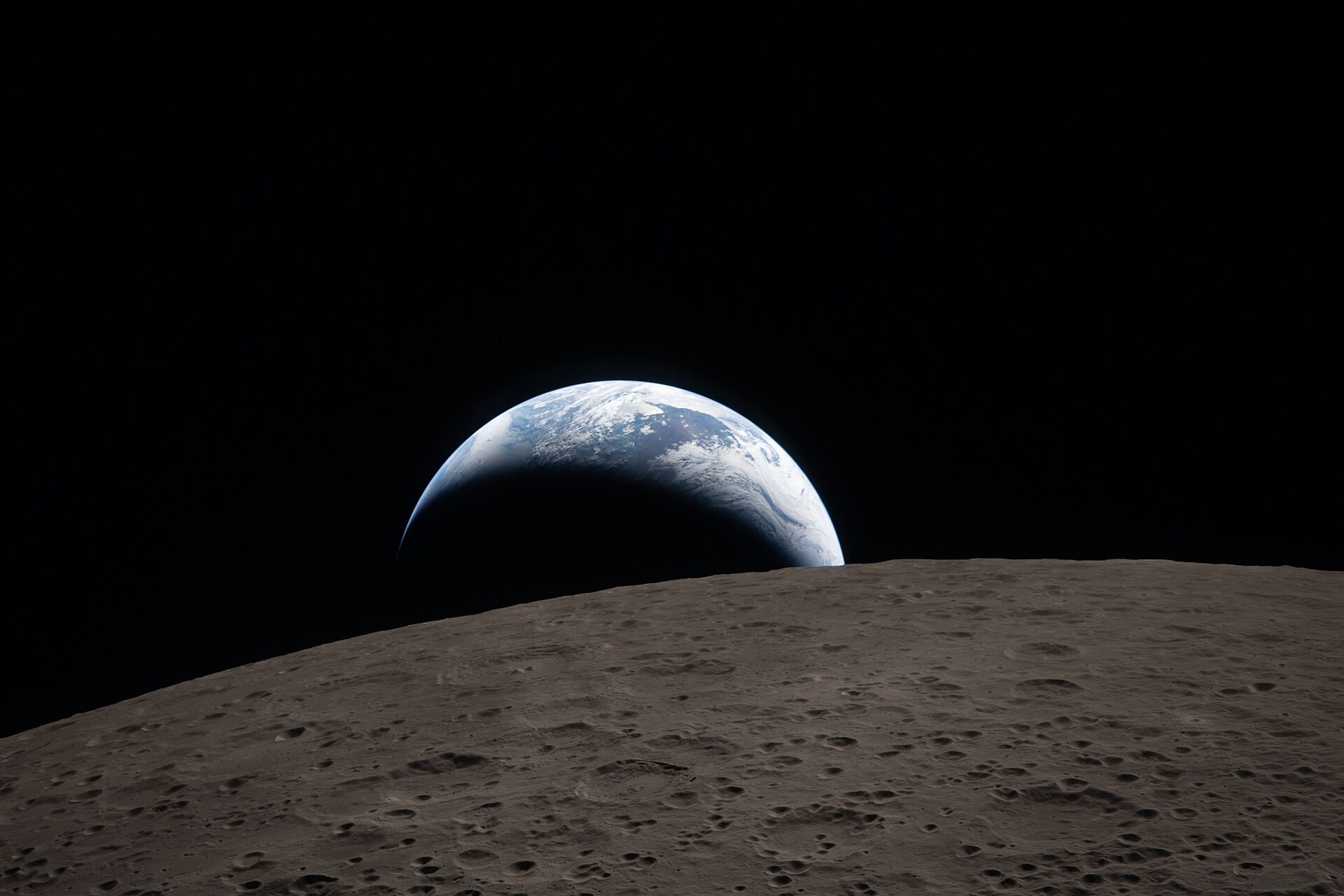
Another view of our planet from space, among the first to be taken from this distance by a human being in over half a century. You can see the dramatic transition where night ends and day begins, the line dividing the two is known as the “terminator.”
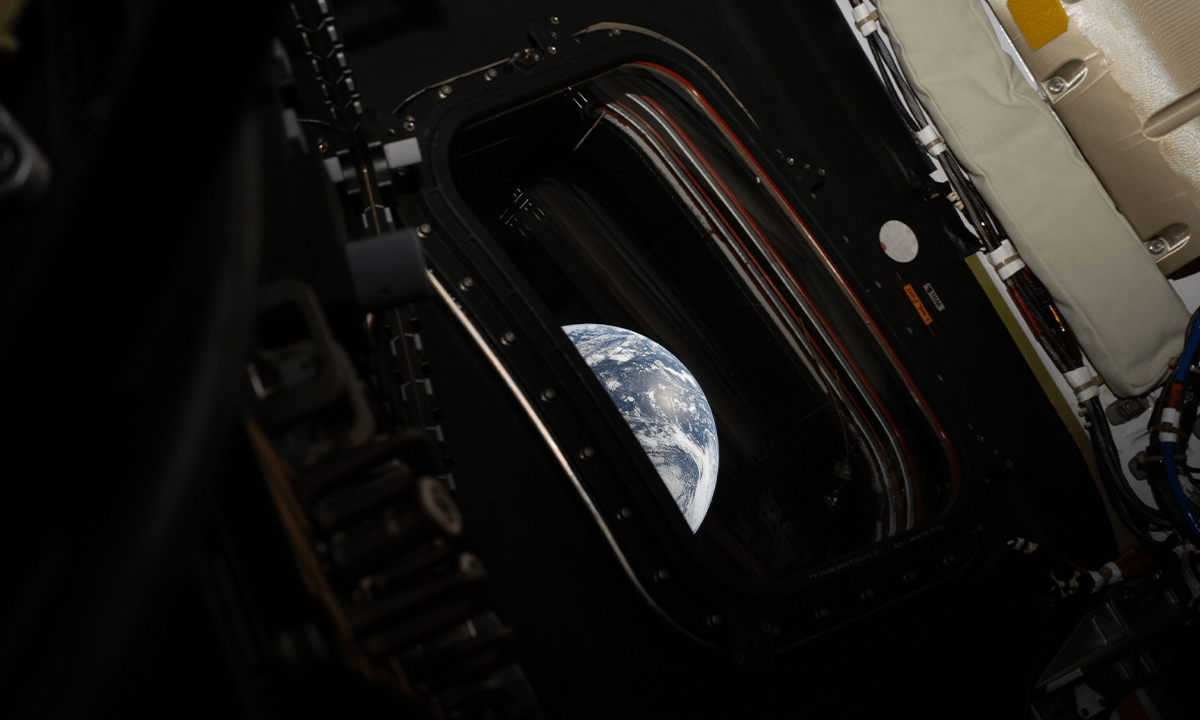
Earth peeks through the window of the Orion spacecraft’s command module. Fifty percent larger than the Apollo command module, this vehicle will be the crew’s home and work area for their 10-day voyage until it returns to Earth for reuse on future missions.
Tomorrow, when the crew will be halfway between the Earth and the moon, they’ll conduct more imaging exercises, beaming back breathtaking views of both celestial bodies. Stay tuned, and track their progress here. 
Enjoying Nautilus? Subscribe to our free newsletter.
Lead image: NASA/Reid Wiseman