Ever since he found a fossilized parrot mandible in 1983, Flinders University paleontologist Trevor Worthy has wondered about the backstory of fossils in Moa Eggshell Cave, North Island, New Zealand. The country is rife with fossil deposits dating to the Late Pleistocene, showing what lived in New Zealand when humans arrived about 750 years ago. Humans played a role in more than 50 species going extinct over just a few hundred years, but whether other provocations caused species turnover earlier in the Pleistocene has been unclear.
In a recent study, Worthy and colleagues from Canterbury Museum, the University of Auckland, and Victoria University of Wellington show that catastrophic environmental changes about 1 million years ago caused extinctions long before humans made their mark. Published in Alcheringa: An Australasian Journal of Palaeontology, the study shares findings from the parrot mandible and 15 additional fossils since collected from Moa Eggshell Cave.
After building a fence to keep goats from wandering into their work, the study authors sieved the cave’s fine sediments to trap any fossils. The fossils were found sandwiched between two layers of volcanic ash in the cave, which dated to 1 and 1.55 million years ago, respectively. This means the fossils are about a million years old and from the Early Pleistocene.
Read more: “Is the Modern Mass Extinction Overrated?”
The fossil finds proved to contain four species of frogs and 12 species of birds, of which at least four, if not six, bird species were extinct by the Late Pleistocene. As such, the bird fauna turned over by 33 to 50 percent during the million years leading up to human arrival.
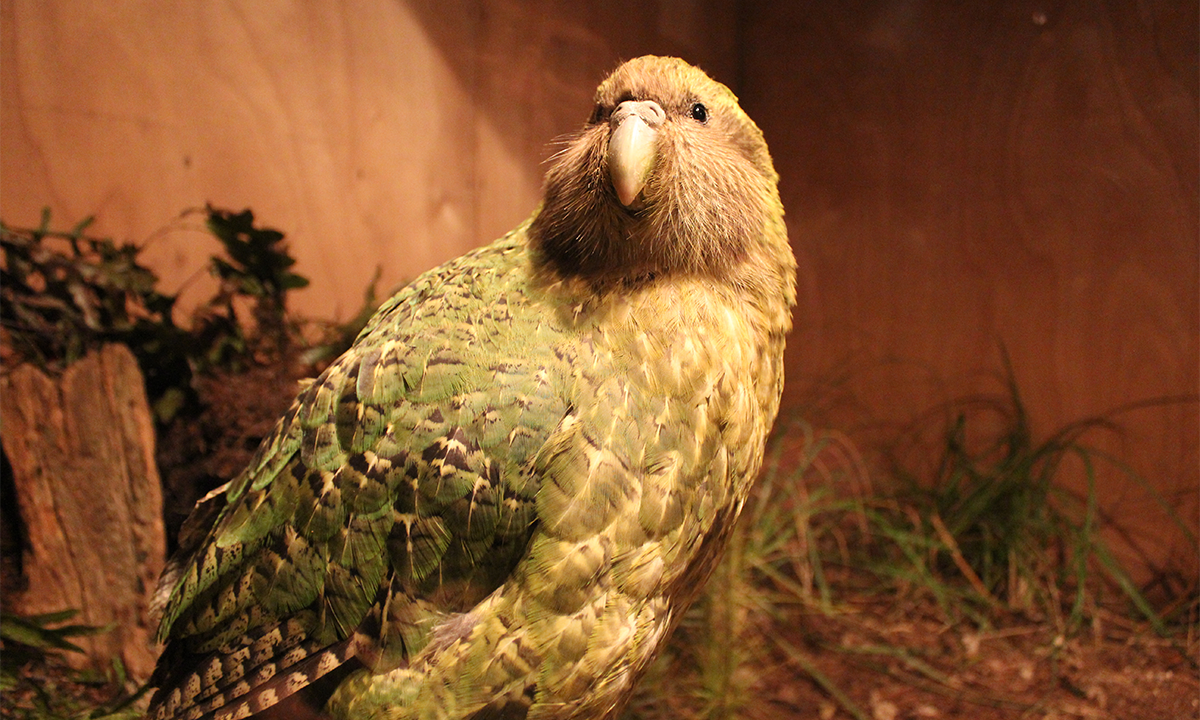
“This is a newly recognized avifauna for New Zealand, one that was replaced by the one humans encountered a million years later,” said Worthy in a statement. It included species like the newly named Strigops insulaborealis parrot, an ancestor of the modern Kākāpō; and an extinct pigeon, a relative of modern Australian bronzewing pigeons (Phaps elegans).
What could have prompted the Early Pleistocene bird extinctions?
During that period, oscillations between glacial and interglacial periods were known to have increased in magnitude, which could have “reset” bird populations by shifting their forest and shrubland habitats, said study author and Canterbury Museum paleontologist Paul Scofield. The researchers also point to the cataclysmic volcanic eruption that blanketed the cave a million years ago.
“For decades,” explained Worthy, “the extinction of New Zealand’s birds was viewed primarily through the lens of human arrival 750 years ago. This study proves that natural forces like super-volcanoes and dramatic climate shifts were already sculpting the unique identity of our wildlife over a million years ago.” 
Enjoying Nautilus? Subscribe to our free newsletter.
Lead image: Imogen Warren / Shutterstock