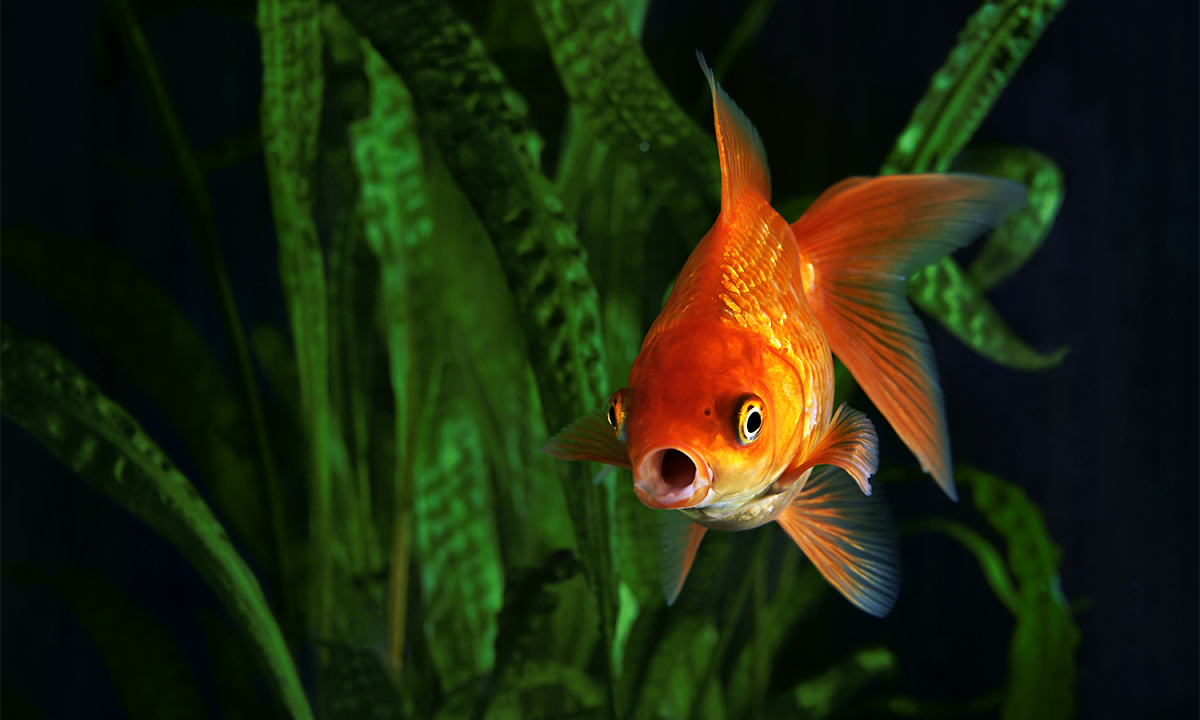
Having a pet goldfish is all fun and games until you release it into the wild. There, the species (Carassius auratus) becomes an invasive pest, growing as large as 18 inches and living up to 30 years while devastating the ecosystem. A new study published in the Journal of Animal Ecology shows just how much destruction these little aquarium pets can cause.
Researchers from the University of Toledo introduced goldfish to tubs of water designed to mimic the natural ecosystem, complete with native species of fish, microorganisms, and algae. Over the course of 60 days, the shimmering swimmers wreaked havoc on their new homes.
Read more: “These Photos Remind Us Why Conservation Matters”
Because they tend to root in the lake bed searching for food, the goldfish kicked up a lot of sediment, turning the water a murky brown. The populations of small invertebrates that form the foundation of the food web collapsed, and the outcompeted native species of fish suffered. According to the researchers, the goldfish caused a “regime shift” in the habitats, pushing them past a tipping point that can be difficult and resource-intensive to reverse.
That’s why, unlike most scientific research, this study comes with a stark warning from the scientists. “It is critically important to inform the public that their pets can become pests that will harm freshwater ecosystems,” study author William Hintz said in a statement. “The evidence is now clear—releasing a goldfish into the wild might be seen as an act of kindness, but it can turn into a major ecological threat.”
So think twice before you throw that ping-pong ball at the county fair. A pet goldfish requires a lot more responsibility than it might seem. 
Enjoying Nautilus? Subscribe to our free newsletter.
Lead image: Mirek Kijewski / Adobe Stock