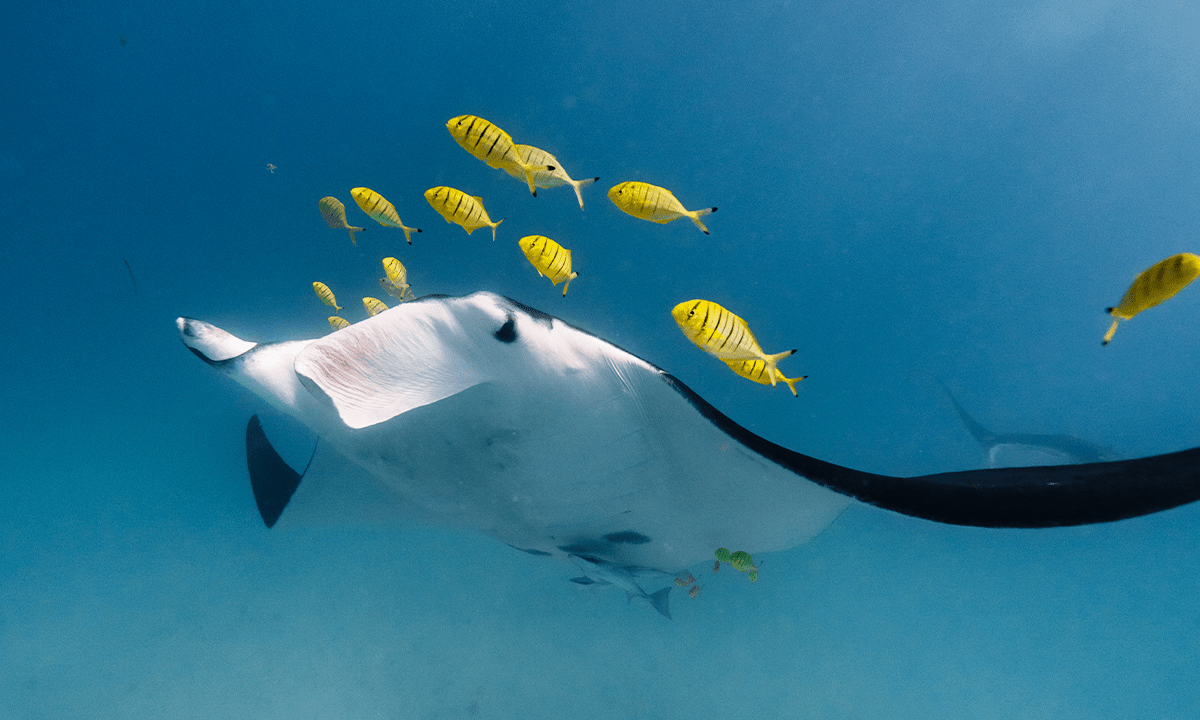
The shallow coastal waters of Florida double as a nursery for Atlantic manta rays (Mobula yarae), where, according to a recent study published in Marine Biology, these juvenile morays also serve as hosts for mini ecosystems of other young marine life.
Researchers from the University of Miami Rosenstiel School of Marine, Atmospheric, and Earth Science and the Marine Megafauna Foundation analyzed video footage collected in the area from 2016 to 2024. Based on 465 videos, a combination of research diver GoPro and drone filming, they found that small fishes regularly swim alongside juvenile manta rays. Remoras (i.e., suckerfish) attach to their undersides, while species such as scads and jacks cluster on top of their eyes, gills, and wing edges.
On average, a manta ray carried six hitchhiking fishes, but there was an instance of a single manta amassing 230 fish companions. The manta rays’ personal ecosystems changed seasonally, with more jacks and scads swimming along during the winter wet season and more remoras in the dry season. The families of symbiotic fishes—Carangidae, Echeneidae, and Rachycentridae—on the Atlantic morays have also been reported on morays in the Maldives, suggesting common ecological drivers, according to the study.
Read more: “Manta Rays at Play”
“These species may be interdependent and form long-lasting and relatively stable relationships, creating mobile ecosystems where fish may mature, feed, or mate,” explained shark specialist and study author Catherine Macdonald in a statement.
The accompanying fishes are likely benefiting from shelter provided by the manta rays’ larger bodies and opportunities to feed as the manta rays cruise around stirring stuff up. Remoras, for example, are known to eat parasites off their host fish and scavenge host meal scraps.
Unfortunately, the manta rays and their symbiotic fish consorts are vulnerable to activities along the Florida coast, given its popularity for human recreation. As such, manta rays risk entanglement in fishing lines and collisions with boat propellers.
“Slowing down in areas where mantas are known to feed near the surface is a simple but crucial step toward protecting these young rays,” said co-author Jessica Pate of the Marine Megafauna Foundation. “Responsible boating and fishing can help protect these species and their critical ecological interactions long-term.” 
Enjoying Nautilus? Subscribe to our free newsletter.
Lead image: Lewis Burnett / Shutterstock