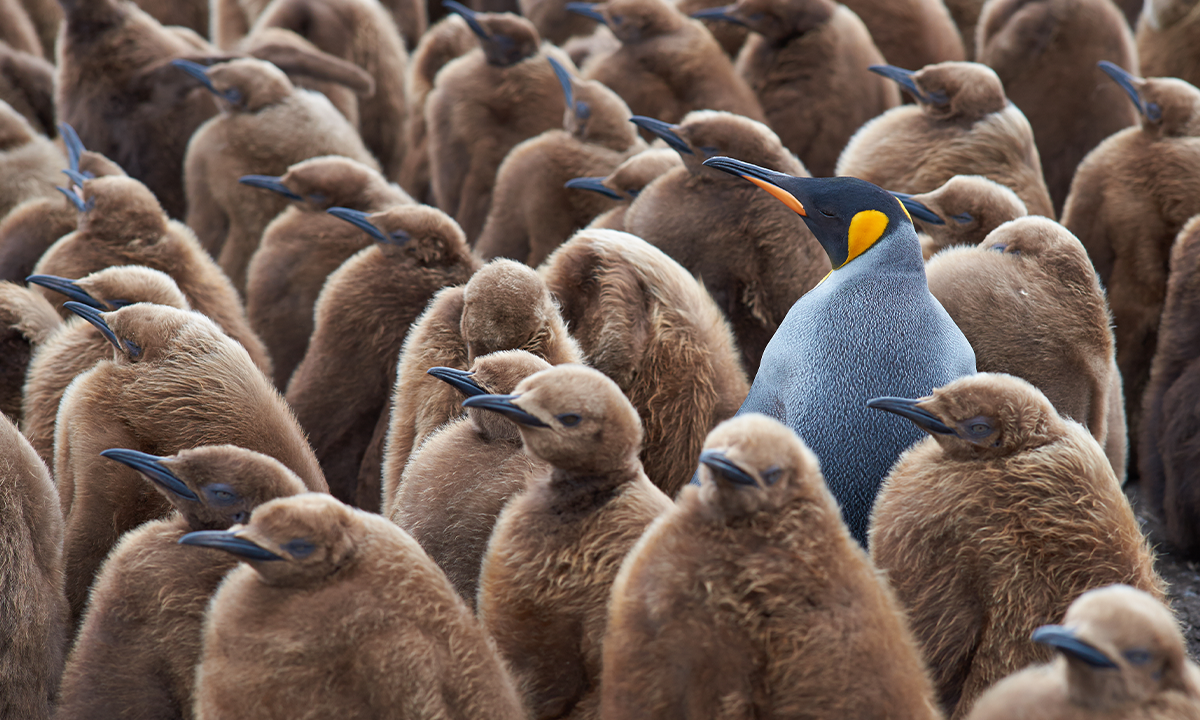
What makes an individual an individual?
Some people might say it’s their genes, while others might say it’s the choices they make. A new study recently published in Trends in Ecology & Evolution is taking a close look at both and combining individuality, epigenetics, ecology, and evolution to offer a novel framework for understanding what makes organisms unique.
“With our study, we propose that individuality and epigenetic variation influence each other,” study author Denis Meuthen of Bielefeld University in Germany explained in a statement. “This bidirectionality—this mutual interaction—helps us to better understand ecological and evolutionary processes.”
Epigenetics involves changes in gene expression without changing DNA sequences. For example, a methyl group attached to a gene can block transcription of the gene. Even though the underlying genotype remains the same, a different phenotype can emerge.
While these epigenetic modifications can be inherited by their descendants, they aren’t always and may not persist in future generations. Put simply, they’re not as “sticky” as direct changes to the genetic code. Because of that, they’ve traditionally been viewed by biologists as having somewhat weaker evolutionary effects.
Read more: “Is Everyone the Same Person?”
This new perspective sidesteps that debate, suggesting that epigenetic modifications can still persist without direct inheritance. Epigenetic processes, researchers say, can influence an individual organism’s behavior, which can, in turn, alter their environment. The core idea of their novel approach is that the altered environment can also give rise to new epigenetic patterns.
For example, an organism seeking out new accommodations may build a nest, with the nest-living lifestyle altering their epigenome. Because their offspring also grow up living their best nest life, their epigenomes would be similarly altered. The change in epigenetics wouldn’t require direct transmission from a parent, rather it would be mediated by the newly constructed environment.
According to the researchers, this could buffer natural selection, maintaining epigenetic diversity within populations. It also means biologists may need to shift their perspective, and use a more comprehensive approach to analyzing traits.
“For me, what makes this work special is that we no longer view individuality solely as the result of genetic differences, but as a dynamic process between organisms and their environments,” Meuthen said. “I am convinced that this provides an important foundation for thinking about ecological and evolutionary processes in a more realistic and integrative way.”
It’s a fresh perspective with far-reaching implications, but among them is that individuality isn’t a final discrete thing at all, it’s just another ongoing conversation between everything that makes an organism unique. 
Enjoying Nautilus? Subscribe to our free newsletter.
Lead image: Jeremy Richards / Shutterstock