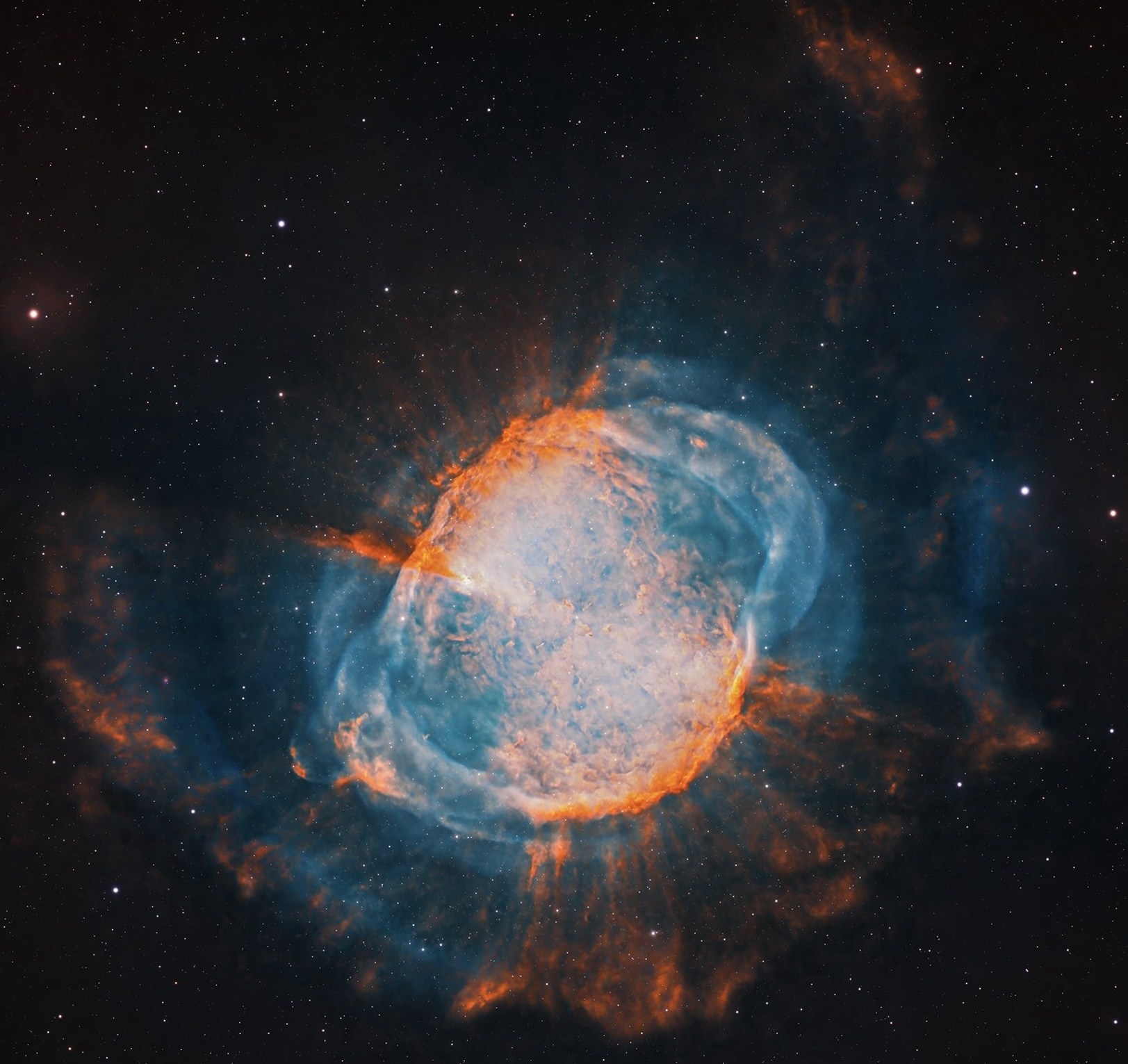
An eccentric Renaissance astronomer described an unusual observation in the sky using the most uneccentric term. A “nova stella” (Latin for “new star”) is what Danish nobleman Tycho Brahe called the strange light he saw in the sky in 1572.
Although he gave a more expansive and poetic title to his 1573 work detailing his observations of the new star (De nova et nullius aevi memoria prius visa stella or Concerning the Star, new and never before seen in the life or memory of anyone), Brahe did not likely anticipate the ripples that his study would send through human history. First, that his phrasing would come to be adopted as the accepted nomenclature for stellar explosions (or supernovae). And second that his obsession with the new star would help launch the scientific revolution that would drag humanity from the natural philosophy of the ancients into a new era of measurement and discovery.
As we sit at the doorstep of the next scientific revolution, debating the benefits and potential pitfalls of artificial intelligence on the scientific process, we are reminded that it was a natural phenomenon that started us on this path.
The story goes that Brahe was out for a stroll on the evening of Nov. 11, 1572, when he glimpsed a bright, new star in the constellation Cassiopeia, the swan. After his servants and passersby confirmed his observation (Did I mention he was eccentric?), the astronomer conducted more observations from his Herrevad Abbey observatory and set to work characterizing the cosmic event as best he could in an age before the telescope was invented. Although he was at a technological disadvantage, Brahe’s careful observations over the next couple of years, while the stellar explosion was still visible to the naked eye, laid the groundwork for a transformation in the practice of astronomy and eventually a revolution in science.
Prior to what became known as supernova 1572 (or SN 1572 for short), ancient Western astronomers saw the stars in the firmament as rotating but otherwise immobile objects, unchanging and static, like holes pricked in the fabric of space. The so-called “crystal spheres” of Aristotelian physics that contained the planets, sun, moon, and stars spun on more or less fixed axes and were made of a uniform element called aether. The appearance of a light that existed outside of memory or documentation changed that worldview.
As he watched the bright, new star, Brahe noted that the object did not shift its position in the sky depending on his own change in position throughout the day. This lack of what astronomers call diurnal parallax suggested that SN 1572 existed outside at least the orbit of the moon and likely the orbits of all the planets, which all show some parallax. So the unchangeable outer heavens could indeed change.
Read more: “The Eccentric Seer of Supernovas”
Brahe’s publication on the stella nova made him an astronomical star in Europe, and he would go on to catalog and calculate the positions of numerous stars throughout his life, even while expressing frustration that the tools of the time were unequal to the task of accurate astronomical observation.
To be sure, there was a confluence of other scientific efforts and characters—Copernicus and Newton among them—coalescing in the same era. That original scientific revolution was more complex than a single celestial explosion. And the first scientific revolution turned into more of an evolution as technologies fueled insights into molecules, physics, and even evolution itself.
Now, AI is poised to revolutionize science yet again. Already, the rapidly changing technology is helping scientists identify new fundamental particles, parse novel proteins, decode animal communication, and comb the cosmos for as yet unobserved phenomena.
But this new era of scientific discovery comes with additional layers of complexity. Influential corporations hold the reins of AI infrastructure. And the technology comes with a seemingly insatiable appetite for energy and water.
As we move forward into the next revolution to hit science, it’s helpful to remember how we arrived here, in part thanks to a new star that appeared in the sky. 
Enjoying Nautilus? Subscribe to our free newsletter.
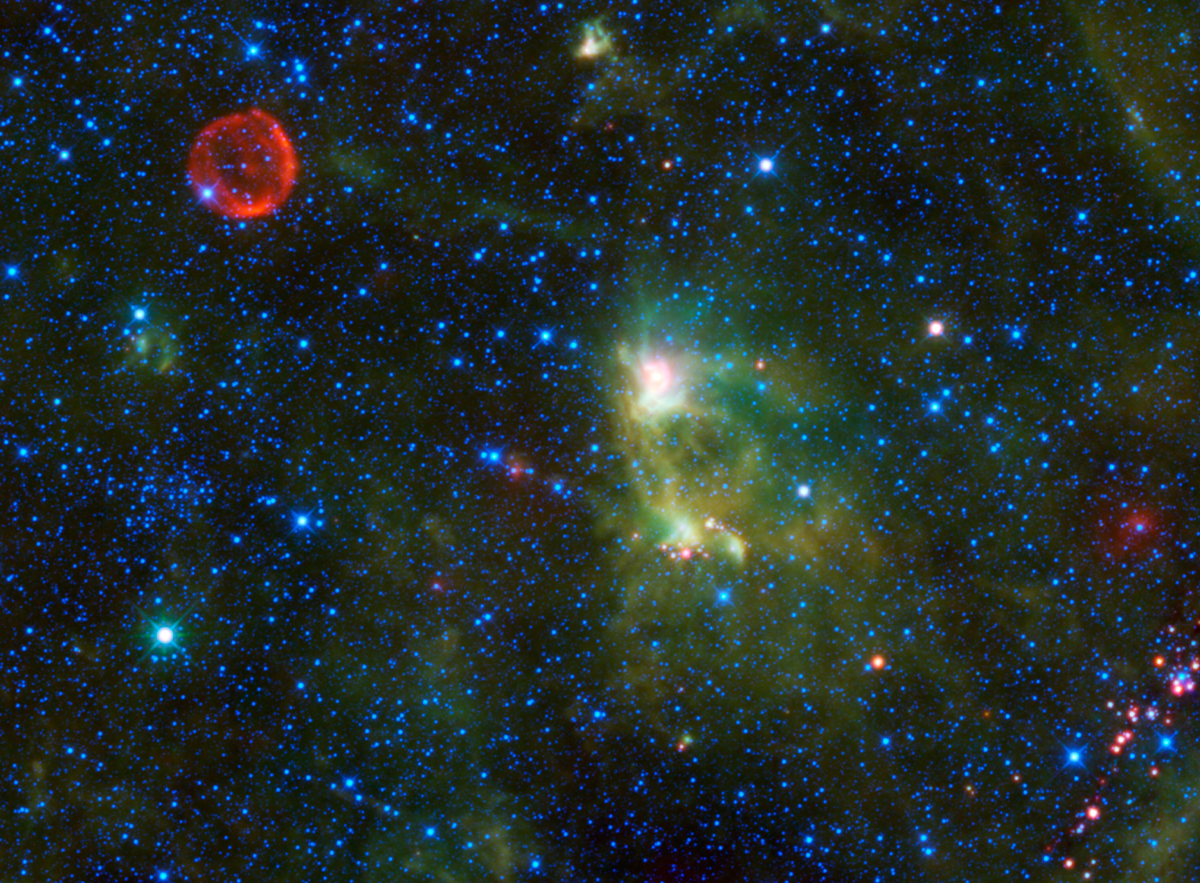
Lead image: NASA/JPL-Caltech/WISE Team