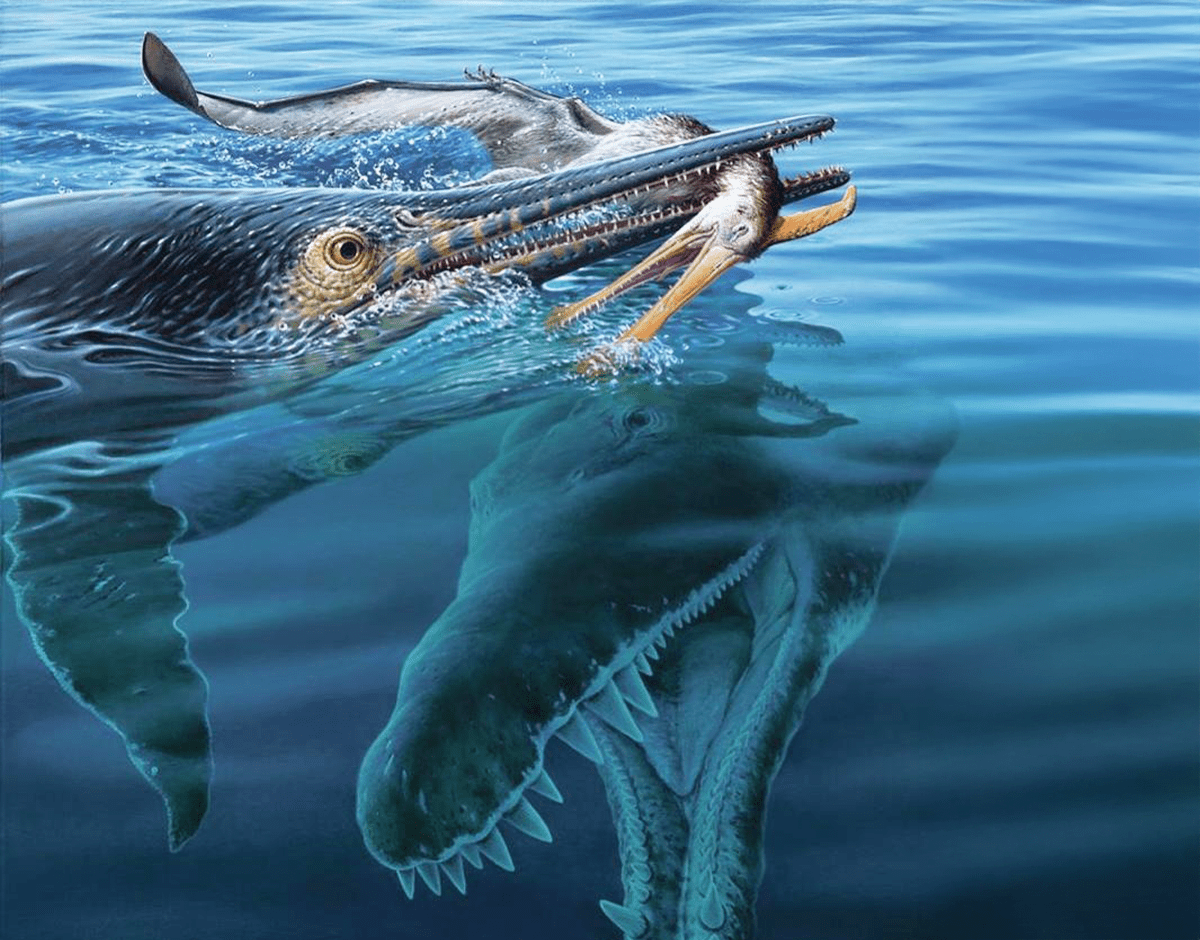
Eighty million years ago, North America was split in half by a vast shallow sea known as the Western Interior Seaway. It was home to prehistoric sharks, colossal crocodiles, and the most fearsome predators of all: mosasaurs. When the waters receded, fossils from these marine reptiles were left scattered across the continent—and may have even inspired Native American legends about water monsters. Now a new species has been discovered in Texas, and it’s got a very familiar name.
In the first description of the species, published this week in Bulletin of the American Museum of Natural History, researchers named the mosasaur Tylosaurus rex or “king of the tylosaurs.” Before it was christened as the newest T. rex, the species was incorrectly labeled as a different species (Tylosaurs poriger) in several museum collections. Paleontologist Amelia Zietlow and her colleagues discovered the error after carefully comparing the specimens to the archetypical fossil for T. poriger.
Read more: “T. Rex Was a Slacker”
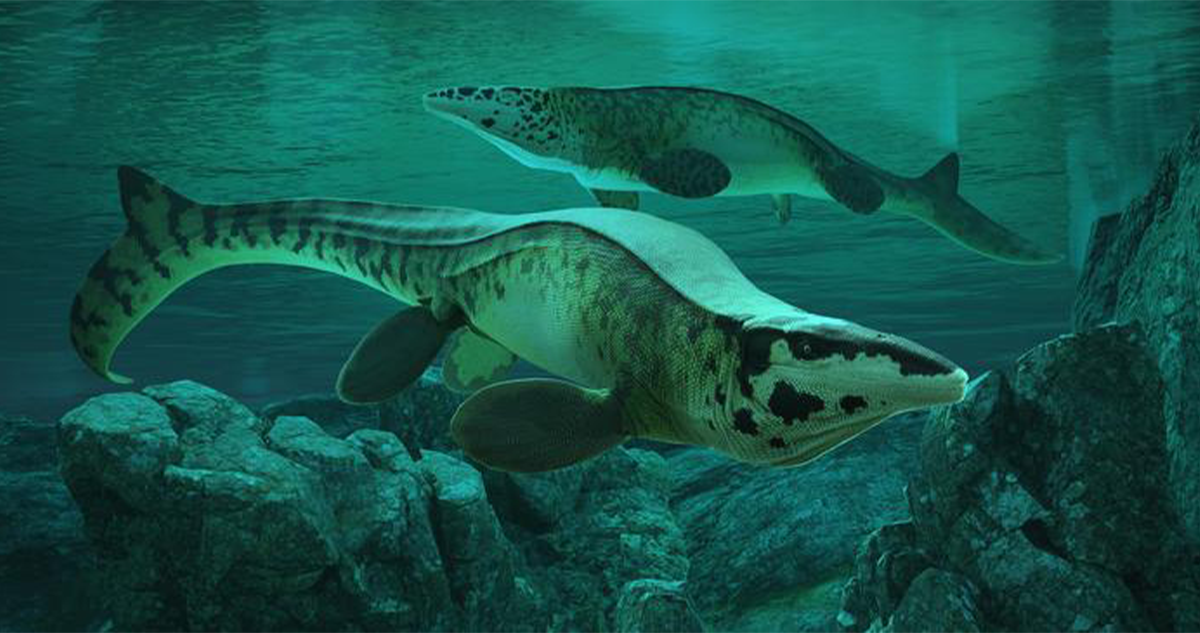
One feature that sets T. rex apart is its size. The species measured 43 feet long from snout to tail, cementing its spot as apex predator of the shallow sea. “Everything is bigger in Texas and that includes the mosasaurs, apparently,” Zietlow joked in a statement.
T. rex also had razor-sharp serrated teeth, unlike other mosasaurs, and an attitude to match. “Besides being huge, roughly twice the length of the largest great white sharks, T. rex appeared to be a much meaner animal than other mosasaurs,” study co-author Ron Tykoski of the Perot Museum explained. “Through our study and examination of well-preserved fossils collected throughout the north Texas region, we have evidence of violence within this species to a degree not previously seen in other Tylosaurus specimens.”
It’s hard to be the king. 
Enjoying Nautilus? Subscribe to our free newsletter.
Lead image courtesy of Alderon Games - Path of Titans