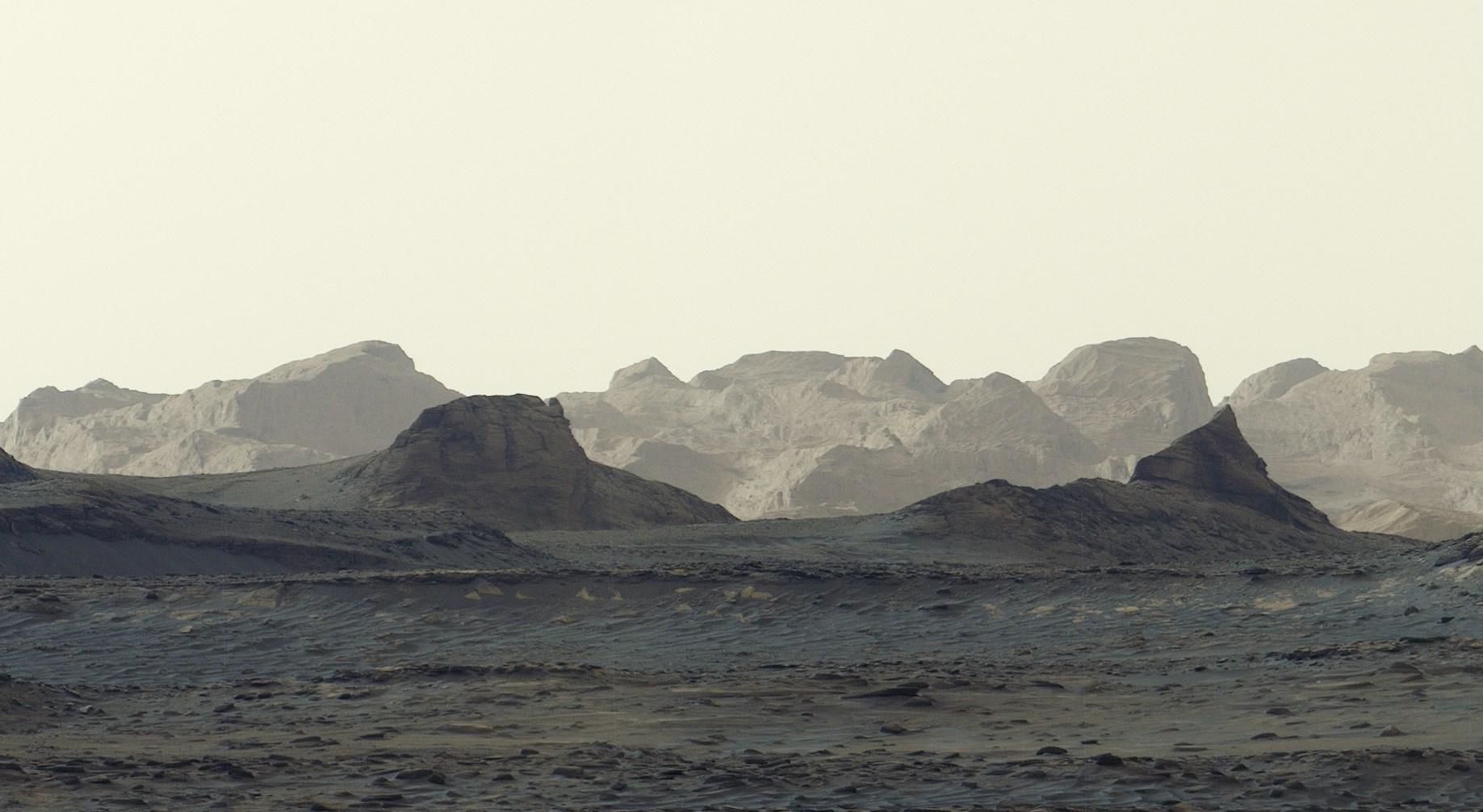
The Curiosity rover has taken some fantastic photos since it landed on the Red Planet in 2012. And here’s a stunning new one to add to the collection: a view of an early morning Martian sunrise.
The shot was captured by Curiosity’s Mastcam, actually two cameras in one snapping images at a resolution of 1,600 by 1,200 pixels. The scene was stitched together from a series of photos snapped at around 8:30 a.m. Mars time on August 11, 2026.
What makes this photo particularly special is what NASA scientists haven’t done to it. Unlike most Curiosity images, it hasn’t had any white balance adjustment done to make it more “Earth-like” (and to help geologists pick out different features); this is a closer match to what you’d actually see waking up on Mars.
As for the view, it’s of rocky ridges known as yardangs that have been carved over millions of years. They’re on the northwestern edges of Mount Sharp, which stands 3.4 miles high and which the rover has been ascending slowly since 2014.
Read more: “The Best Mars Photos Taken by the Curiosity Rover”
“The yardang layer looks out of place,” Curiosity project scientist Ashwin Vasavada explained in a statement. “It’s the wrong color, the layers tilt at an odd angle, and it almost appears plastered on. But that’s what makes it exciting to reach. No one is sure exactly what created this layer, but one idea is it may be ash deposited by ancient volcanic eruptions.”
Previously, Curiosity’s study of yardangs has led to some important revelations about the lakes and streams that once cut through the Martian surface, before it got dried out into its current, arid state.
At an elevation of about 3,200 feet, Curiosity is now higher than any other probe has ever been on Mars, though there’s still a long way to go. It’s hoped that the rover will reach the ridges in this photo sometime in 2027, when it will attempt to get a rock sample as well as some close-up imagery.
While it’s difficult to say for certain how long Curiosity will remain operational, if it wants to beat the record lifespan for a Mars rover (14 years and 136 days set by Opportunity), it needs to keep going until at least Christmas.
And if the NASA Curiosity team is taking requests, how about a sunset next time? 
Enjoying Nautilus? Subscribe to our free newsletter.
Lead Image: NASA/JPL-Caltech/MSSS