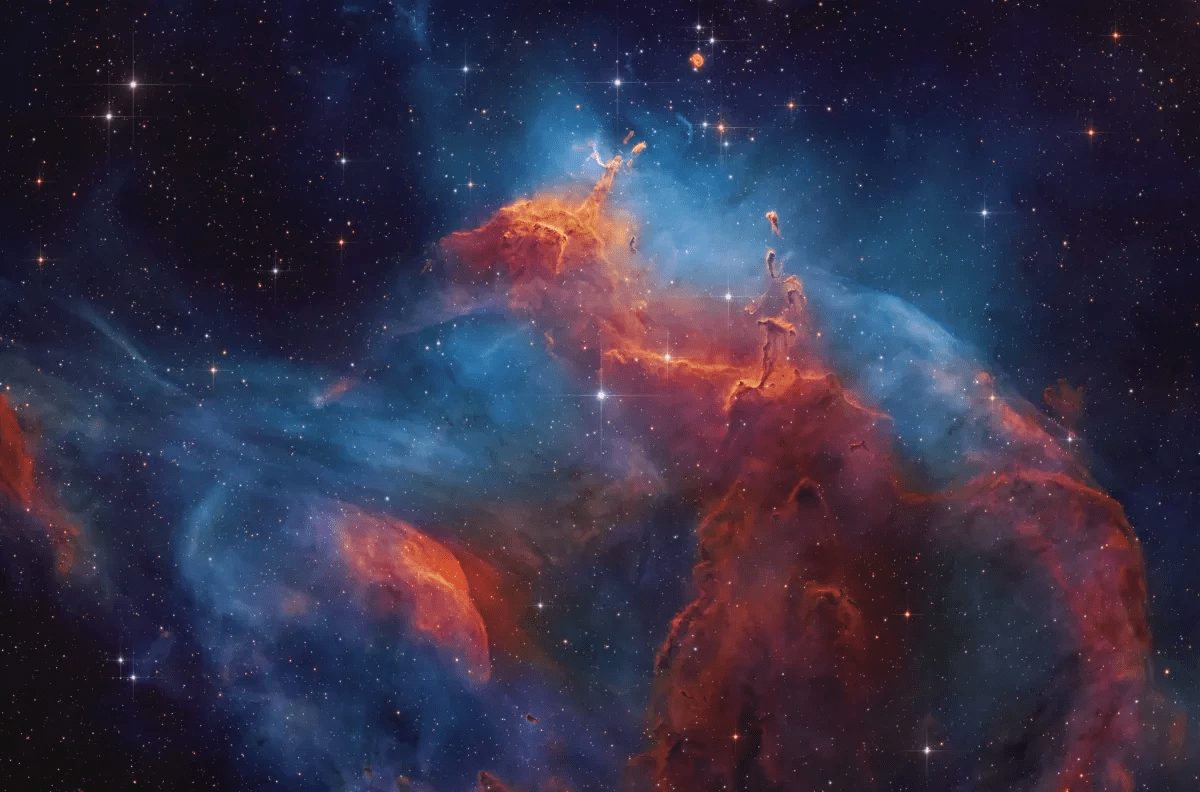
When a solar system is born, it isn’t really much of a system at all. Instead, it’s just a protostar surrounded by a whirling disc of gas and dust. Given time, gravity, and a variety of forces, the protostar becomes a star and the planets begin to take shape from the material within this cosmic cloud. The types of planets that form in a given solar system depend on their distance from the star and the available elements.
A new study suggests that in our solar system, the formation of rocky planets, including the one we live on, were created in part by an explosive outside force as well—supernovae.
For rocky planets to develop, heat-generating radioactive elements called “short-lived radionuclides,” or SLRs, need to be present to boil off excess water from burgeoning protoplanets. While these SLRs can come directly from a supernova blast, a stellar shockwave so close to a fragile baby solar system could disrupt the whole solar system construction project. A new “immersion model” proposed by researchers in Japan and published in Science Advances suggests an interesting twist.
Read more: “The Cosmic Web and the Fate of the Universe”
In this model, a supernova around three light-years away could have seeded our own protoplanetary disk with SLRs while being cosmically gentle enough to keep the nascent solar system intact. Still, it wouldn’t produce the ratio of SLRs that analyses of meteorites have shown were present in our solar system’s infancy. To account for the missing SLRs, University of Tokyo Ryo Sawada astrophysicist and his team proposed that cosmic rays emanating from a supernova irradiated material within the protoplanetary disk to produce additional radioactive elements. In other words, a supernova could cause an initial dose of SLRs followed by a kind of cosmic radiation “booster shot.”
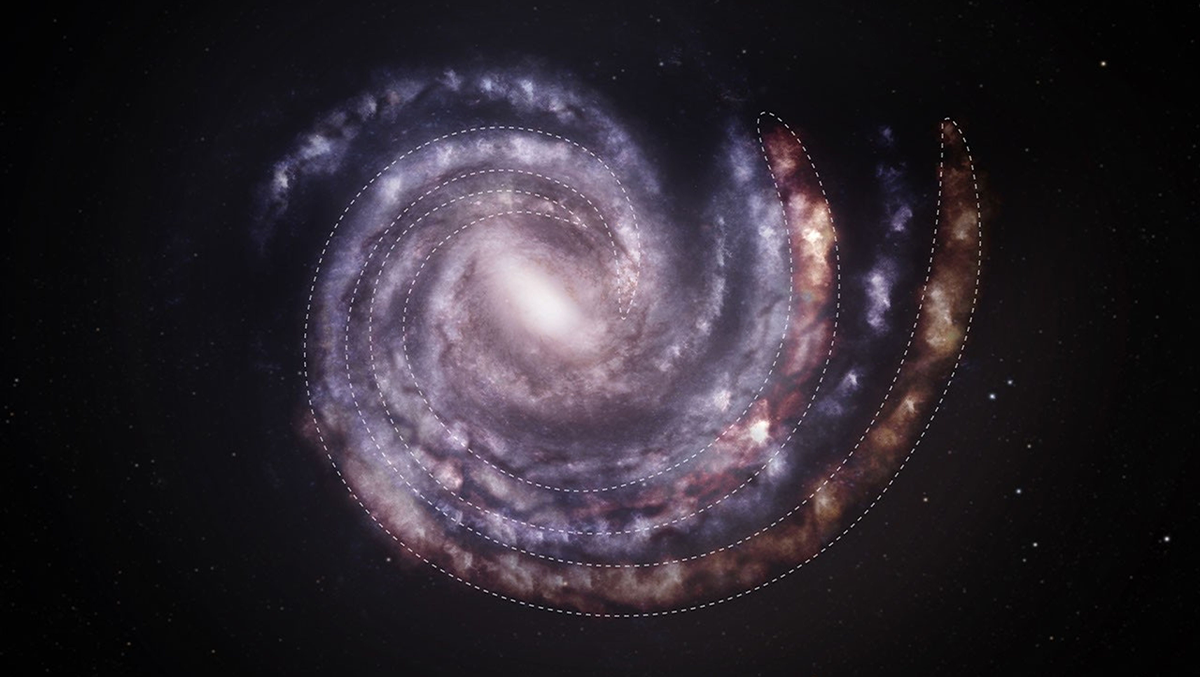
It’s an exciting model, and not just because it could explain how Earth formed; it also increases the chances of finding other rocky planets capable of supporting life in the Milky Way.
“At least 10 percent, possibly 50 percent of sun-like stars are likely to host protoplanetary disks with SLR abundances similar to those of the protosolar disk,” Sawada and his co-authors wrote. “Our results suggest that Earth-like, water-poor rocky planets may be more prevalent in the galaxy than previously thought.” 
Enjoying Nautilus? Subscribe to our free newsletter.
Lead image: Merikanto / Wikimedia Commons