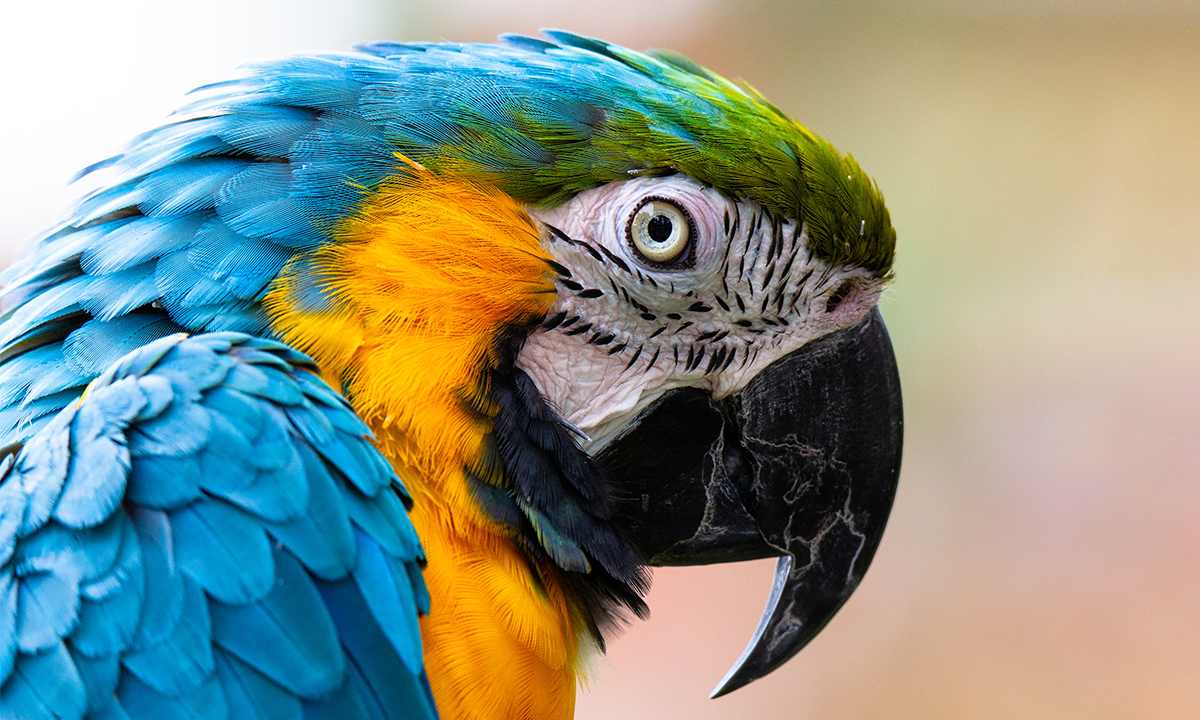
Humans aren’t the only animals that call each other by names. Dolphins and elephants both use specific vocalizations to refer to individuals of the same species, but what about parrots? While these talkative birds are definitely adept at mimicking human speech and can repeat names, it’s unclear whether they’re actually using them to refer to others in the same way we do. New research published in PLOS One is shedding light on whether these avian mimics have the same cognitive naming abilities as other social animals.
Biologists Lauryn Benedict of the University of Northern Colorado and Christine Dahlin of the University of Pittsburgh looked at data from the ManyParrots project, which collects surveys and audio recordings from parrot owners. Analyzing data from close to 900 parrots, the team found around 413 clips of the birds seemingly using names. Of those, 88 were parrots using names as specific labels for individuals, either referring to themselves, a person, a companion bird, or another pet.
Read more: “The Woman Who Saw Birds as Individuals”
But do parrots really cognitively grasp what names mean?
It’s a bit unclear. Many of the parrots used names in ways we typically wouldn’t. For example, some birds repeated their own names when they wanted attention or when greeting new people, and others referred to one dog by another dog’s name. That said, others used names appropriately, including one who said “Goodnight [name]” to each of its flock mates as they were being tucked in for the night.
According to the researchers, parrots definitely possess some cognitive and vocal capabilities to use names in different ways, but the variation in which they use them leaves plenty of questions. Additionally, it’s unclear whether parrots in the wild make up their own names for themselves—after all, the birds in this study were given human names by humans.
To find out for sure, we’ll have to study parrots in their own homes, and not ours. 
Enjoying Nautilus? Subscribe to our free newsletter.
Lead image: Martin / Adobe Stock