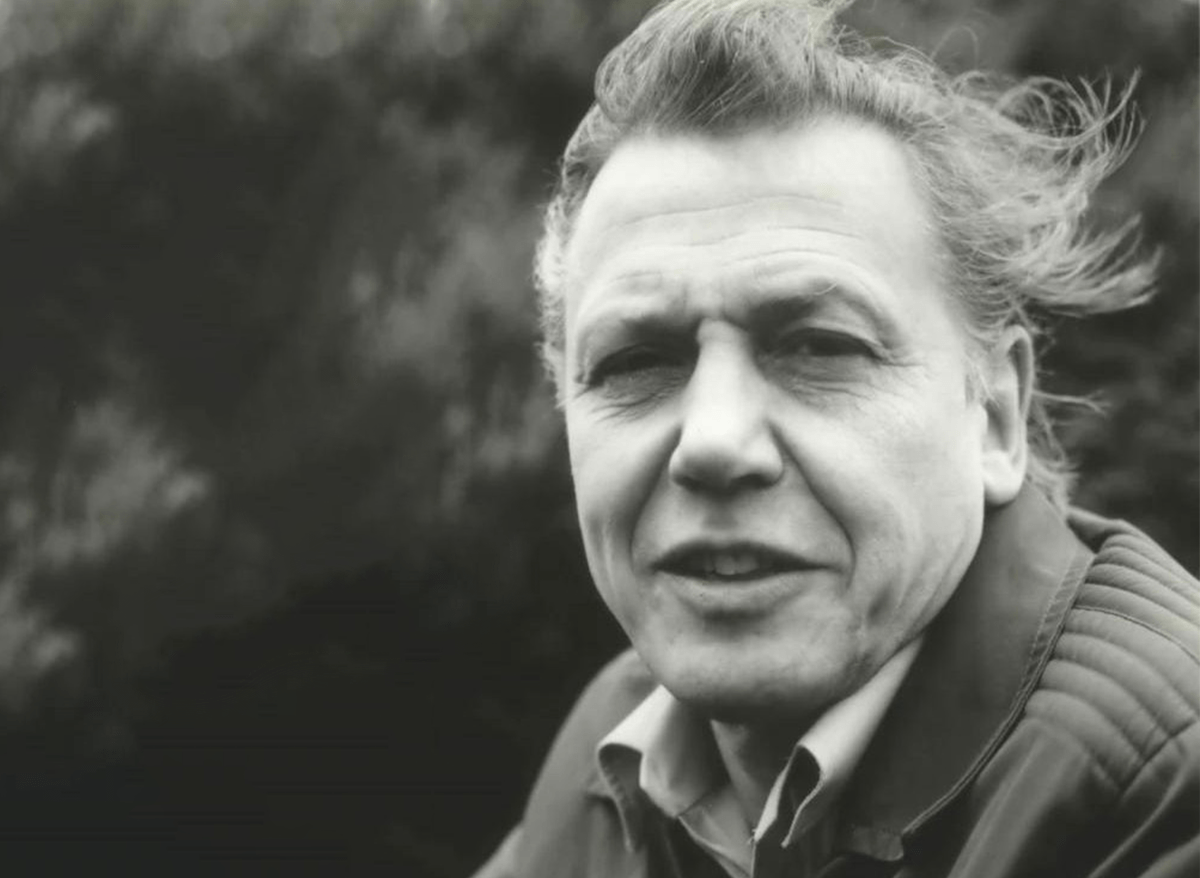
Two predictions of Albert Einstein’s—one scientific, one sentimental—have recently been confirmed.
The first came early in 2016: the existence of gravitational waves. The second came late last month: the handsome price of a pair of notes Einstein wrote, in place of a tip, to a bellboy in 1922, while on a lecturing tour in Japan. The scientist, who had just learned he’d won the Nobel Prize, had empty pockets but didn’t come up empty. He dished out some priceless wisdom to the young man—“A calm and modest life brings more happiness than the pursuit of success combined with constant restlessness,” he wrote in German—that went on to fetch, as Einstein foresaw, a hefty price. He told the bell boy, according to the Jerusalem-based auction house, Winner’s Auctions and Exhibition, that his note could be worth more than a tip someday. Someone bought it for $1.56 million. (Einstein’s second note to the bellboy, far more inexpensive at $250,000, was also more cliché: “Where there’s a will, there’s a way.”) It was far more than the auction house had predicted it’d go for: $5,000 to $8,000. The bellboy’s descendants, according to the New York Times, were “elated by their new riches.”
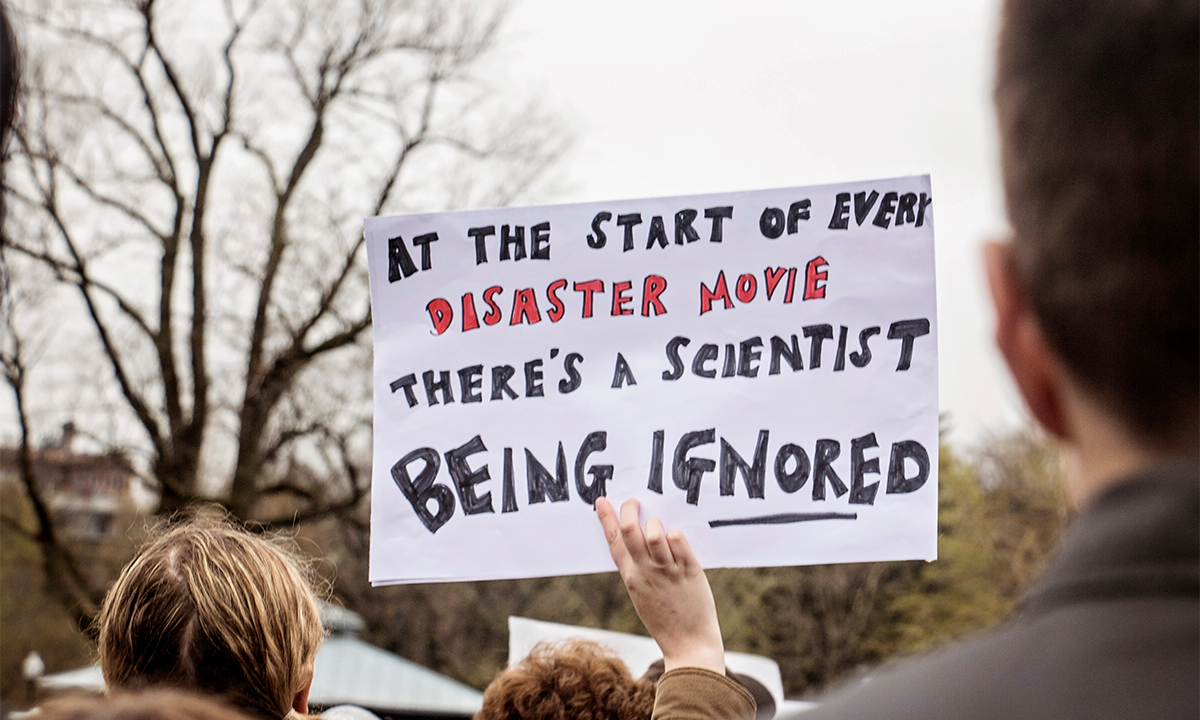
It’s heartening to see a scientist be so admired cross-culturally.
How to explain the price? Meni Chadad, a spokesman for Winner’s, offered this to the Times: the fact that “the story behind the tip is so uplifting and inspiring, and because Einstein continues to be a global rock star long after his death.” Chadad’s account is fair enough, but he could’ve gone further: Einstein doesn’t continue to be merely a “global rock star” nowadays—he’s the global rock star.
At least, that was the conclusion Katja Hanke, a psychologist at the Leibniz Institute for the Social Sciences, James H. Liu, a psychologist at Victoria University of Wellington, and others, came to in a 2015 study, titled “‘Heroes’ and ‘Villains’ of World History across Cultures.” After parsing the evaluations nearly 7,000 university students, from 37 countries, gave for 40 world-historical figures, the researchers found that Einstein was “the most highly rated figure in world history.” Mother Teresa edged out Gandhi for second place. Martin Luther King, Jr. came in fourth, and fifth place belonged to another scientist, Isaac Newton. (Jesus Christ just missed the top five, coming in sixth.)
Thirty-sixth place, or the 5th worst villain, is—who? Take a guess.* Does it help to know that Hitler was ranked the number one villain and George W. Bush, the fourth? If you know that Osama bin Laden is the second worst, and Saddam Hussein the third, the guess should be an easy one. Filling out the middle, at the 20th and 21st ranks, were Confucius and Alexander the Great, respectively. (Princess Diana, for good measure, got 11th, tailing, of all people, the Buddha.)
It turned out, the researchers write, that there was “more agreement across cultures about the ‘greatest heroes’ of world history compared to its ‘worst villains.’” People across the planet converged most on their positive rankings of Buddha, Newton, Einstein, Mother Teresa, and Nelson Mandela (who came in seventh). Abraham Lincoln, ranked ninth, garnered the least consensus as a top-10 positive figure cross-culturally, with Gandhi, Christ, and M.L.K. garnering a little more than him. “The pattern suggests that scientists are most consensually evaluated as ‘heroes’ across cultures, together with religious and humanitarian figures who are unambiguously associated with peace,” the authors write. They were interested in what this might mean in terms of a global political culture. “The first salient aspect of it, at least among university students,” they concluded, “is that the pursuit of scientific excellence appears to be evaluated in a pan-cultural manner.”
It’s heartening to see a scientist be so admired cross-culturally. Maybe humanity—for all its tribalism and sectarianism—is united, at least, in its respect for a commitment to uncover the secrets of nature.
Brian Gallagher is the editor of Facts So Romantic, the Nautilus blog. Follow him on Twitter @brianga11agher.
*It’s Joseph Stalin.