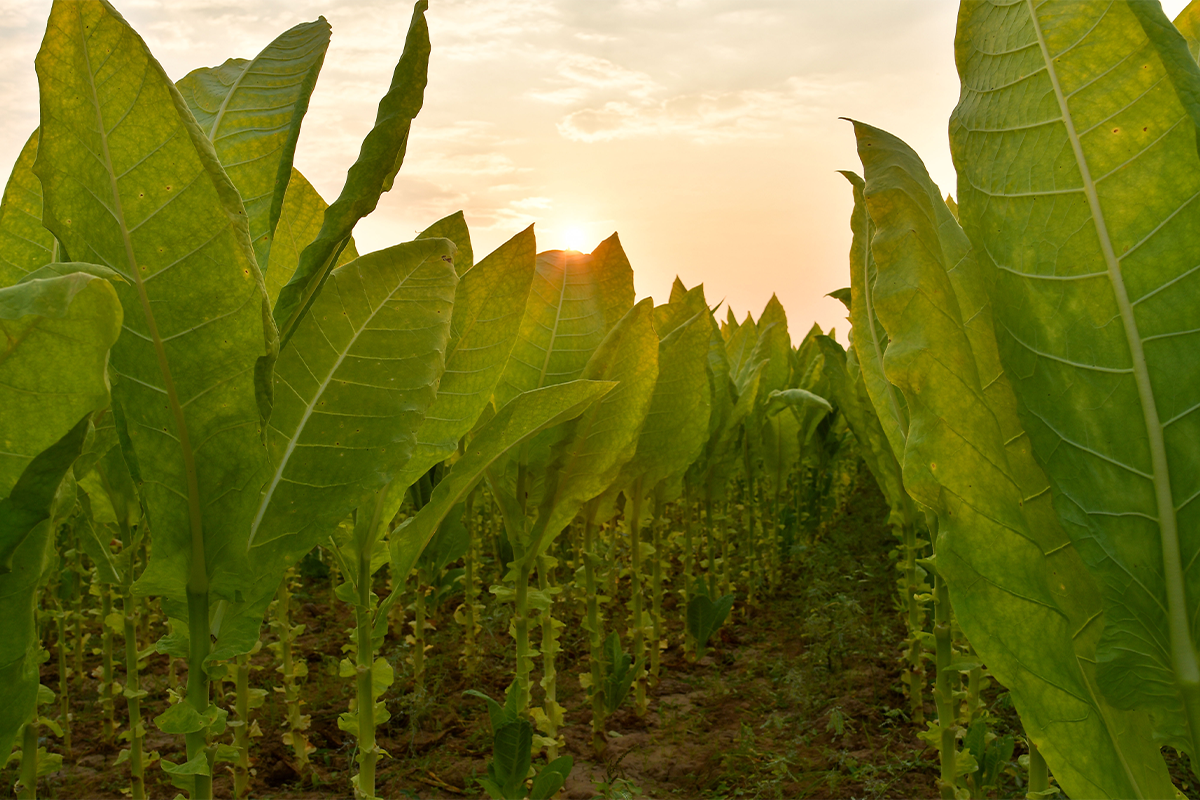
Humans have been cultivating tobacco since mammoths roamed the Earth. Fast forward several millennia and Europeans colonizing the Americas turned it into such a massive cash crop, they were using tobacco leaves as currency. More recently, it’s become an invaluable model organism for studying genetics and pathogens (the first virus ever discovered was the tobacco mosaic virus).
But despite our long and twisted history with tobacco, there’s a key thing we’ve never fully understood: how it produces nicotine. Now, new research published in Nature Communications has solved that mystery, and it’s a development that could actually improve our health.
“The puzzle of how tobacco plants produce nicotine has been around since the late 1820s, when nicotine was first extracted from the plants,” study author Benjamin Lichman of the University of York said in a statement. “Since then no one had cracked the mystery of how it was made. It is a big moment in plant science and biochemistry that we now have the answer we have been chasing for more than 200 years.”
Read more: “The First Time Tobacco Executives Admitted Smoking Is Bad for You”
The international research team discovered that sugar was key to the biosynthesis of nicotine. A glucose molecule bound to one of the two alkaloid rings that make up the larger structure allows the compound to come together. When the nicotine is complete, the glucose molecule is discarded, which explains why the step has remained hidden for so long. The team also uncovered two enzymes that facilitate this cryptic glycosylation.
“Tobacco plants can be used in biotechnology as platforms for producing vaccines or other pharmaceutical products, but it is plagued by the presence of nicotine which contaminates the products and requires processing to remove it,” Lichman said. “With this new knowledge we can remove or repurpose the nicotine that is produced naturally by the plant and create better biotechnology tools.”
The team said uncovering the final steps in nicotine biosynthesis will allow researchers to produce life-saving drugs and vaccines.
Maybe tobacco can be good for you after all. 
Enjoying Nautilus? Subscribe to our free newsletter.
Lead image: sirisakboakaew / Adobe Stock