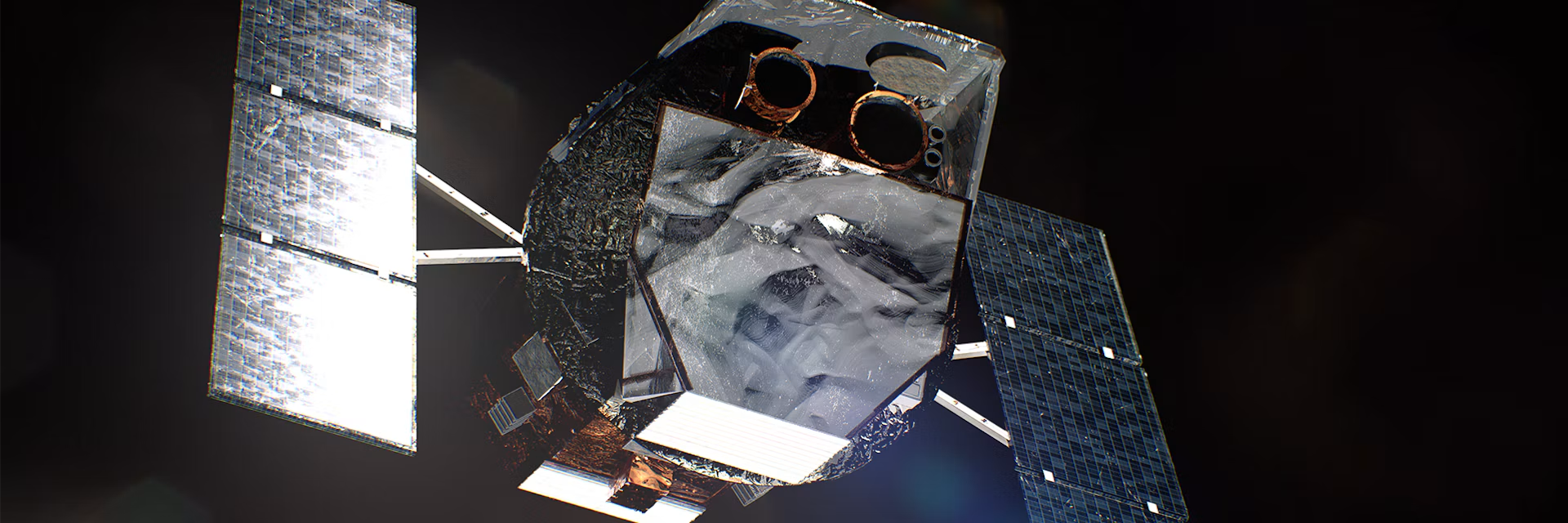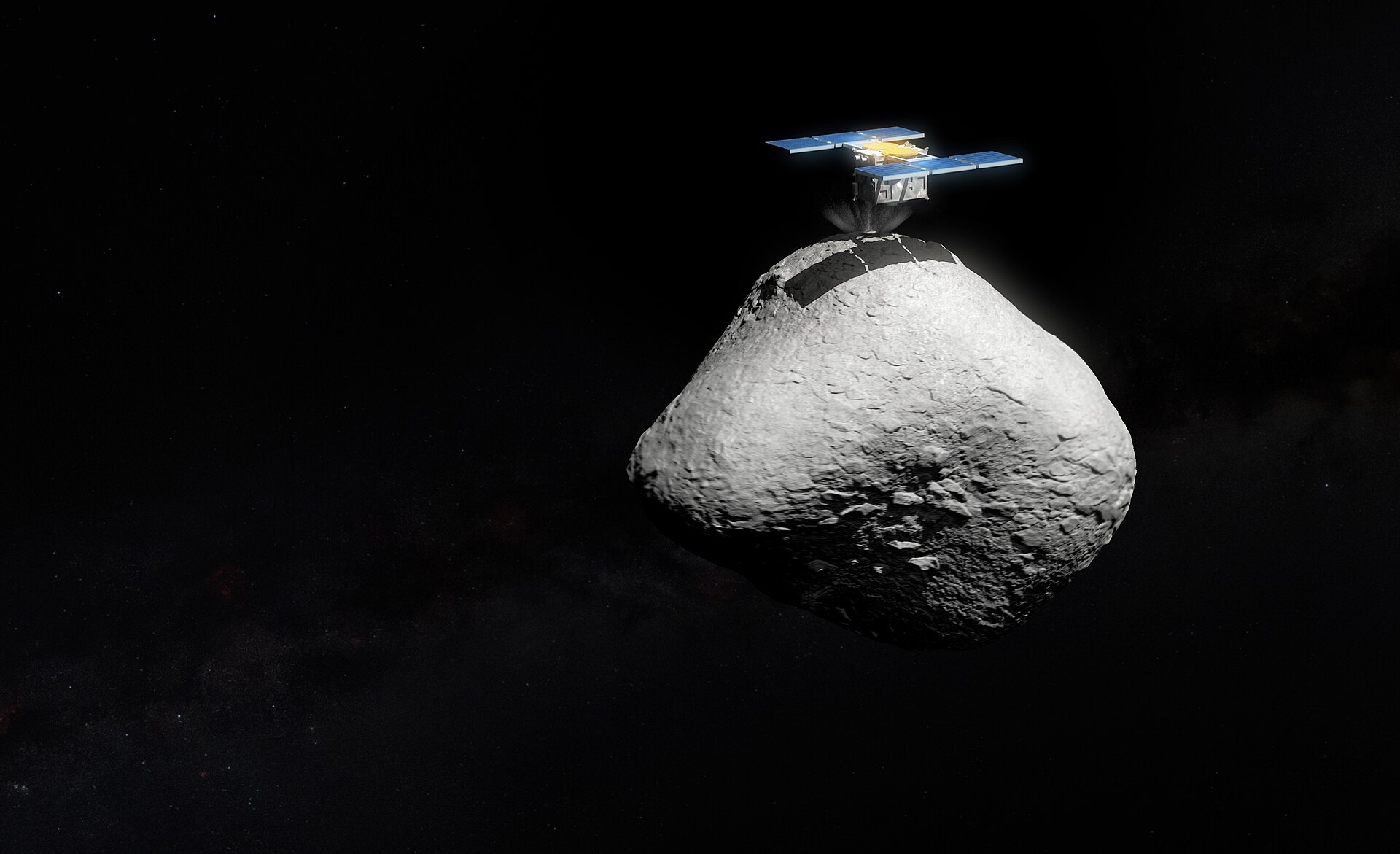
Hayabusa-2 is currently careening toward a rendezvous with the unknown. Launched in 2014, the Japanese spacecraft embarked on a mission to retrieve samples from asteroids and return them to Earth. It performed its duties admirably in 2018, spending a year and a half surveying the “rubble pile” asteroid Ryugu before swinging by its home planet to drop off the goods. Inside the sample return canister were traces of organic compounds from the dawn of the solar system.
Now its mission has been extended until at least 2031, when it should reach its next target: the smaller, speedier, more mysterious 1998 KY26. This peculiar celestial object has puzzled astronomers since its discovery nearly 30 years ago. It’s relatively tiny—not much bigger than Hayabusa-2 itself and roughly 1/100th the diameter of Ryugu—and it rotates at a brisk clip of once every 5.35 minutes.
Read more: “Nine Rebel Astronomy Theories That Went Dark”
But the weirdest thing about 1998 KY26 is its acceleration. Instead of smoothly zipping around the sun like a normal asteroid it tends to lurch perpendicular to its orbit in unpredictable ways. This odd behavior led Harvard astrophysicist Avi Loeb and colleagues to argue it wasn’t an asteroid at all, but the derelict Soviet space probe Phobos 1 (the paper, published earlier this year, hasn’t been peer reviewed).
Of course, there are other explanations for this kind of activity. For example, it’s possible 1998 KY26 is a “dark comet.” Comets get their magnificent tails from the sun heating icy particles that jet out into space. Dark comets, on the other hand, are asteroids that keep their icy material hidden beneath the surface. They can act like comets, but without the telltale tail.
Unfortunately, a new study published in the journal Icarus is throwing cold water on the dark asteroid theory—or rather, warm regolith. Per an analysis of 1998 KY26 conducted by aerospace engineers from the Georgia Institute of Technology, the object is much too warm to harbor any ice. “Our temperature model results indicate that the water outgassing rate on 1998 KY26 would be too high to maintain buried ice, refining the understanding of the asteroid’s composition,” the researchers wrote. If 1998 KY26 ever had secret pockets of frozen water, they would have been depleted long ago.
So why is this plucky little asteroid so weird?
We still don’t know for sure, but not knowing is the first step on the path toward knowing. While we speculate back on Earth, mark your calendars for July 2031—that’s when Hayabusa-2 makes contact. 
Enjoying Nautilus? Subscribe to our free newsletter.
Lead Image: ESO/M. Kornmesser. Asteroid: T. Santana-Ros et al; Hayabusa2 model: SuperTKG / Wikimedia Commons