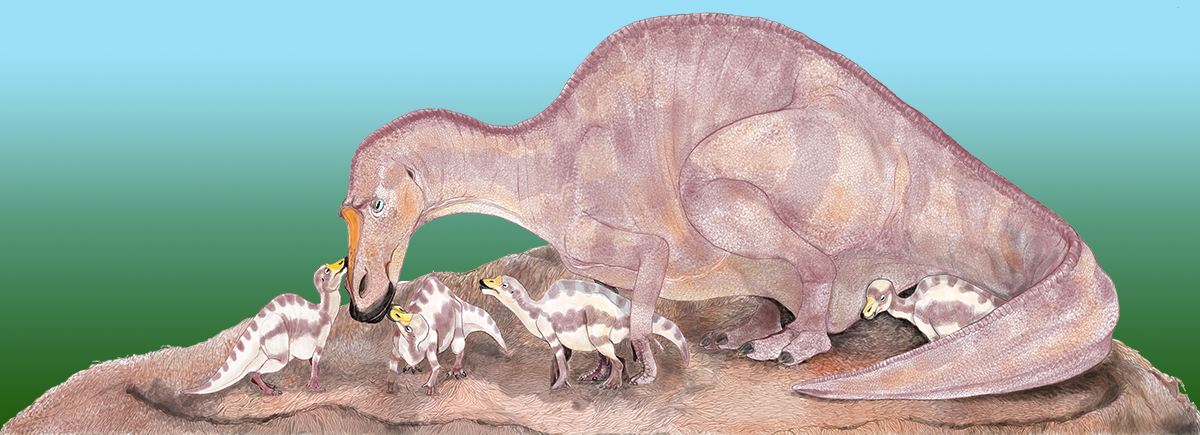
Animals can be doting parents, too—even dinosaurs. A new study published in the journal Palaeogeography, Palaeoclimatology, Palaeoecology shows just how far hadrosaur parents of the genus Maiasaura went to raise their young.
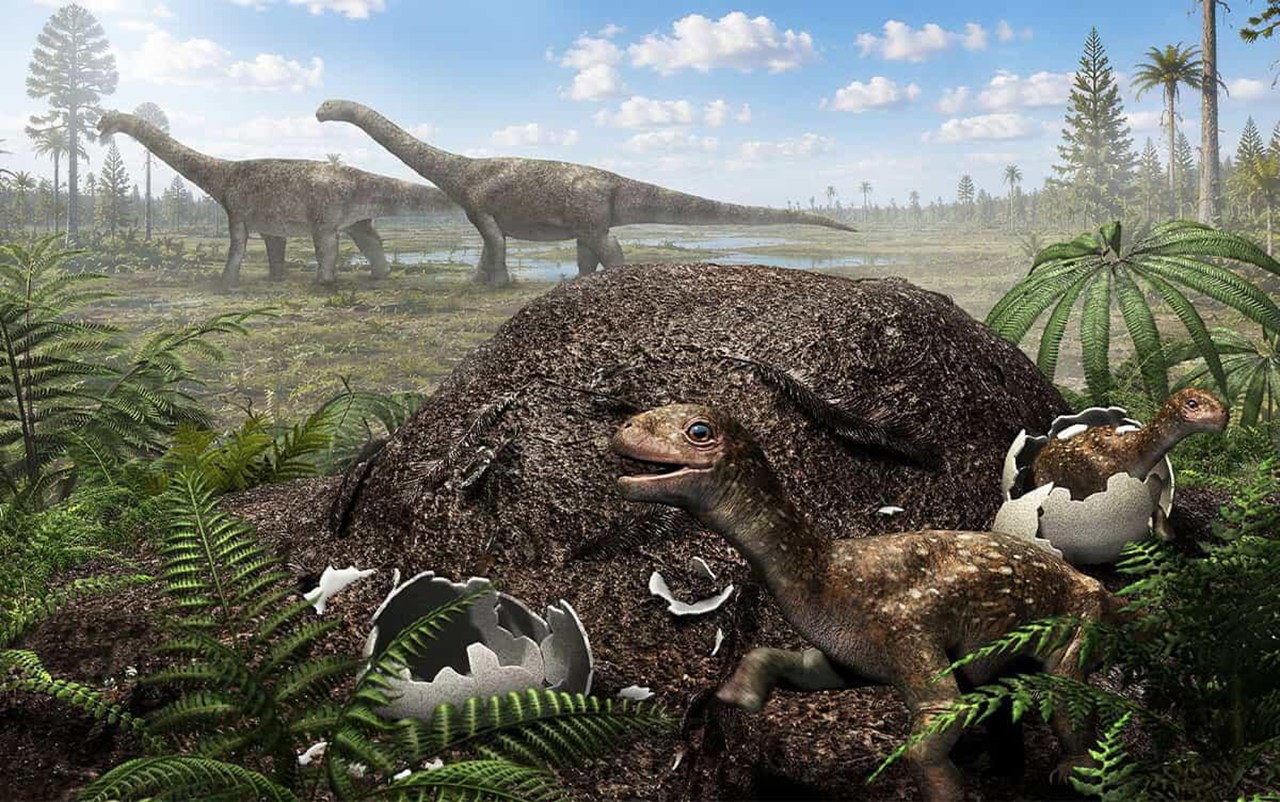
These duck-billed herbivores were likely very social animals, living and moving in herds. Fossil evidence shows they also cared for their young. Young Maiasaura discovered among fossilized nests had leg bones that weren’t fully ossified, meaning they couldn’t walk well and relied on their parents for food. In fact, this relatively unique nurturing behavior is what gave the dinosaurs their name: “Maiasaura” means “good mother lizard.”
Read more: “How a Simulated Dinosaur Nest Revealed Prehistoric Parenting Strategies”
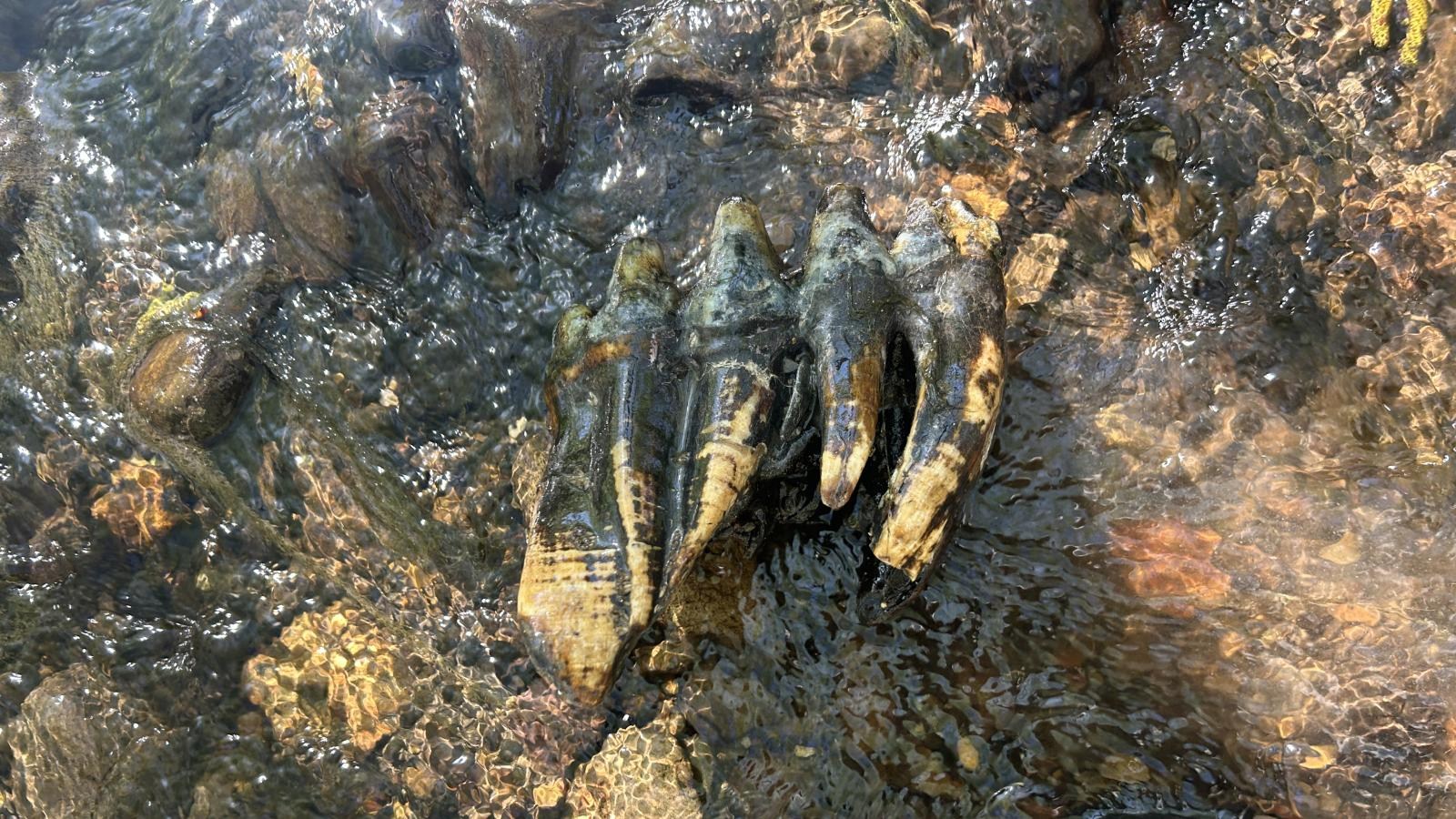
Paleontologists from Ohio State University studying the wear patterns on Maiasaura teeth determined just what kind of food mom or dad likely brought to the nest. Arranged in a compact array, these narrow honeycomb-shaped teeth showed different wear patterns in juveniles and adults. By comparing these wear patterns to those on the teeth of herbivorous mammals living today, they were able to make some educated guesses about their diets.
Juvenile teeth were polka-dotted with pits (like the teeth of fruit-eating tapirs), consistent with crushing soft foods. Adult teeth, on the other hand, showed striped striations consistent with shearing activity (like the teeth of grass-eating cows). In other words, Maiasaura parents fed their kids nutritious, protein-rich fruit as they opted for high-fiber salads for themselves. With such huge infusions of nutrients, baby Maiasaura were able to grow more quickly.
While not all dinosaurs cared for their young like Maiasaura, the behavior is quite common in dinosaurs' closest living relatives—birds. “The urge for a bird to feed a youngster is a very old behavior,” study author John Hunter explained in a statement. “What we’re providing is that evidence for that behavior probably goes much further than the origin of birds, perhaps to the origin of dinosaurs.”
Paying your mom back with an annual brunch, on the other hand, is a relatively new innovation. 
Lead image: Mineo / Adobe