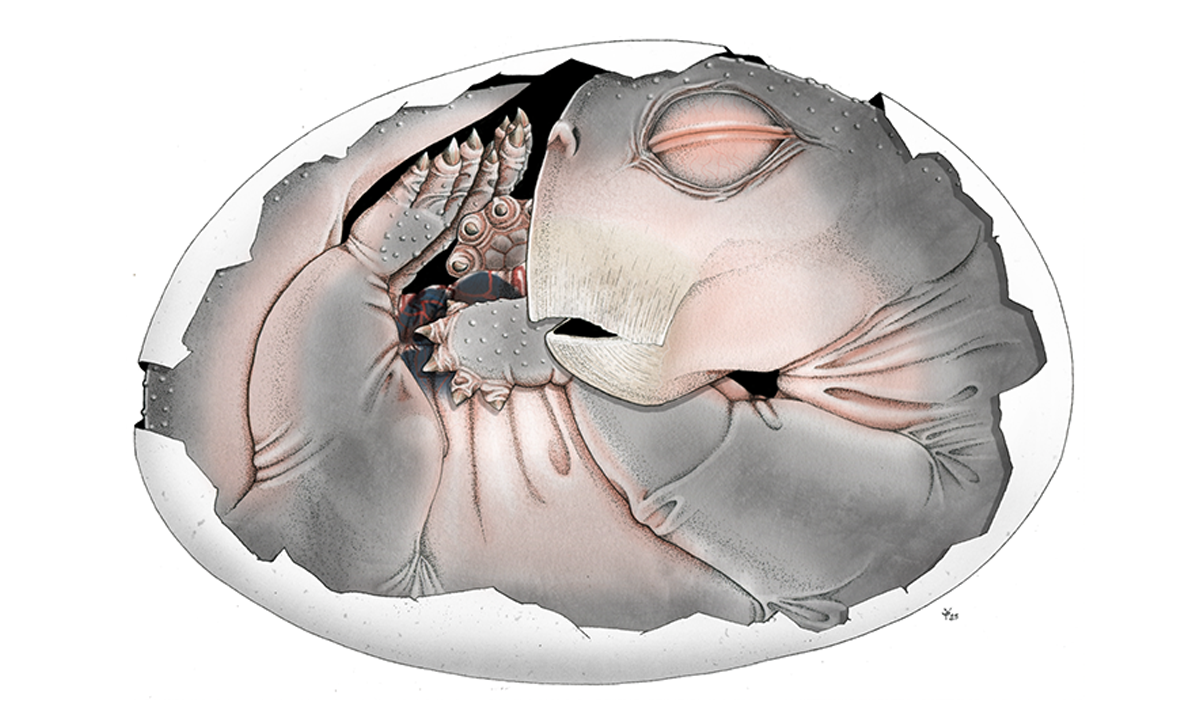
Dinosaur eggs are rare, but oviraptors, small birdlike dinosaurs that lived during the Late Cretaceous period around 70 million years ago, left behind plenty for paleontologists to study. Their fossilized nests have provided a wealth of information—from the pattern of egg-laying to the color of the eggs (blue-green).
But what about their behaviors?
Unfortunately, these don’t typically show up in the fossil record, but new research published in Frontiers in Ecology and Evolution is taking a stab at decoding the brooding activity of oviraptors using a novel approach: a simulated dinosaur nest.
To puzzle out how dinosaurs behaved, paleontologists usually look to some of their closest living relatives. In the case of oviraptors this includes crocodiles and birds. Unfortunately these two take very different approaches to parenting. While crocodiles bury their eggs in the mud, birds typically lay theirs in open-air nests, famously warming them through their body heat.
Read more: “A Dinosaur Illustrator on How to Blend Science and Art”
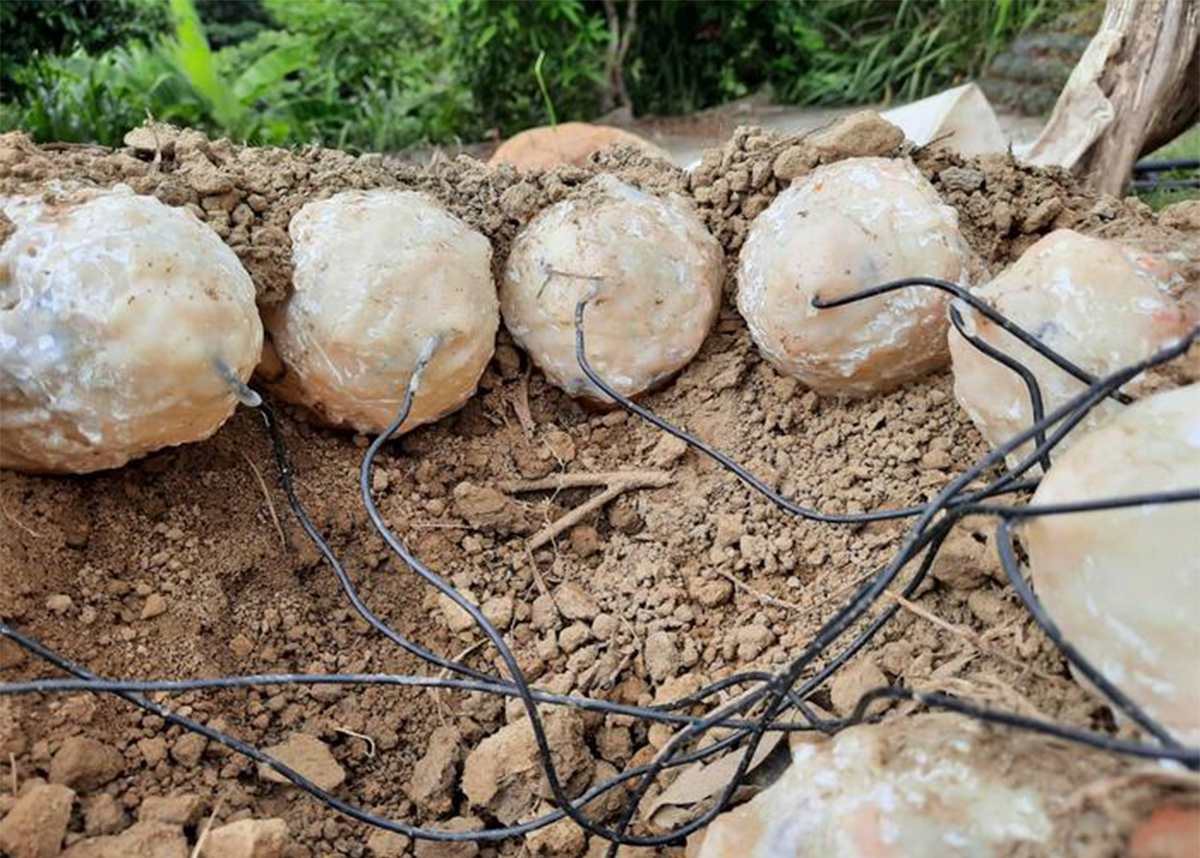
To find out how oviraptors incubated their eggs, paleontologists from Taiwan’s National Museum of Natural Science carefully constructed a faux oviraptor from the species Heyuannia huangi and Nemegtomaia barsboldi out of wood, foam, bubble wrap, fabric, and a heat source. Then, using resin, they created simulated hollow eggs filled with water to approximate egg whites and inserted thermometers to monitor temperature. They buried the eggs in pairs, one above the other, to mimic the inner and outer rings found in fossilized nests.
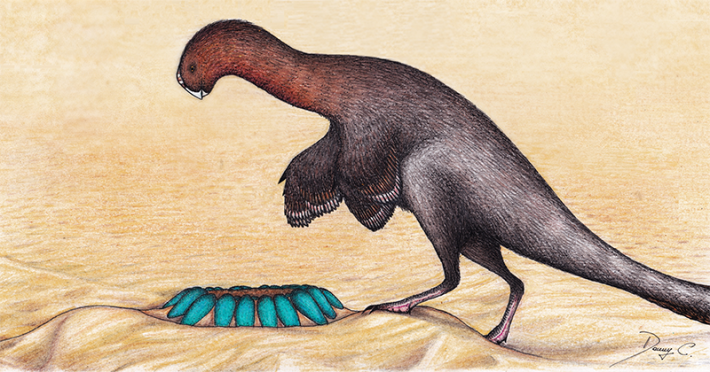
Their model dinosaurs proved to be incapable of maintaining contact with all of the eggs at the same time, and further analysis revealed they were less efficient incubators than modern birds. In colder ambient temperatures, the outer and inner rings of eggs differed in temperature by as much as 10 degrees Fahrenheit, meaning they’d be in danger of hatching at different times. In warmer temperatures, however, the temperature discrepancy between the eggs decreased by a factor of 10, making it negligible.
So how did oviraptor incubation work? Instead of sitting on their eggs all day, the researchers said, oviraptors “co-parented” with the sun.
“It’s unlikely that large dinosaurs sat atop their clutches. Supposedly they used the heat of the sun or soil to hatch their eggs, like turtles,” study author Tzu-Ruei Yang of Taiwan’s National Museum of Natural Science explained in a statement. “Since oviraptor clutches are open to the air, heat from the sun likely mattered much more than heat from the soil.”
Why don’t more birds today use this incubation strategy? Climate change. In the Late Cretaceous, when oviraptors lived, the planet was much warmer, and there simply wasn’t a need for parents to maintain constant contact with eggs.
It’s just another example of our changing world putting more and more demands on parents. 
Enjoying Nautilus? Subscribe to our free newsletter.
Lead image: Chun-Yu Su