Are you tired of AI doomsaying? Whether it’s AI researchers and CEOs warning that AI may kill us all (but only after vaporising most of the good jobs), or critics saying that AI will drive us over a climate cliff, doomsaying is everywhere now.
It leaks from our media into everyday conversations, hovers over our sense of the future, haunts our attempts to envision meaningful lives for ourselves and our children, and intrudes upon every peace. For me, whose job is to contemplate technology’s role in futures worth wanting, doomsaying has become like irritating hold music that the whole world is playing.
Read more: “AI Is the Black Mirror”
It’s also a constant battle to keep from playing it myself. That’s because today’s AI technologies truly are dangerous: maybe not to all human life, but to human agency and self-understanding, to our relationships with one another, to our ability and will to think for ourselves, and to our prospects of living sustainably together. That’s why I wrote The AI Mirror (2024). We can’t evade reasonable fears by looking away from them.
But of course, there is a difference between doomsaying and calls to action. Doomsaying fosters decision paralysis, apathy, and resignation. Calls to action reawaken our sense of agency, purpose, and moral urgency. Unlike doomsaying, calls to action are grounded not in visions of how a broken world ends, but in visions of how broken worlds are repaired, remade, and carried with love into the future.
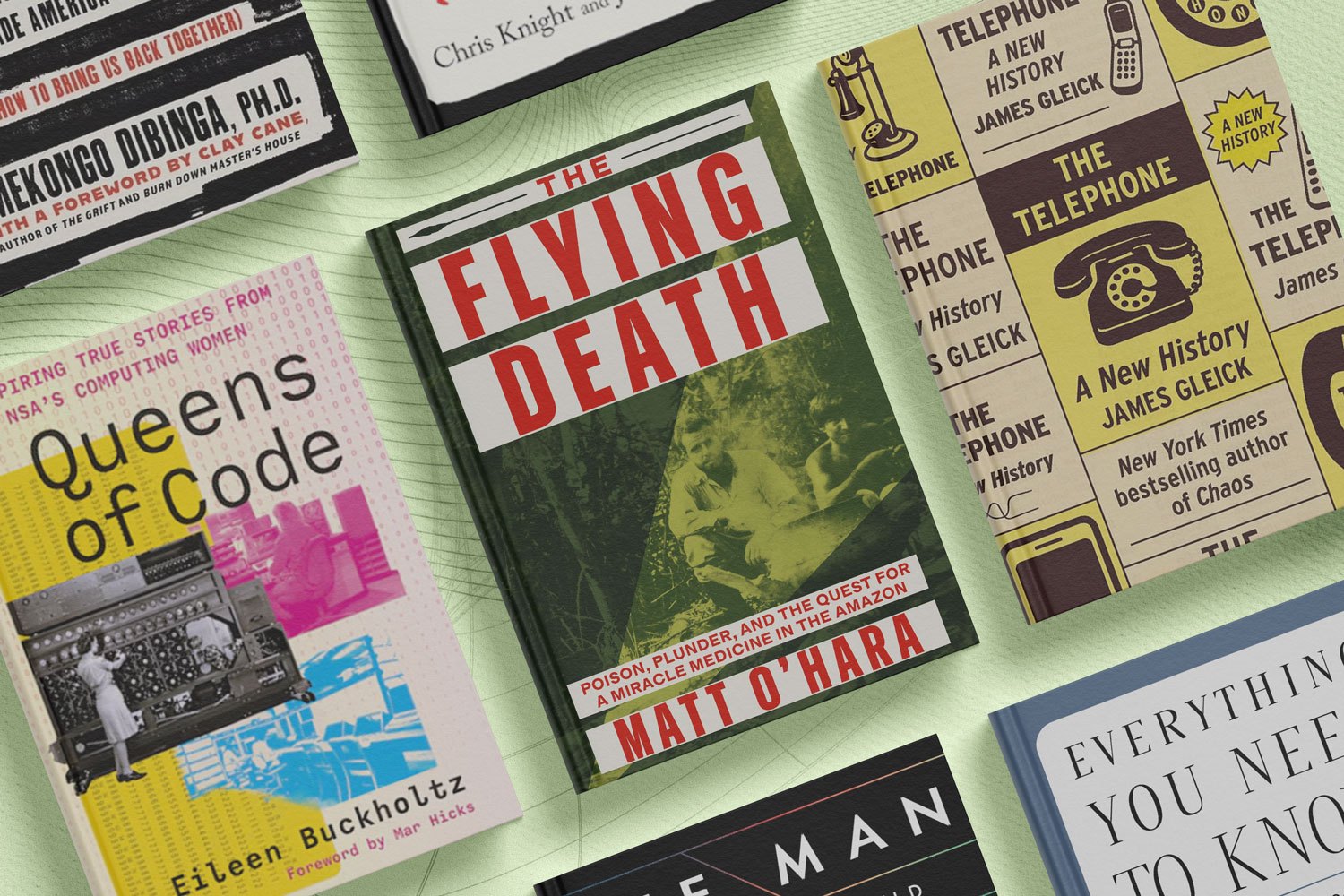
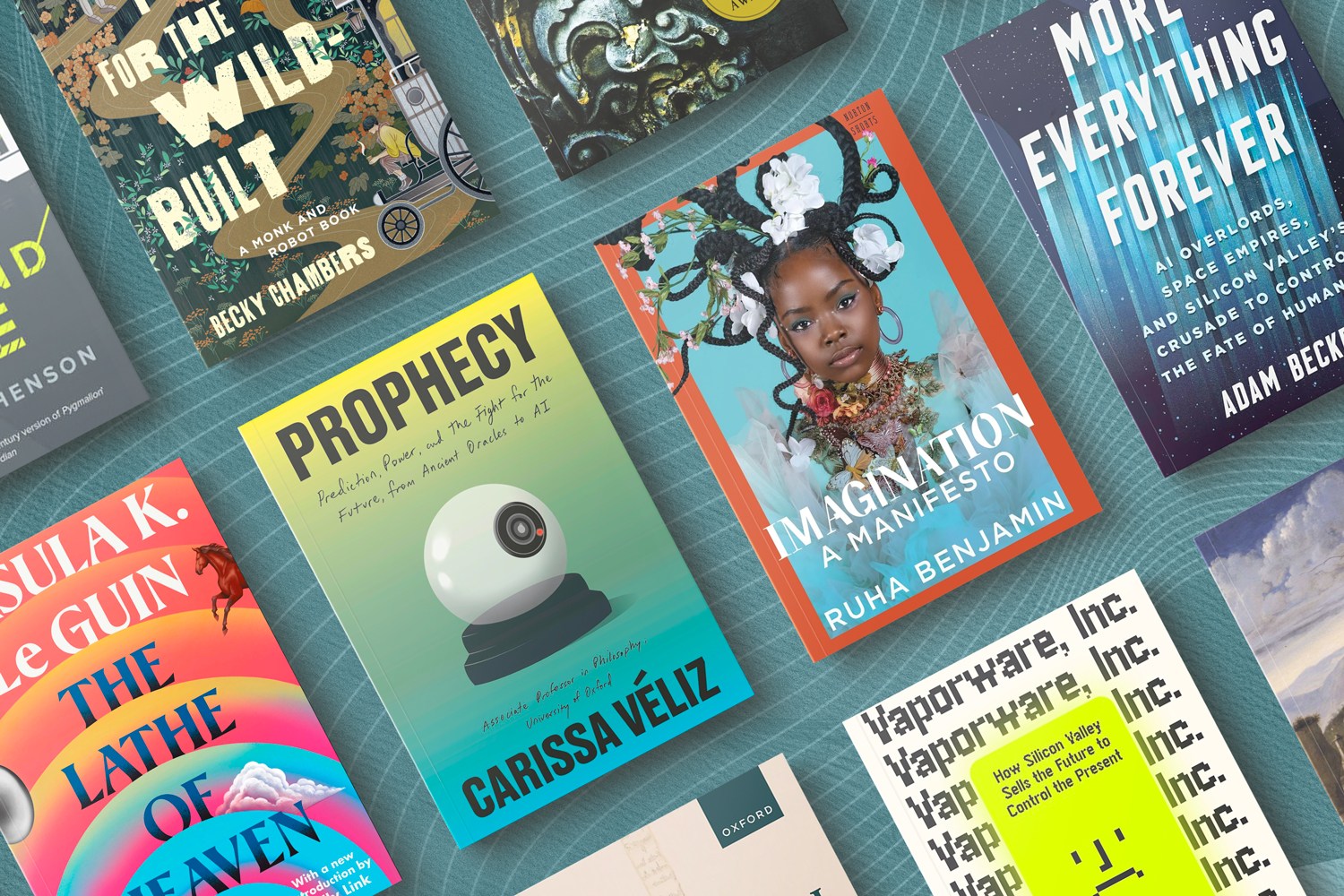
In that spirit, here are 10 books, in fiction/nonfiction pairs, that have shared such visions with me. No matter your views about artificial intelligence, they will help you think about the future, and technology, with more love, more courage, and more wisdom than the doomsayers can muster.
Imagining AI: How the World Sees Intelligent Machines, edited by Stephen Cave and Kanta Dihal (2023)
If it feels like the whole world is playing the AI doomsaying tune, try a different playlist. Philosopher Stephen Cave and science communicator Kanta Dihal have given us a book that helps us do just that—leave the media party that only Silicon Valley is allowed to DJ, and listen to alternative tracks (essays, in fact) on AI from all over the world. This edited collection quickly breaks the doomspell with a sprawling diversity of visions of AI and the future, from Europe, Latin America, Africa, East and Southeast Asia, including indigenous traditions that know all too well what it is to be assured that the future has no place for you, and to keep living in it anyway.
A Psalm for the Wild-Built, Becky Chambers (2021)
The first of two novellas in her beloved Robot and Monk series, Chambers envisions a future where humans have made all the worst mistakes with machines, and still invented ways to keep on living. It’s a beautiful, contemplative, and pastoral vision of a different kind of future, one where humans and machines have finally acquired the wisdom to know when to stop, and are mustering the courage to make a new start.
More Everything Forever: AI Overlords, Space Empires, and Silicon Valley's Crusade to Control the Fate of Humanity by Adam Becker (2025)
This is one of many excellent books to yank back the curtain on Silicon Valley’s apocalyptic and messianic fantasies, exposing their roots in Big Tech’s increasingly fetid stew of authoritarian politics and antihumanist ideologies. What made it stand out for me were journalist and astrophysicist Becker’s reflections on his own Star Trek-fueled, childhood faith in tech as something that delivers the future to us. As a sci-fi and tech-obsessed kid of the 70s, who imagined the spectre of a first-strike ICBM in every meteor trail, I too spent years waiting for machines to either consume the world or spirit us away to the stars. Becker’s moving final chapter marks the path that leads us beyond childlike waiting, and toward the tomorrows we can at any time start to build.
The Fifth Season, N.K. Jemisin (2015)
AI isn’t actually a theme of the first novel in Jemisin’s triple Hugo Award-winning Broken Earth trilogy. Yet this book, and the series as a whole, profoundly shaped my thinking about technology, power, and the fear of apocalypse. It’s more than a demonstration of Jemisin’s truly astonishing talent of world-building. It’s a reflection on what it means to believe that you can end worlds, how radically that thought changes us, and what happens when world-bending power is controlled by elite castes, or wielded by broken souls. It’s about how people find a way to walk into the future together even as they confront a world coming apart at the seams (here, quite literally).
Prophecy: Prediction, Power, and the Fight for the Future, from Ancient Oracles to AI, by Carissa Véliz (2026)
Prophecy is a look at the long history of human claims to see the future, from religious divination to astrology, from predictive algorithms to mathematical estimates of our AI (p)doom. Véliz gives us an eagle-eye view of the history and politics of prophecy and our susceptibility to its allure. Most importantly it offers a vital lesson: Many claims to know what will happen are concealed instructions to us to let it happen. Ask yourself who benefits from a future where AI has usurped all of your power and liberty, and you may see how a prophecy of AI doom is designed to enlist you in the service of its fulfilment.
Erewhon, by Samuel Butler (1872)
How could a satirical expose of Victorian society written more than 150 years ago, long before the dawn of computing, possibly help us grapple with the 21st century spectre of AI doom? Sit down with Chapters 23-25, which tell a story within the story: ‘The Book of the Machines.’ It’s a story that will sound shockingly familiar, a welcome reminder that our fears of becoming enslaved by intelligent machines—and nearly every detail of the “AI takeover” scenario—have been haunting us since well before the dawn of the computer, when the most frightening technology we could imagine was steam-power. Perhaps, then, we should treat its fears as more confession than prophecy.
Imagination: A Manifesto, by Ruha Benjamin (2025)
In Imagination, MacArthur Fellow Benjamin reminds us that if we feel hopelessly trapped in Big Tech’s narrative, haunted by the same fearful visions spoon-fed to us by the same unaccountable powers, we must ask: What other stories could we write for ourselves? She offers a powerful set of tools for liberating human political and technological imagination from the AI doom loop, reawakening an ability that we have never fully lost—to invent new visions of the future that work like open doors, not cages.
The Lathe of Heaven, by Ursula K. Le Guin (1971)
Le Guin famously rejected the idea of science fiction as prediction, and the stale binaries of utopia and dystopia, often mirror images of the same limited view. Nor did she write about futures with AI or robots. What opens human futures, she argued in her 2002 lecture “Operating Instructions,” is not technology but imagination. Lathe of Heaven, her classic novel about a man whose dreams bend reality, still has much to teach us about the folly and limited imagination of today’s AI leaders, who strive in vain to force the future into the mold of their own utopian dreams, while leaking their dystopian nightmares into our reality.
Vaporware, Inc: How Silicon Valley Sells the Future to Control the Present, by David Karpf (2027)
This forthcoming book offers a compelling exposé of the decades-old con that is “digital futurism.” Again and again, Silicon Valley sells us visions of future abundance and ease that somehow never arrive, like a friend who keeps inviting you out to a free lunch and then doing a runner when the check comes. It’s a bracing takedown of empty techno-utopian promises, yet an equally powerful antidote to doomsaying. Our future isn’t secure, but it isn’t lost either. When the spell of digital futurism breaks, the future is always still in our hands, waiting for us to shape it. Vaporware isn’t a book for pessimists, but for pragmatists with work to do. As Karpf puts it, it’s “a book for worriers and for planners.” That’s a book for me. Maybe you too.
The Diamond Age: Or, A Young Lady’s Illustrated Primer, by Neal Stephenson (1995)
Stephenson was long seen by many Silicon Valley founders as a prophet of digital futurism. His 1992 novel Snow Crash was celebrated for decades as foreseeing the inevitable shift of our lives into a virtual Metaverse. Yet it’s 2026, and multiple costly attempts to force the Metaverse prophecy into commercial reality have gone bust. It’s a reminder of Le Guin’s warning to read fiction not as prophecy, which narrows our vision of the future, but as a mind-stretcher to widen it. So skip Snow Crash, and take a tour through Stephenson’s sweeping tale of a far weirder future, one with a nanotech-fueled economy, geopolitics remade by tribal clashes between neo-Victorian and neo-Confucian revivals, and an AI-enabled personal tutor that might shape a child into a dull conformist or a world-breaking revolutionary. It’s a dizzying vision that defies utopian and dystopian tropes, and imagines AI as a conduit for human agency, love and resistance, not their replacement. 
Enjoying Nautilus? Subscribe to our free newsletter.